Context
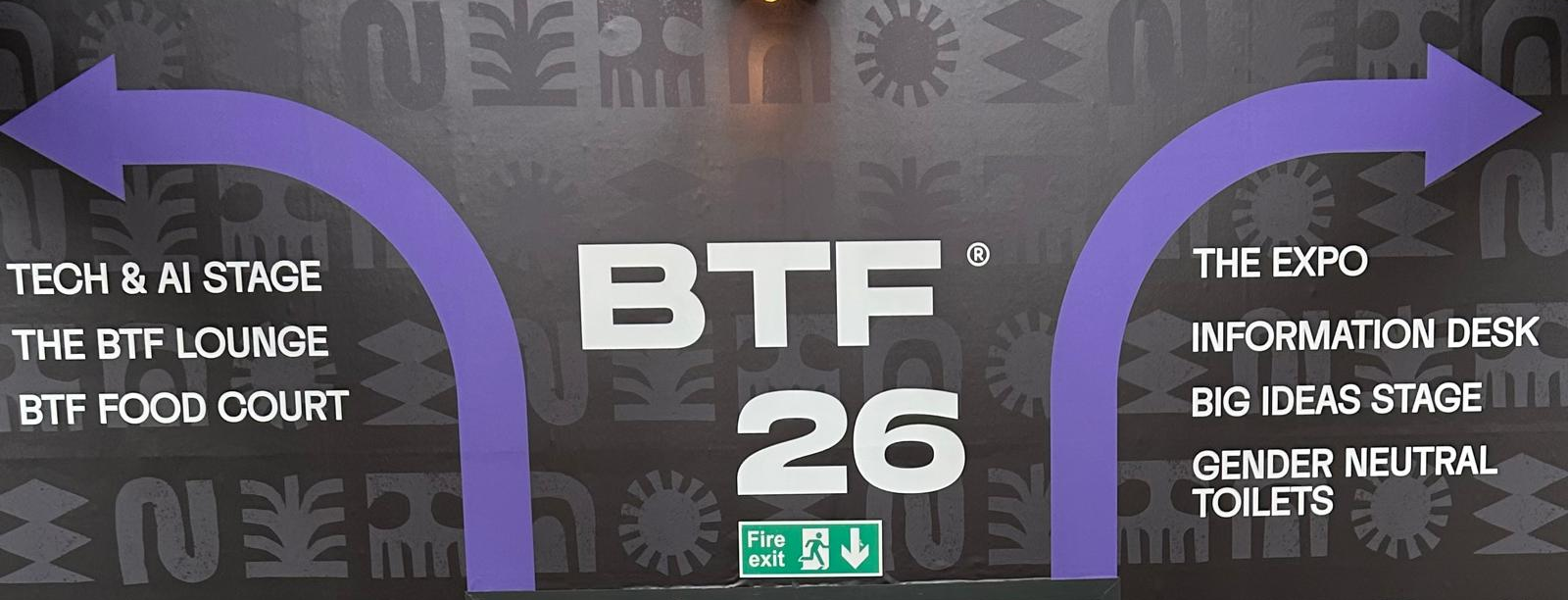
On 29 October 2026, I had the opportunity to attend Black Tech Fest 2026 at Tobacco Dock in London.
There was a real energy throughout this well attended event. Technology was naturally at the centre of many conversations, particularly AI, but what struck me was how often the discussions came back to people: careers, leadership, diversity, trust, responsibility and the choices organisations make as technology advances.
I got a chance to attend and participate in selected sessions, capturing ideas that challenged me or made me stop and think. Looking back through those sessions, several themes kept resurfacing: how organisations move beyond experimenting with AI, how careers need to evolve alongside automation, why human judgement becomes more important rather than less important, and why governance, trust and accountability cannot be afterthoughts.
My day at BTF 2026
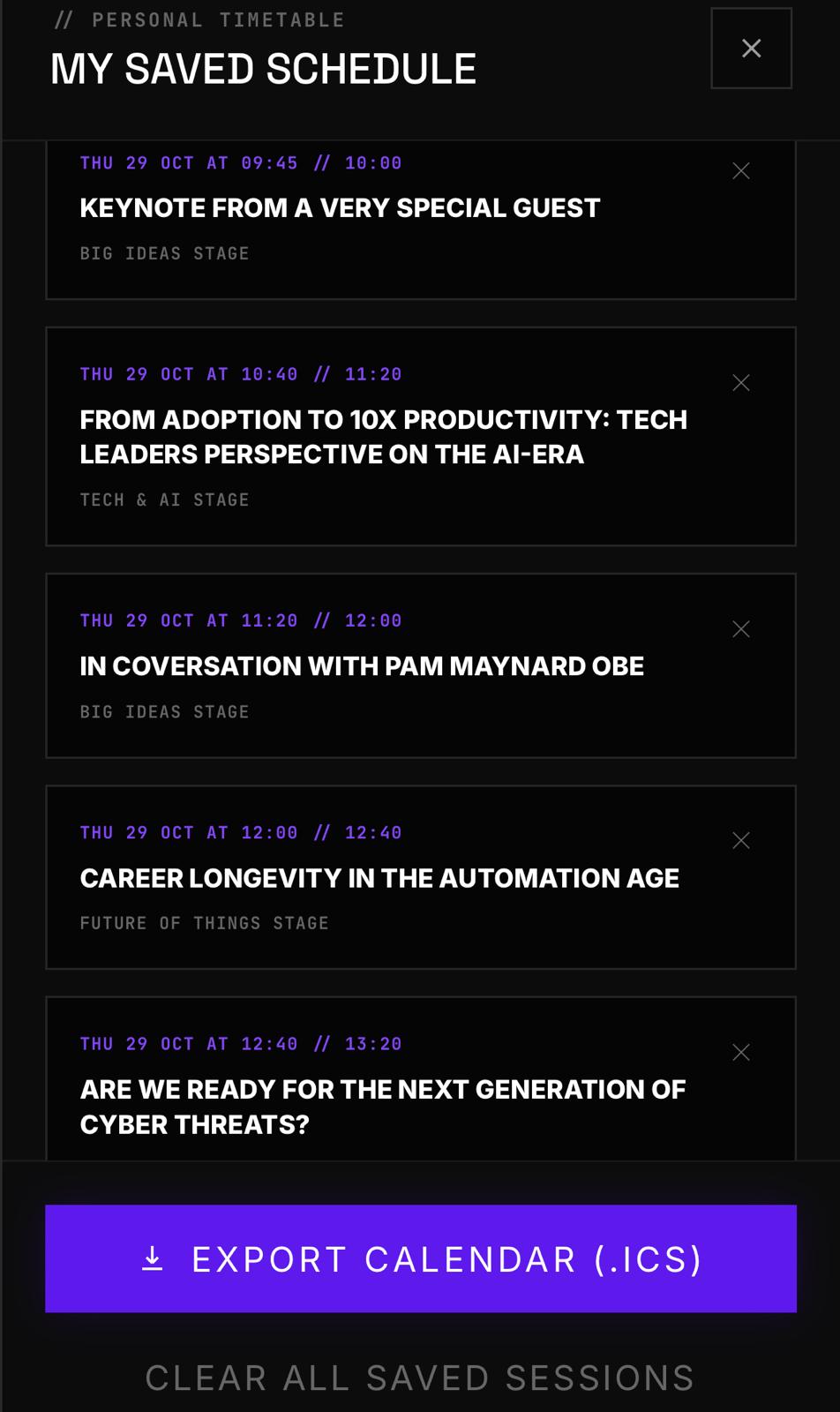
My schedule took me across several different conversations, beginning with the opening keynote before moving into AI adoption, leadership and transformation, career longevity and cyber security.
Here are the things that stayed with me.
Session 01: Opening Keynote with the Mayor of London
About the session
This was the opening keynote From a Very Special Guest, on the Big Ideas Stage. The guest was the Mayor of London, Sadiq Khan.
My key takeaways
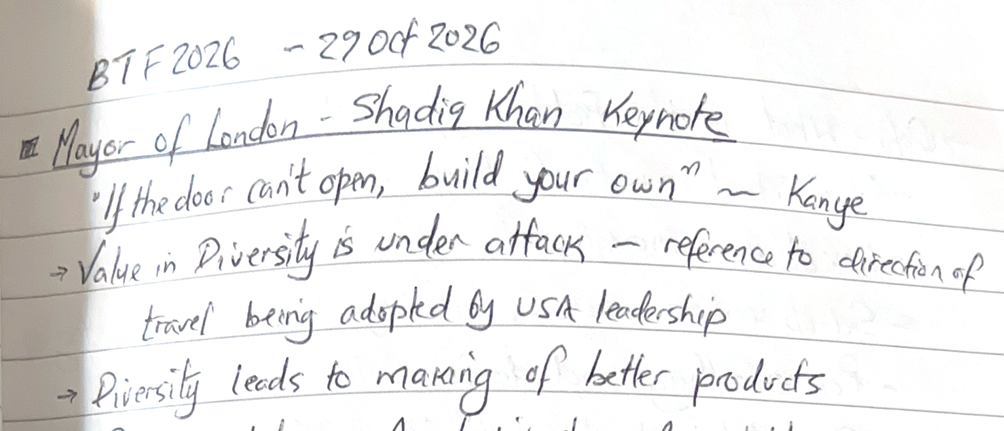
One phrase I wrote down immediately was: “If the door can’t open, build your own.”
What resonated with me throughout the keynote was the importance of diversity not simply as an aspiration, but because of the value it creates.
The Mayor made a point that diversity leads to better products. That matters particularly in technology. The people building products and platforms influence the assumptions that get embedded into them, the problems that are prioritised and ultimately the people those products work for.
Another statistic the Mayor shared concerned the significant disparity in Angel investment between mainstream and minority-based founders. Whether we look at investment, careers or technology leadership, the broader message I took away was the importance of ensuring organisations have an inclusive talent strategy.
My reflection
Technology does not develop separately from society.
As AI becomes an increasingly important part of the products and services organisations build, representation around the table matters. Different experiences, backgrounds and perspectives help us challenge assumptions that might otherwise become embedded in the technology.
Session 02: From Adoption to 10X Productivity: Tech Leaders Perspective on the AI-Era
About the session
This panel explored a challenge facing many organisations today: moving beyond AI experimentation and isolated pilots towards adoption that can deliver meaningful productivity at scale.
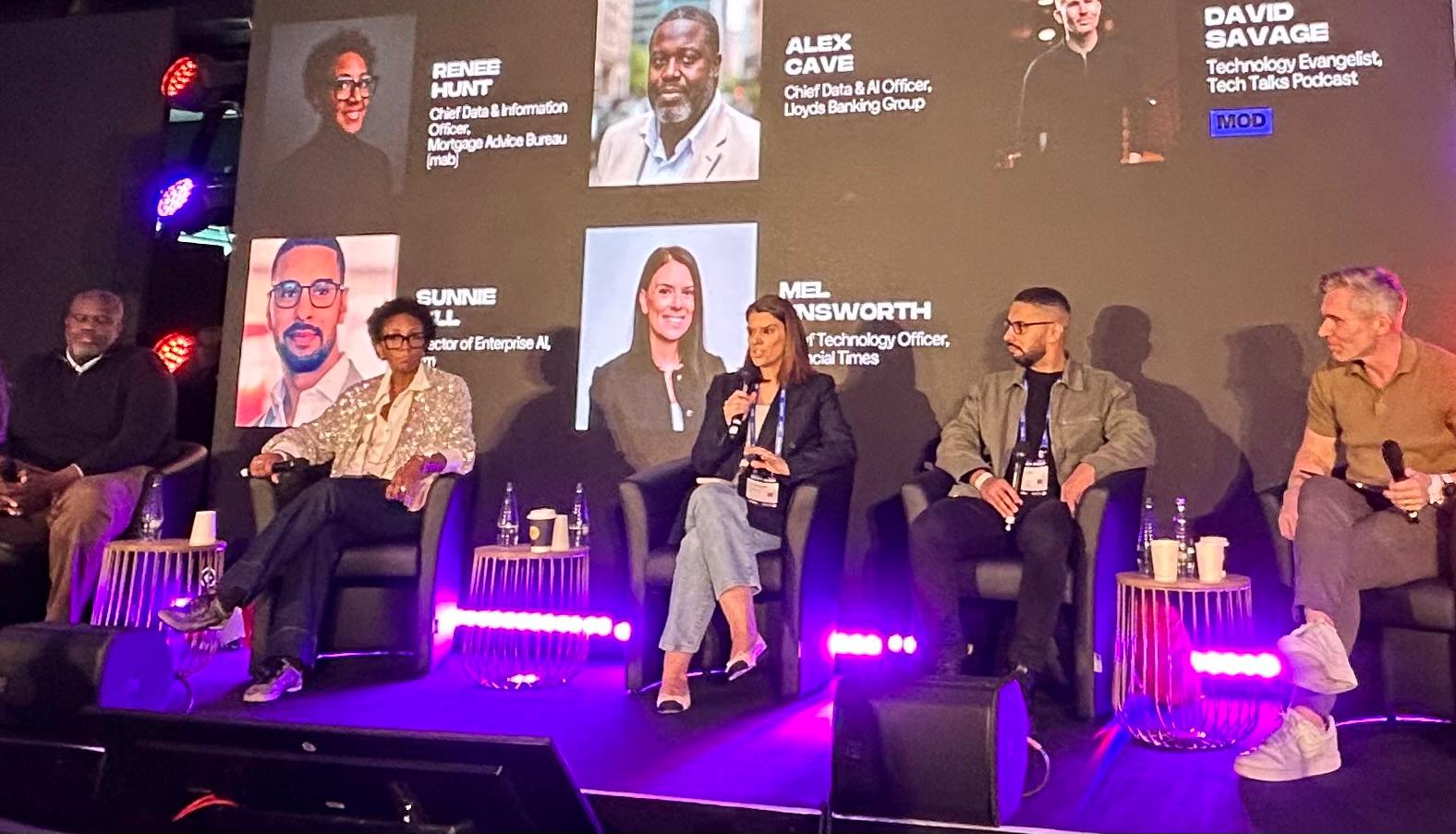
The session brought together:
- Alex Cave, Chief Data & AI Officer for Business & Commercial Banking, Lloyds Banking Group
- Renee Hunt, Chief Data & Information Officer, Mortgage Advice Bureau
- David Savage, Group Technology Evangelist, Harvey Nash Group
- Mel Unsworth, Chief Technology Officer, Financial Times
- Sunnie Gill, Director of Enterprise AI, Arm
The discussion was positioned around infrastructure, workforce behaviour, leadership and the practical decisions organisations need to make when moving from incremental applications of AI towards larger-scale adoption.
My key takeaways
One of my first notes was simple: Define the problem you are trying to solve.
That sounds obvious, but it becomes increasingly important when organisations are surrounded by new AI products and capabilities.
AI adoption should not begin with the technology. Start with the problem.
A few other ideas stood out.
i) Think beyond isolated AI tools
One panelist shared what worked in their ogranisation was the idea of creating an AI working group to bring people together and encourage organisational participation.
There was also discussion around establishing an agentic operating model, looking at throughput rather than simply individual activities, and potentially thinking about agents operating throughout the software development lifecycle (SDLC).
But introducing agents is not, by itself, transformation.
Another panelist shared an interesting point: organisations also need to decide what people will do with the capacity created while agents are executing work. Otherwise, we risk simply watching the automation happen rather than redesigning work around it. Is is like “We are defragging our own disk”.
ii) Your knowledge architecture matters
Another important point discussed was: Ensure the knowledge base is well architected. AI depends on the information available to it. If the underlying knowledge is poor, you risk a version of the familiar “garbage in, garbage out” problem.
That means knowledge architecture becomes key part of the AI architecture.
iii) Shared outcomes need shared ownership
One panelist shared that individual approaches can create noise. Instead, organisations need shared outcomes and objectives, together with C-Level (leadership) buy-in.
That becomes particularly important as AI moves beyond individual productivity tools and begins affecting workflows and operating models.
iv) Trust needs governance
Risk and trust was mentioned repeatedly by panelists. Responsible adoption requires organisations to understand what an AI system or agent has done and, critically, to be able to track and undo actions where appropriate.
Trust cannot simply be declared. It needs to be supported by governance, accountability and visibility.
v) Leverage AI where it make sense
Be selective about where AI actually creates value. Rather than attempting to introduce AI everywhere, organisations should use AI where it makes most sense.
That could mean using AI for areas such as data analysis or supporting people in parts of an existing process, while continuing to recognise where human judgement adds more value.
This led to another takeaway: Cherry-pick the AI solutions that solve the right problems rather than adopting an entire suite simply because it is available.
vi) AI should create new possibilities
AI is not only about making existing processes faster. AI introduces new opportunities such as use it to to solve problems that were previously difficult or impossible to do.
Which raises a more interesting transformation question: What could we now do that we could not realistically have done before AI?
My reflection
Perhaps the biggest takeaway for me was that scaling AI is as much an organisational architecture problem as it is a technology problem.
The tooling matters, but so does the knowledge foundations, operating model, leadership alignment and clarity around the problem being solved.
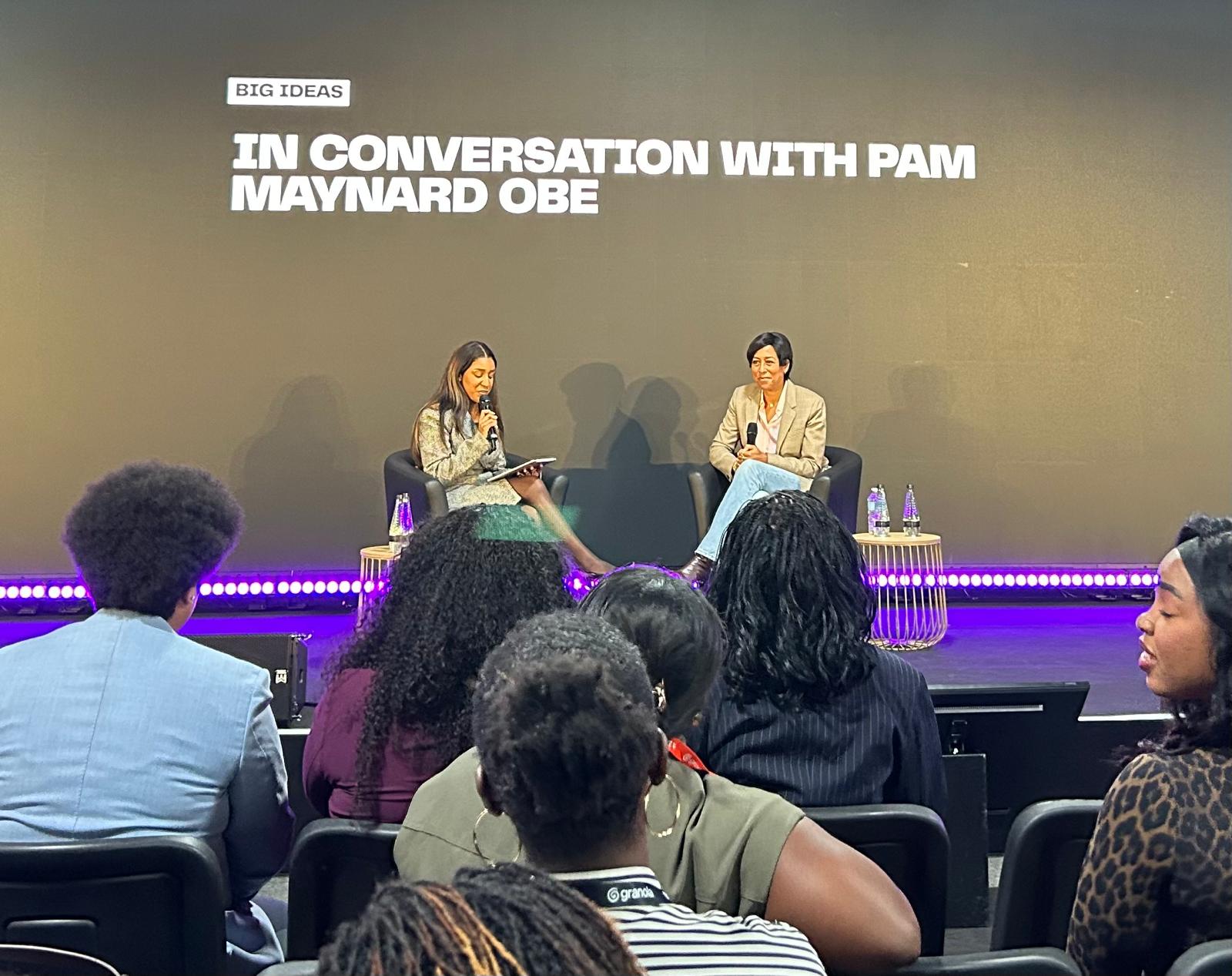
Session 03: In Conversation with Pam Maynard OBE
About the session
This session focused on what AI transformation requires beyond simply deploying technology.
The conversation featured:
- Pamela Maynard, Corporate Vice President, AI Transformation, Microsoft
- Savannah Adams, Co-Chair, CBERG (City Black ERGs)
This session covered the discussions around leadership, organisational change, operating models, adoption, trust, accountability and measurable business value.
My key takeaways
This was a session where Pam shared her experience leading Microsoft AI Transformation, with Microsoft as Customer zero.
Below are things that stood out from her conversation with Savannah
i) What happens to the capacity AI creates?
Pam answered the question: What do we do with capacity created by AI?
- That is ultimately a leadership decision.
- If AI creates capacity, organisations need to rethink work and determine where human judgement remains important.
- That could lead to new roles, changes to existing roles or consolidation of old ones.
- But the starting point remains outcomes.
- What are we trying to achieve?
- What value are we creating for customers and stakeholders?
- And importantly, is the underlying process itself effective?
- Fix the process first, then consider applying agentic AI.
ii) Entry-level talent still matters
Pam highlighted the importance of continuing to invest in entry-level roles. Today’s entry-level workforce could potentially become one of the most AI-native generations in the organisation.
That makes mentorship, judgement, critical thinking and responsible AI important skills to develop alongside technical AI capability.
iii) ROI does not always look the same
Another useful reminder was that return on investment can take different forms and operate across different timescales.
AI transformation therefore needs transparency around expected outcomes rather than a simplistic definition of productivity.
iii) What are the biggest barriers?
Pam shared her learning around what are the biggest barriers when it comes to AI adoption:
- Ability to observe AI and operationalise AI – getting overwhelmed
- Need to define clear vision on use of AI
- Business and Tech working together (cross-functional)
- Governance that is shared across organisation. HR. Legal. Marketing and other functions
- Clear accountability – who owns value
- Role of Managers and Teams
- Get feedback from engineering teams
- Do not focus on consumption for consumption sake.
- We must have diverse representation to get AI right.
iv) Accept that you are never going to be “ahead” when AI is advancing at lightning speed
Trying to know everything is probably the wrong target. Instead, we need to think about how AI changes the way we work.
Pam shared the following advice to CEOs on AI adoption:
- Early stage into AI: Look at your work and ask how AI can change how you work, not simply make you work faster.
- Mid-level AI maturity: Invest more in connections, work across-functions. Think end-to-end about where AI creates value and where organisations need to learn
- Mature in AI adoption: Look around the decision-making table and ask , is that representative enought? Is it diverse enought? If not, change that
My reflection
The theme that stayed with me was the importance of treating AI transformation as organisational transformation. Technology can create capacity and new possibilities, but people still have to decide what outcomes matter, how work should change and where responsibility sits.
It reinforced a principle that applies well beyond AI: Do not automate a broken process and expect transformation.
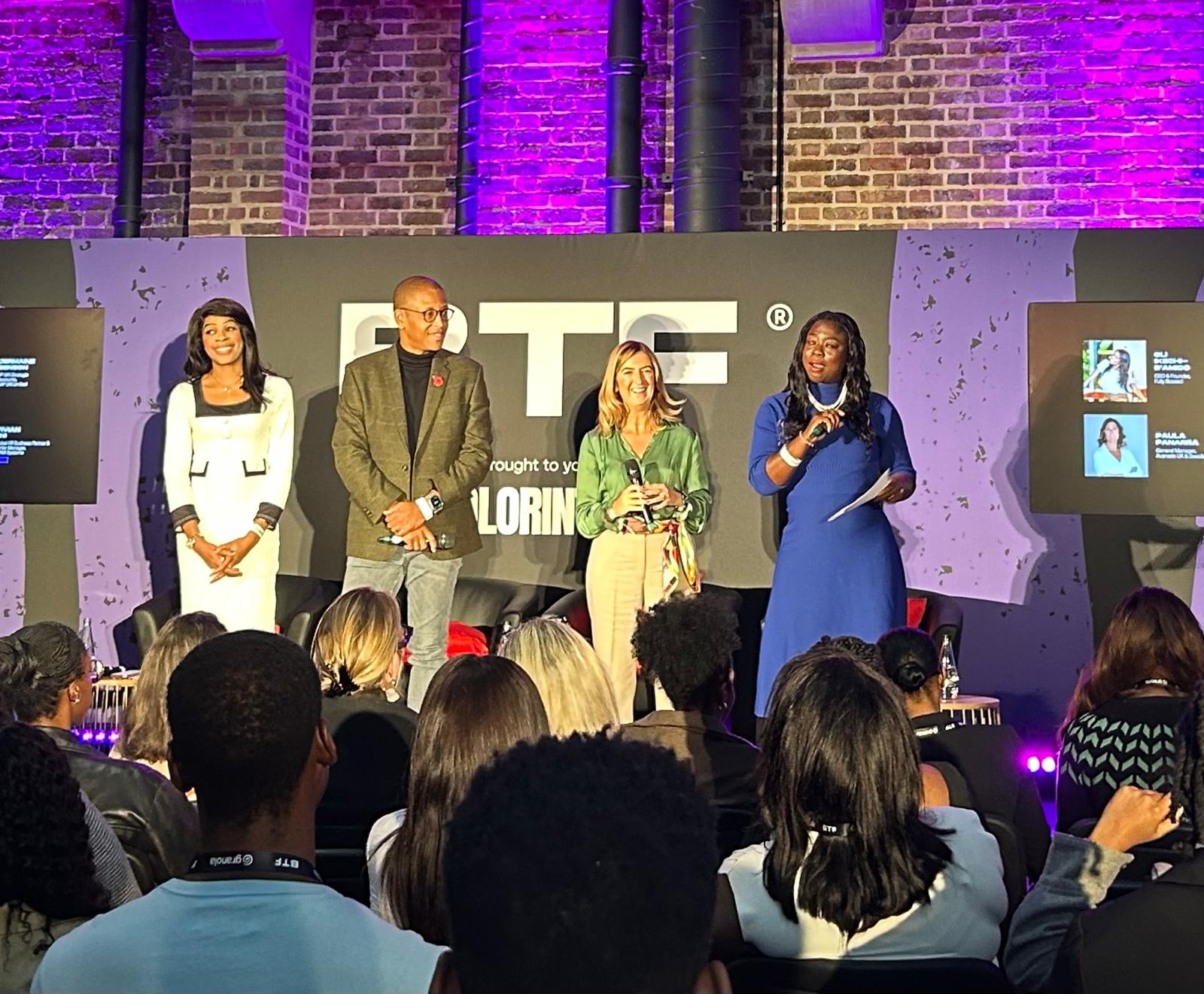
Session 04: Career Longevity in the Automation Age
About the session
How do we build careers that remain valuable as technology continues to change the nature of work? This session sesion explored exactly that question.
The panel brought together:
- Oli Ikechi-D’Amico, CEO & Founder, Fully Bossed
- Paula Panarra, General Manager, Avanade UK & Sweden
- Vivian Eni, Global HR Business Partner & Senior Manager, EPAM Systems
- Jermaine Benson, VP UKI Strategic Accounts, SAP UKI Limited
The session considered career reinvention, transferable skills, internal mobility and how professionals can remain resilient as automation changes roles and industries.
My key takeaways
All the panelists emphasised the importance of human skills during the age of AI. Oli in particular brought this point to life referencing the recent EY’s $100 million bonus program to reward their employees who demonstrate critical human skills alongside AI.
Paula emphasised the human company experience, context and business knowledge that people bring to the table. What she referred to as role-based fluency.
Below are things that stood out from the panelists:
i) Human skills become more important in the age of AI
I noted several skills that were highlighted:
- Curiosity
- Judgement and decision velocity
- Communication
- Business acumen
- Adaptability
- Leadership
- Collaboration
- Innovation
- Thoughtful experimentation with technology
Paula emphasised the importance of avoiding becoming static in mid-career. Continuous learning matters, but so does company experience, context and business knowledge. Technical fluency alone is not enough.
ii) Your network is part of your career capital
Another theme was relationships.
- Who are the first people you think about in a room?
- What value do you bring?
- Who are the mentors and sponsors around you?
Networks need to be intentional. Our career value does not come simply from working hard. It also comes from the impact we create, the knowledge we bring and the relationships we build.
iii) Reinvention is an addition, not necessarily a leap
I liked the idea shared by one panelist, that reinvention can be an overlap rather than a leap. You do not always need to discard everything you have done before and begin again. Instead, take your existing experience, skills and strengths into a new area.
Pick a problem. Learn. Solve it. Build from there.
And perhaps most importantly, start acting before you feel completely ready. Failure is part of the journey, as Paula summirized it.
My reflection
This session probably captured one of the biggest career questions of the AI era. The differentiator cannot simply be access to the technology, because increasingly everyone will have access. The difference will be how we use AI as an ally while combining it with the distinctly human judgement, experience, relationships and curiosity that we bring to the table.
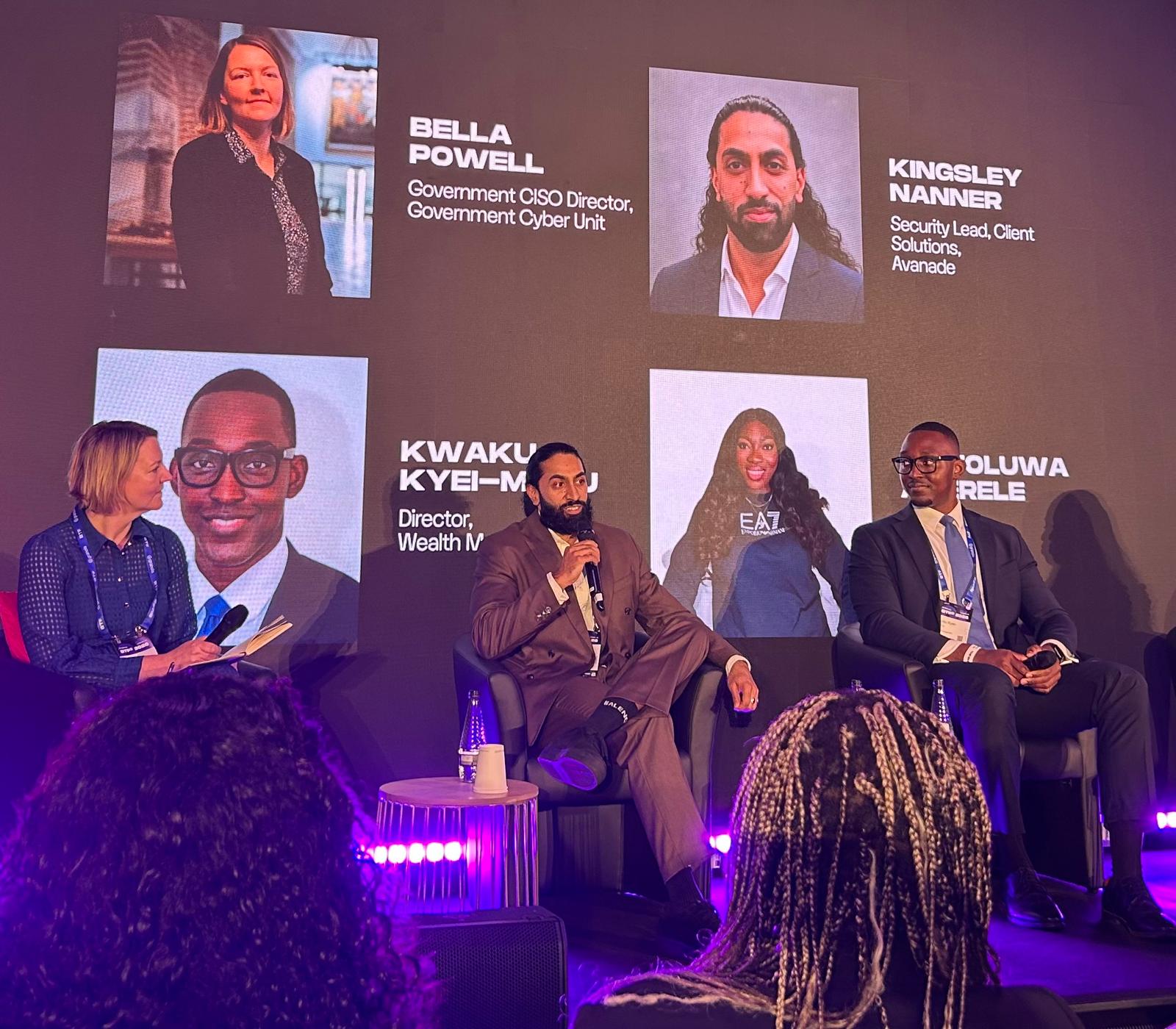
Session 05: Are We Ready for the Next Generation of Cyber Threats?
About the session
This session explored how AI is changing the cyber-security landscape.
The panel included:
- Dr Iretioluwa Akerele, Director, Cybarik Limited
- Kwaku Kyei-Manu, Director – Wealth Management
- Kingsley Nanner, Security Lead – Client Solutions, Avanade
- Bella Powell, Government CISO, Department for Digital, Culture, Media and Sport
The discussion was positioned around the increasing speed, scale and sophistication of AI-enabled cyberattacks, whether current defences can keep pace and how organisations, government and communities should prepare.
My key takeaways
My first note from this session was direct: AI is enabling cyberattacks at lightning speed.
That creates a challenge not simply around preventing attacks, but around the speed at which organisations can understand and respond to them.
Kingsley and the panelists made the point that approach to cyber security is no longer business as usual. Some of the key security elements to be addressed include:
- Establish secure or zero-trust gates.
- Remove black-box and grey areas. We need to understand how the systems operate.
- Do not rely on obscurity as a defence.
- We need to act with speed and at scale.
- Stop ignoring system-level risks while only focusing on organisation-level risks.
i) Visibility before response
When thinking about incident response, one of the strongest messages one of the panelist raised was to invest in visibility and observability as a first step.
You need to understand the attack vectors. You also need to plan on the assumption that risks will materialise rather than simply hoping they will not. That means building the capacity to respond.
ii) Governance needs to keep pace
The panelists covered on regulation and governance. There was a theme of outcome-based regulation and keeping examples and controls current rather than relying on approaches that quickly become outdated.
Evidence-led decision-making and shared ownership become increasingly important. Security cannot be somebody else’s problem.
A blame culture is not a viable operating model when threats can move across organisational boundaries and systems.
iii) Responsible AI needs security built into it
Kingsley outlined shared responsibility across models creators, solutioning partners and end users.
- Owners of models need to create models with Responsible AI and safety in mind
- Solutioning partners need to define solutions with governance and controls.
- End users cannot be expected to be the first line of defence against every AI-enabled threat. The systems themselves need appropriate protections.
And because these threats extend beyond individual organisations, collaboration matters too, whether through industry groups, cyber advisory boards or security leaders sharing experiences and risks. Bella highlighed the collaboration with Cyber Advisory Boards and Internationa CISOs
My reflection
What I took away from this session is that AI changes both sides of the security equation. It can increase the capability, scale and speed available to attackers, but it can also enable new forms of security innovation.
The answer cannot be to step away from innovation. We need to lean into innovation for security while strengthening visibility, controls, governance, collaboration and shared ownership.
Session 06: AI Reality Check – Beyond the Buzzwords: What Does It Really Take to Make AI Work?
About the session
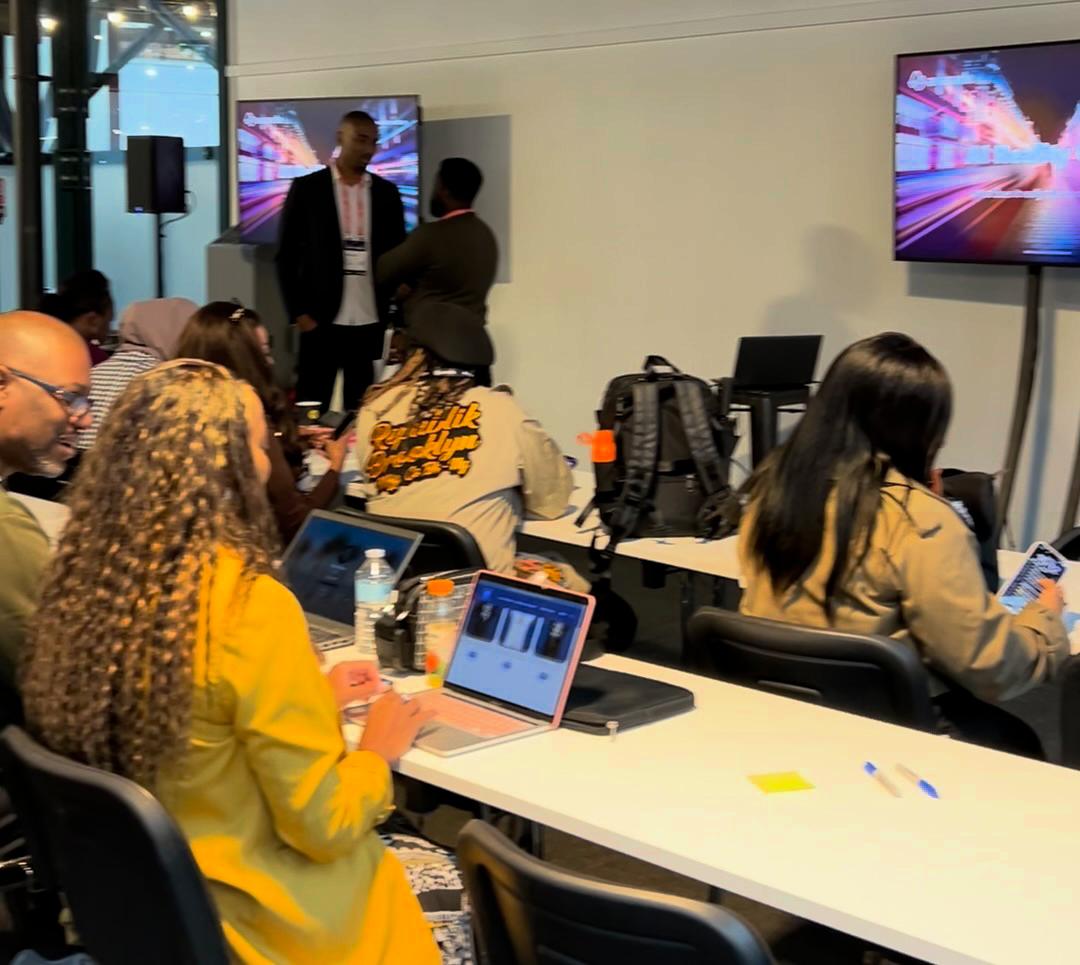
My final session of the day was Avanade’s interactive AI Reality Check workshop held in the Workshop Zone. The workshop was designed around a highly practical question: what separates AI ambition from AI impact?
Rather than treating access to AI technology as transformation in itself, the workshop was positioned around understanding organisational readiness, challenging assumptions and identifying practical experiments with clear measures of success.
The Avanade team including Rioh-Burke Derby, Ainsley Bell and Afsheen Sajid facilitated this hugely engaging and well attended workshop.
Attendees completed round-table activities that walked through solving actual industry related NHS use cases and scenarios using AI. Participants works in groups, and worked on requirements assessments, designing AI enabled solutions using PoC, MVP based approaches before going to production.
Cross-cutting reflections
Looking back across all the sessions I attended, what interests me most is how often apparently different conversations converged on similar organisational questions.
1. AI transformation is not really about the AI
Across several sessions, the harder questions were about everything surrounding the technology.
- What problem are we solving?
- What does the operating model look like?
- Is our knowledge properly architected?
- Who owns the outcome?
- What happens to the capacity we create?
- How do people work differently as a result?
Those are architecture and organisational-design questions as much as technology questions.
2. Human judgement becomes more valuable, not less
A recurring theme in my notes was human judgement. Whether discussing careers, enterprise AI adoption or cyber security, the question was rarely about removing people altogether.
It was about understanding where technology creates value and where human judgement, critical thinking, accountability, communication and experience remain essential.
3. Responsible adoption requires visibility and accountability
Trust appeared repeatedly in different forms.
- In enterprise AI, can we understand what an agent has done and undo it when necessary?
- In cyber security, do we have enough visibility and observability to understand what is happening?
- In organisational adoption, who owns the outcome?
Different problems, but closely related questions. If organisations cannot see, understand and explain what their technology is doing, trust becomes difficult to sustain.
4. Diversity matters to technology outcomes
This theme was present from the opening keynote and resurfaced later when thinking about leadership, AI adoption and the people sitting around organisational decision-making tables.
The important point for me is that representation is not separate from technology strategy. The people shaping technology influence what gets built, what problems are prioritised, what assumptions are accepted and whose experiences are represented.
5. AI adoption ultimately requires redesigning work
Perhaps my strongest takeaway from the day was this: Do not limit AI to making today’s work faster.
Ask more fundamental questions.
- What work should change?
- What work should disappear?
- Where should human judgement remain?
- What previously impossible opportunities are now achievable?
- What do we do with the capacity AI creates?
- And what value are we ultimately creating for customers and stakeholders?
Those feel like much more valuable questions than simply asking which AI tool we should deploy next.
My key takeaways from the day
If I had to reduce the day to a handful of ideas, these are the ones I would keep:
- Start with the problem, not AI. Define the outcome before choosing the technology.
- Architecture extends beyond technology. Knowledge, governance, operating models, accountability and people all influence whether AI actually works at scale.
- Fix the process before automating it. Applying AI to a poor process does not automatically transform it.
- Think about the capacity AI creates. Productivity only becomes valuable when organisations decide intentionally what to do with the capacity released.
- Invest in human capability alongside AI capability. Judgement, communication, curiosity, business context and relationships will continue to differentiate people.
- Responsible AI and cyber security require visibility and accountability. Trust needs mechanisms behind it.
- Representation matters. Diverse perspectives around the decision-making table help organisations build technology that works for a broader range of people.
- Do not wait until you feel completely ready. Technology will continue moving. Careers will continue changing. Learn, experiment, build relationships and keep moving.
Closing thoughts and Next steps
BTF 2026 gave me plenty to think about. We often talk about AI transformation as though the fundamental challenge is access to better models, tools or computing power.
My experince from the day tell a slightly different story. The harder questions concern how we organise around the technology.
- How do we redesign work?
- How do we maintain trust?
- How do we build careers that evolve with technology?
- How do we ensure the right voices are around the table?
- How do we secure increasingly complex systems?
- And, ultimately, what outcomes are we trying to create?
Technology will continue to evolve quickly. Our challenge is to make sure that the organisations, careers, governance and human capabilities around it evolve too.
If you attended Black Tech Fest 2026, I would be interested to hear what stood out for you. And if you are working through similar questions around AI adoption in your organisation, let me know which of these challenges resonates most.
Stay tuned for future posts, and feel free to leave us your comments and feedback as well.