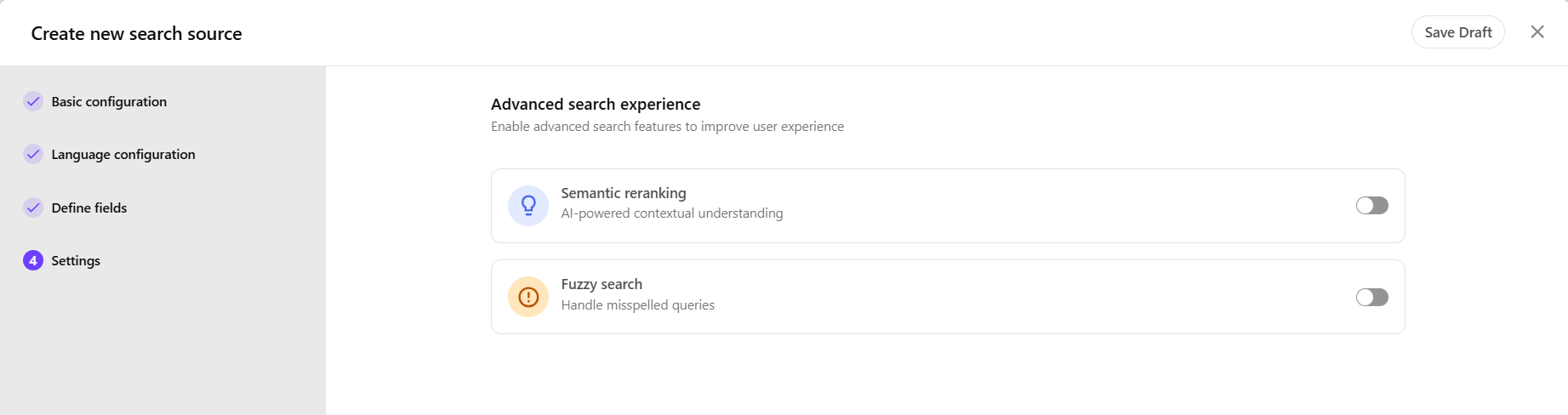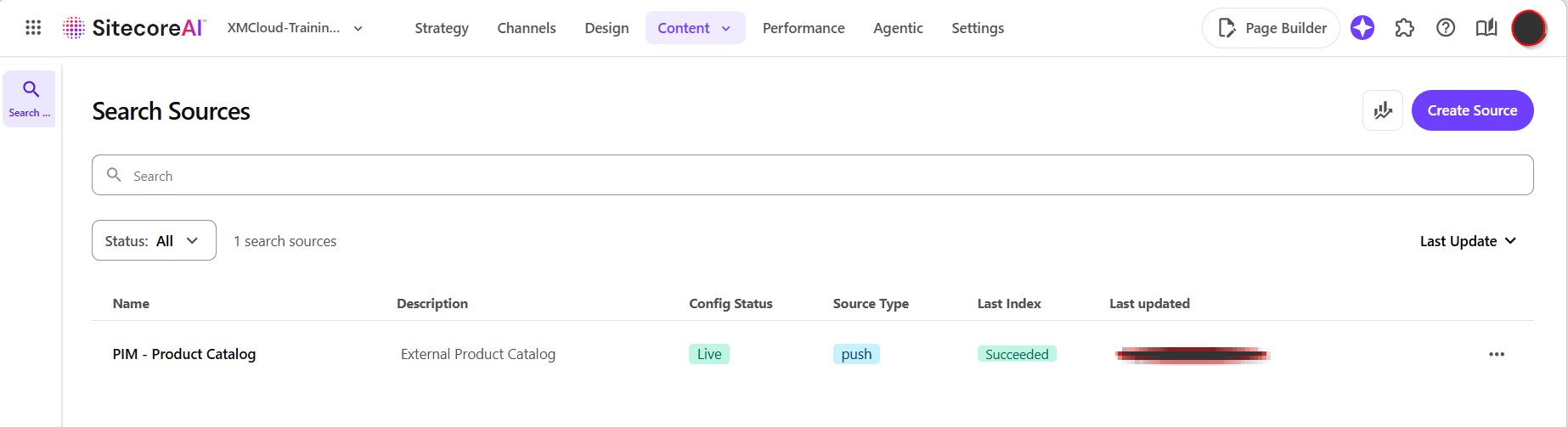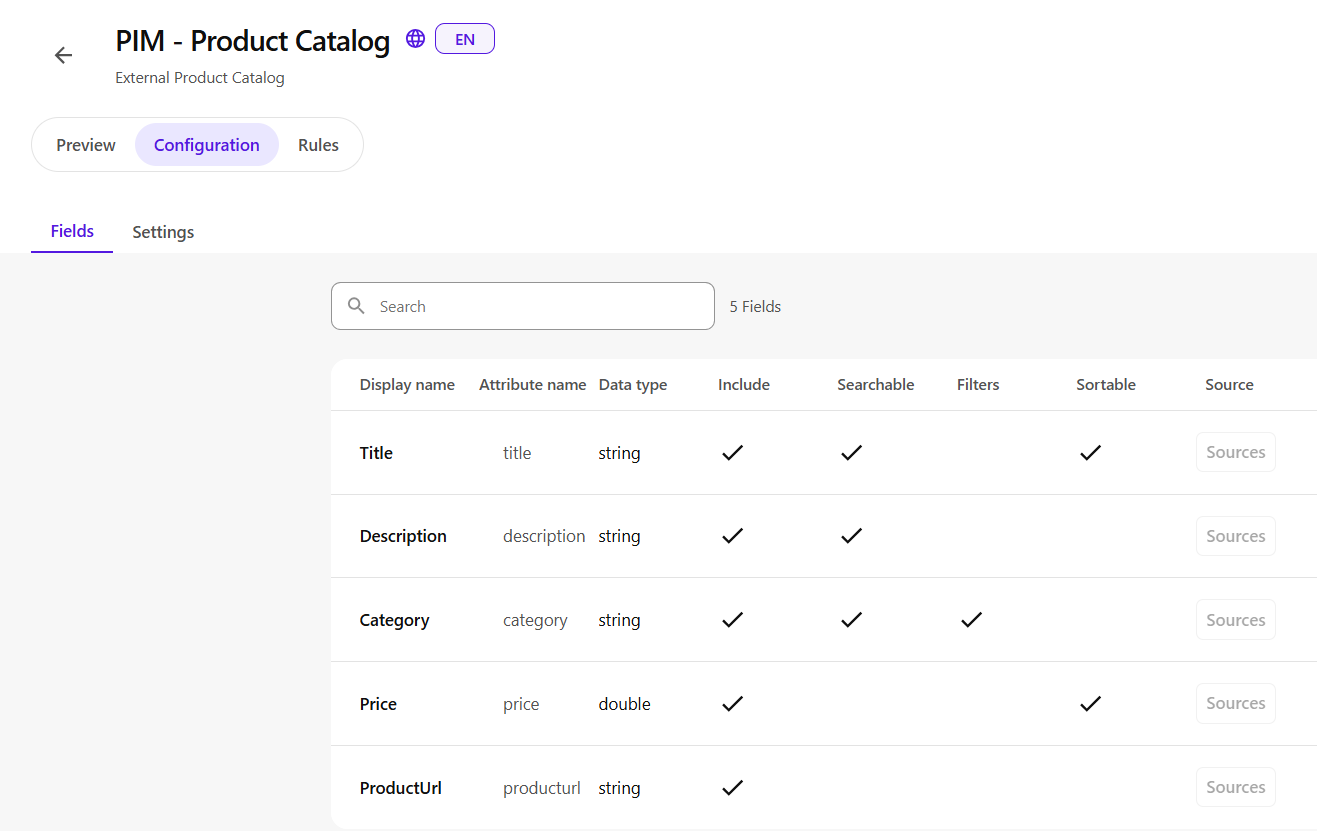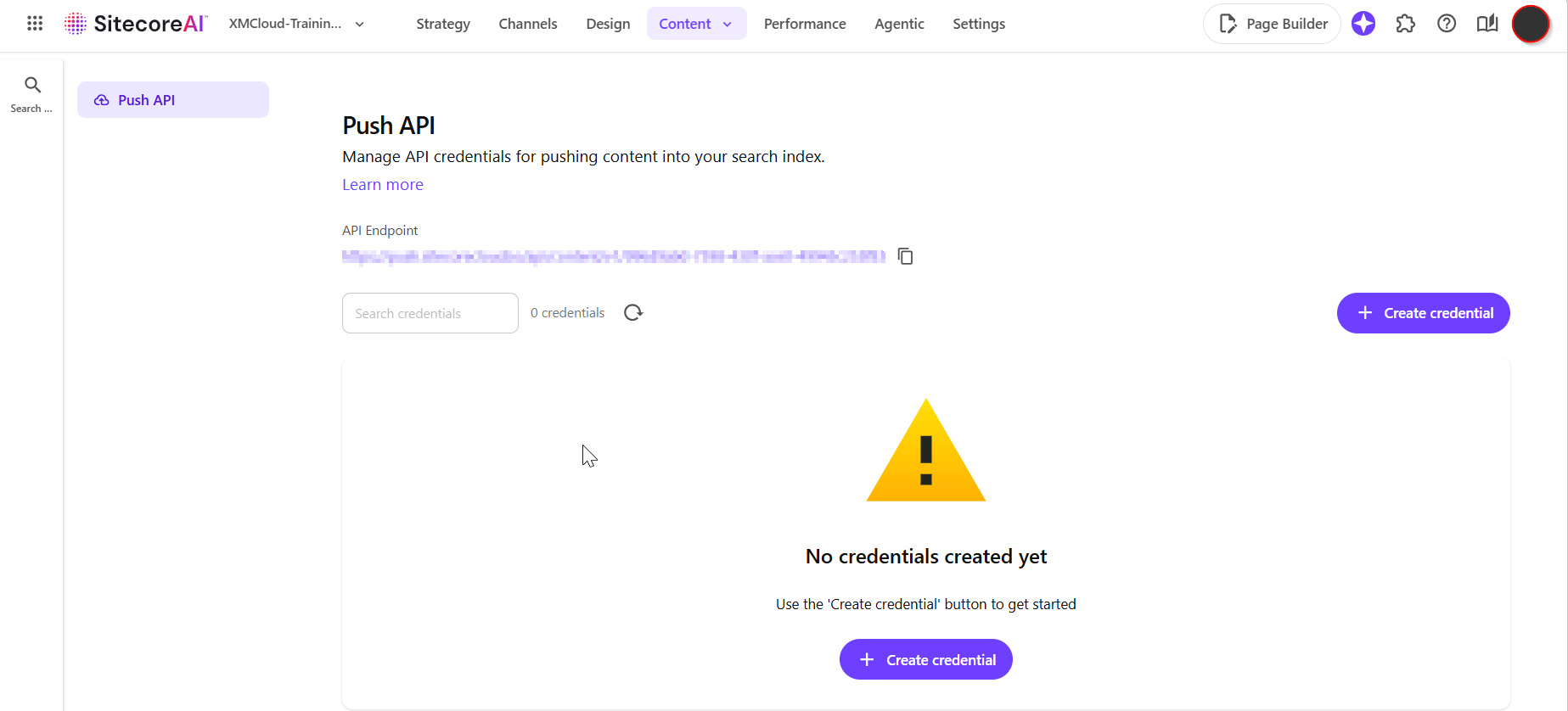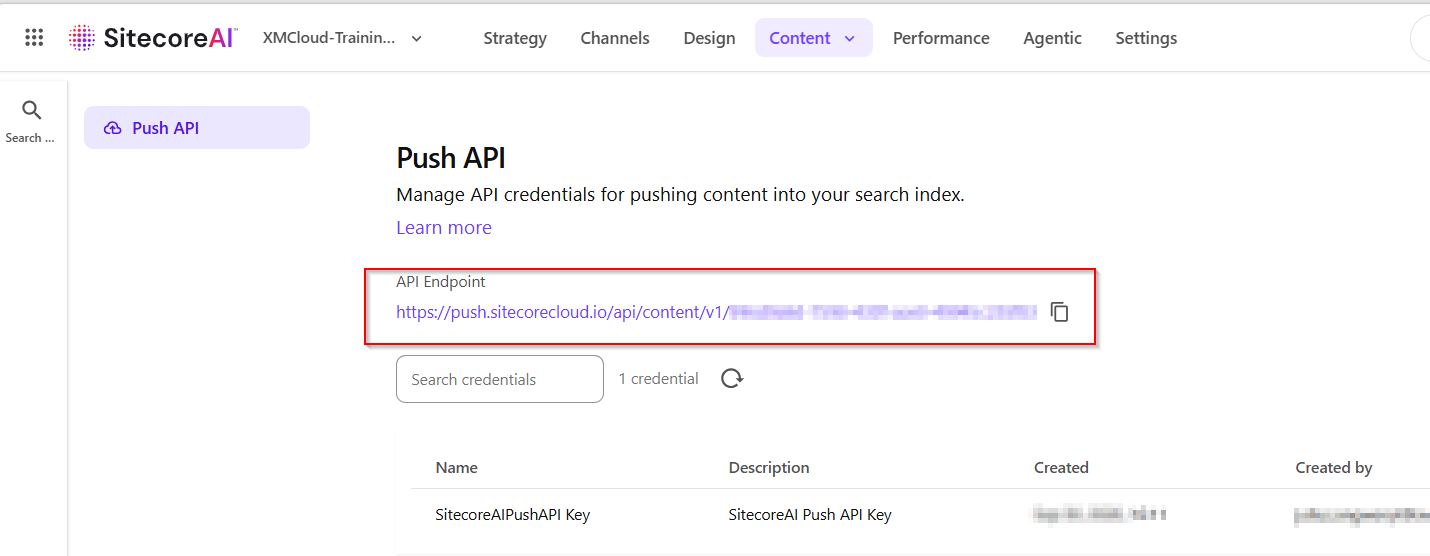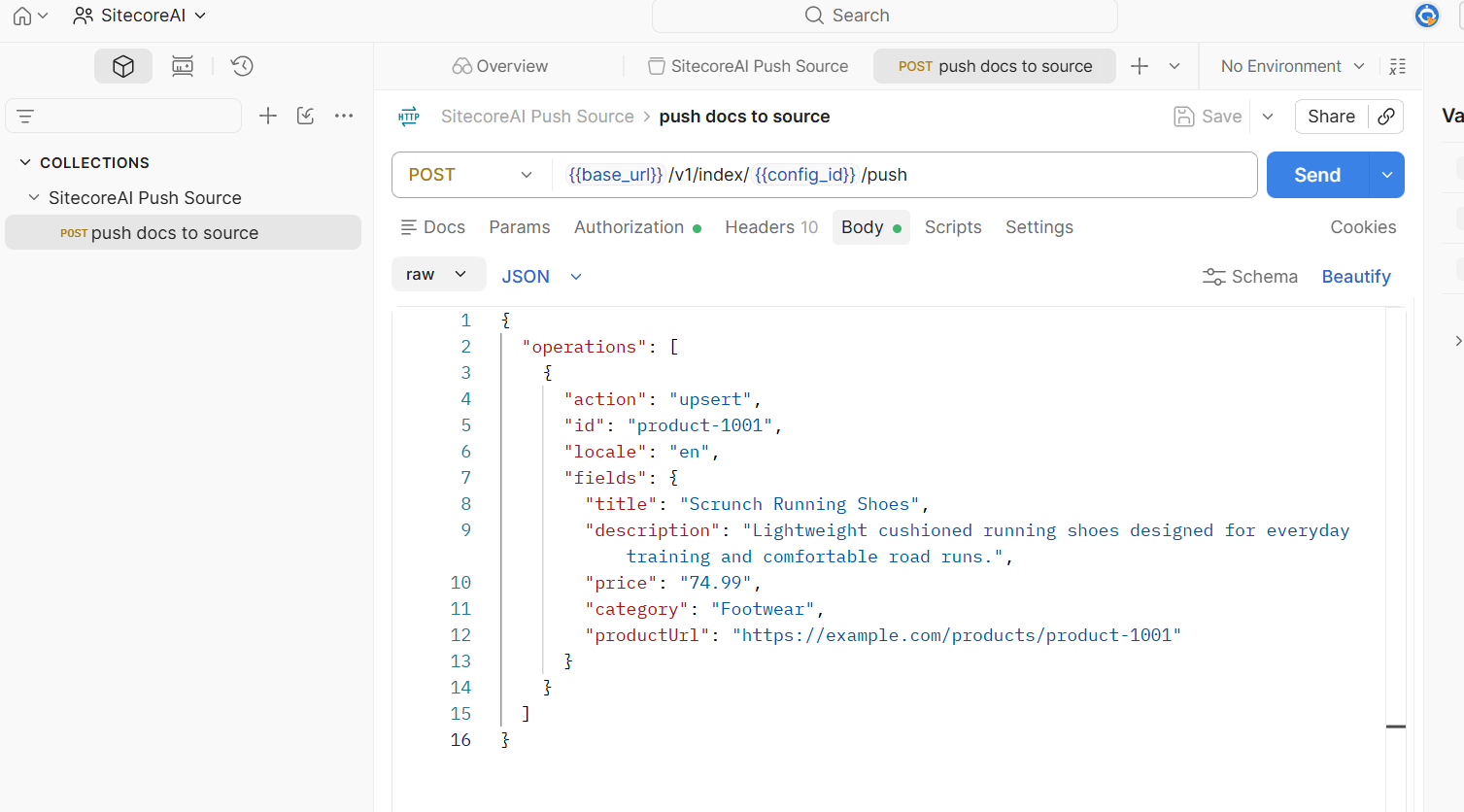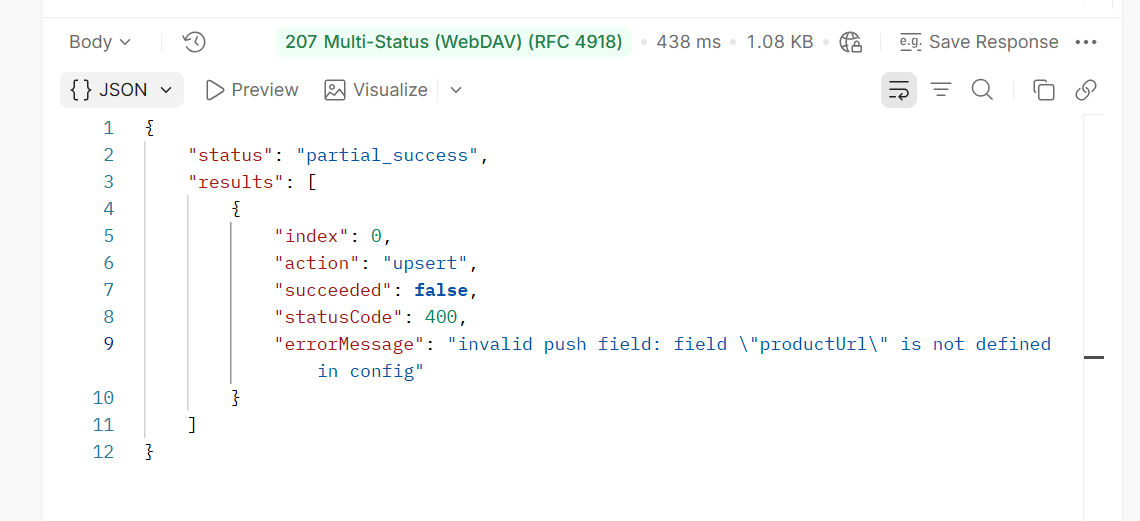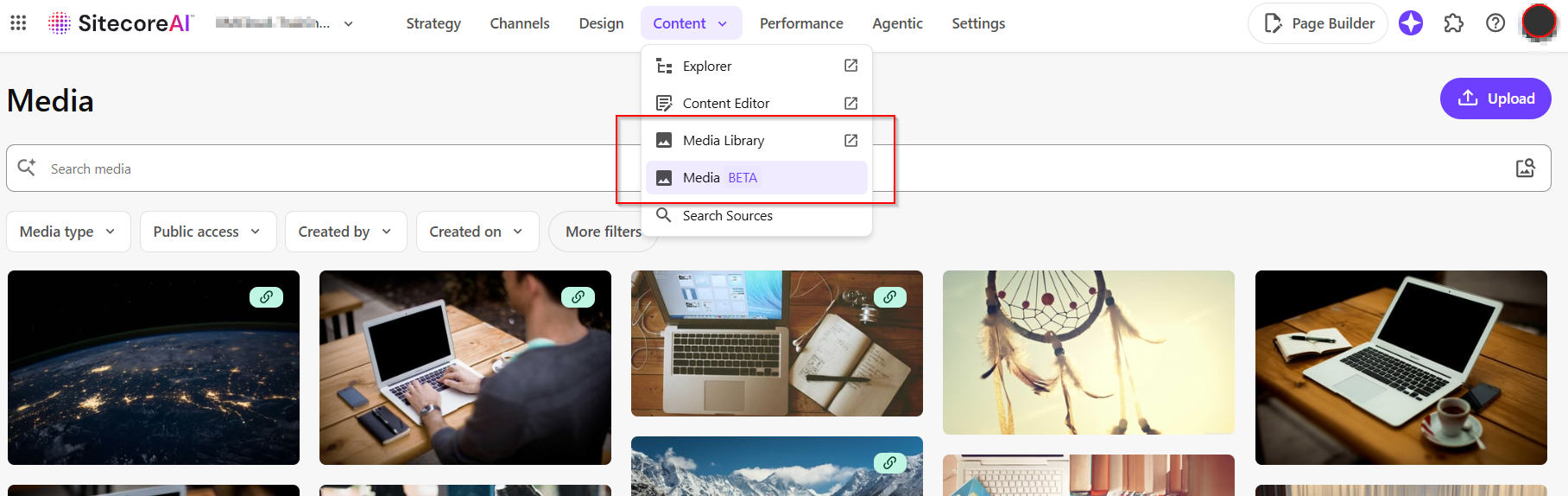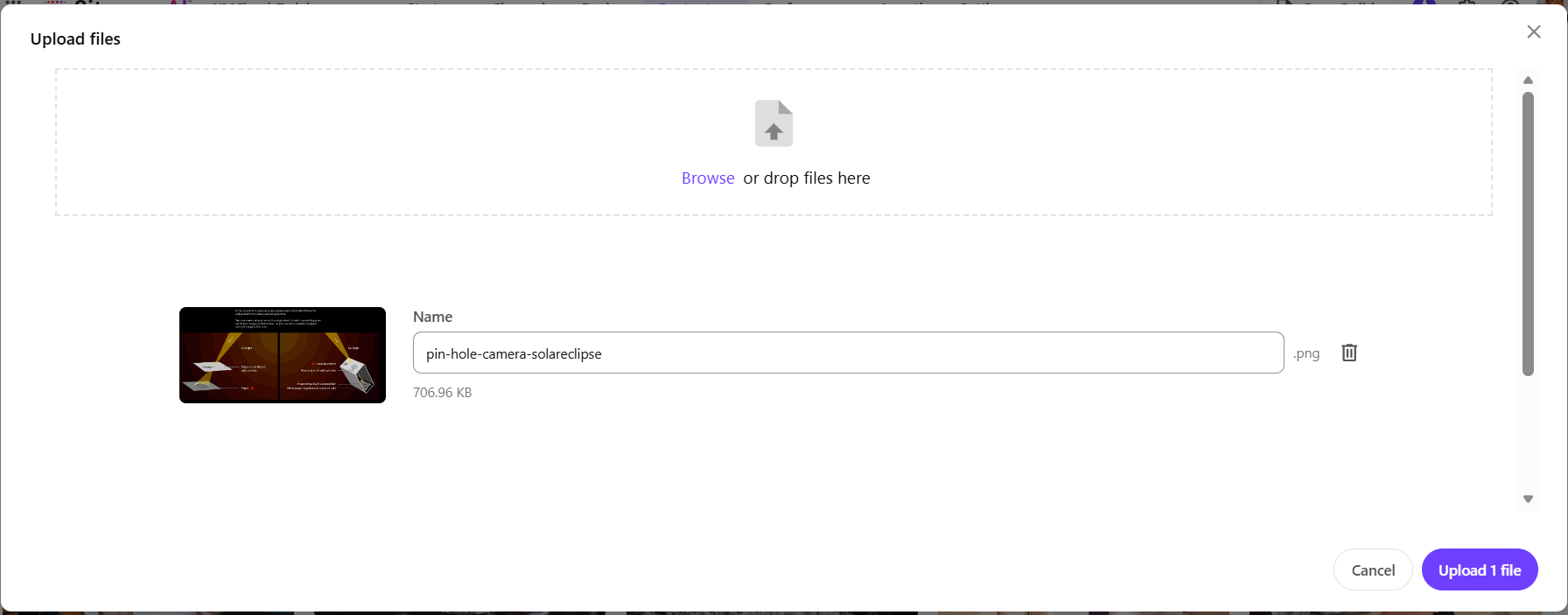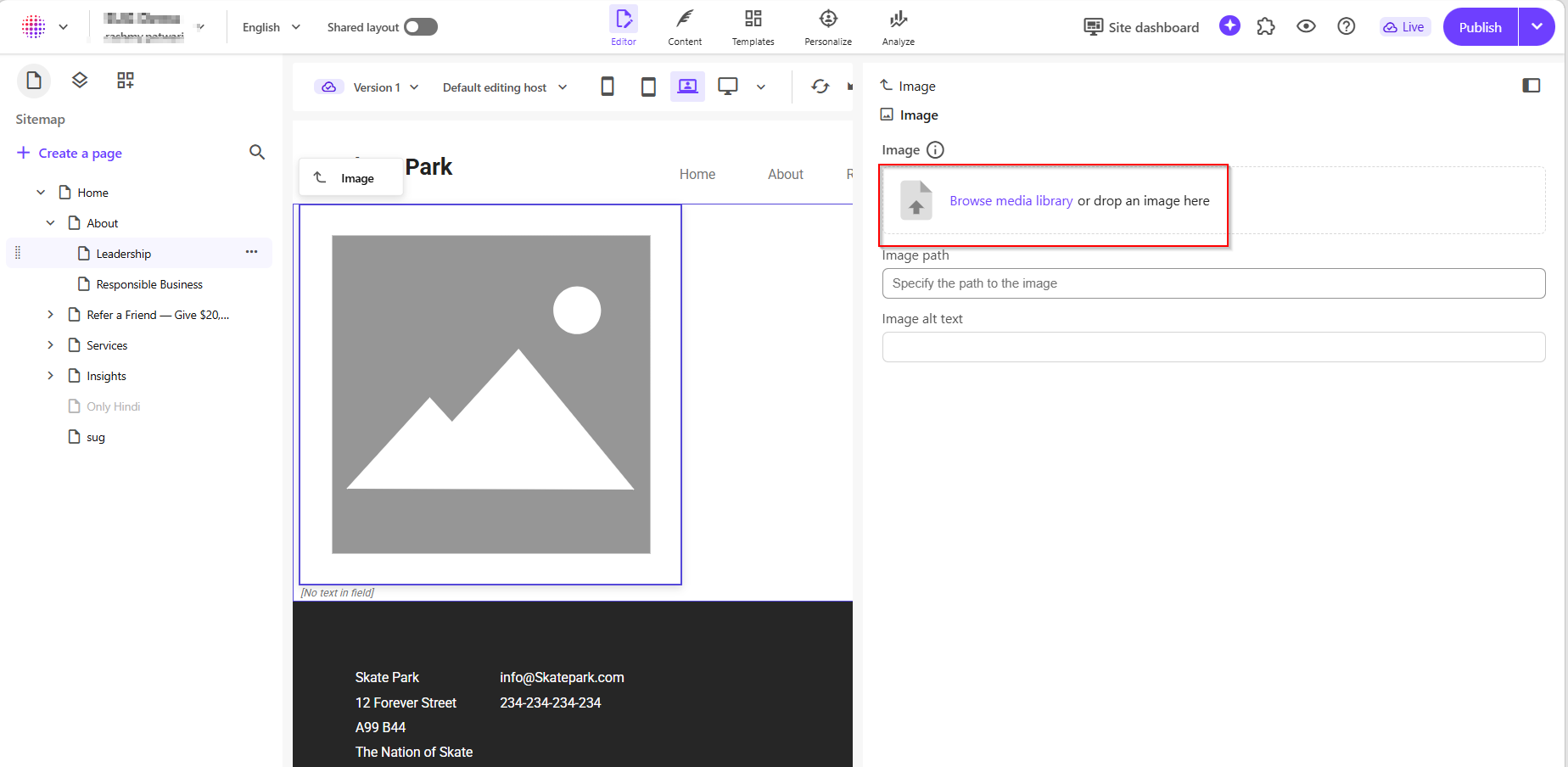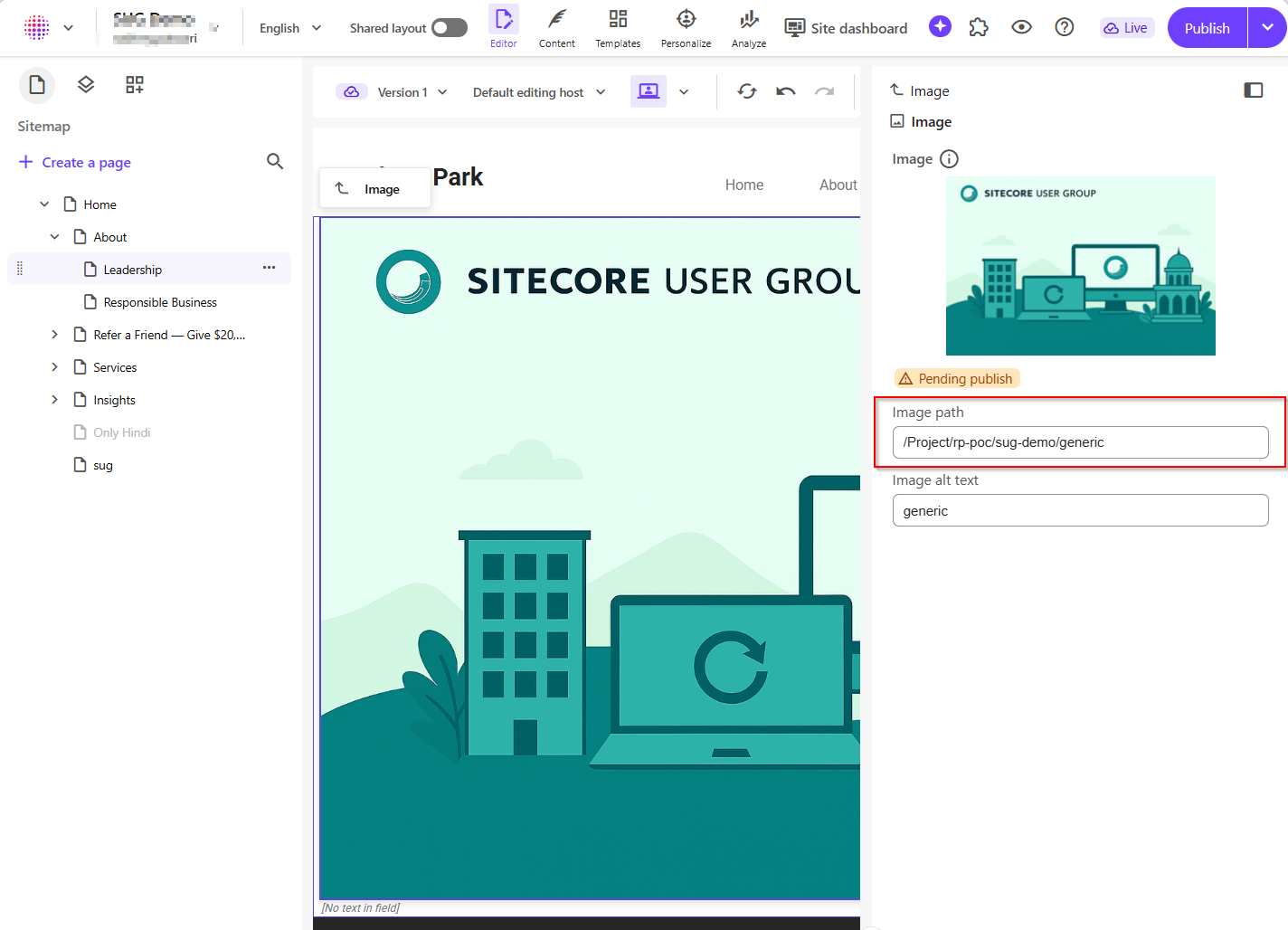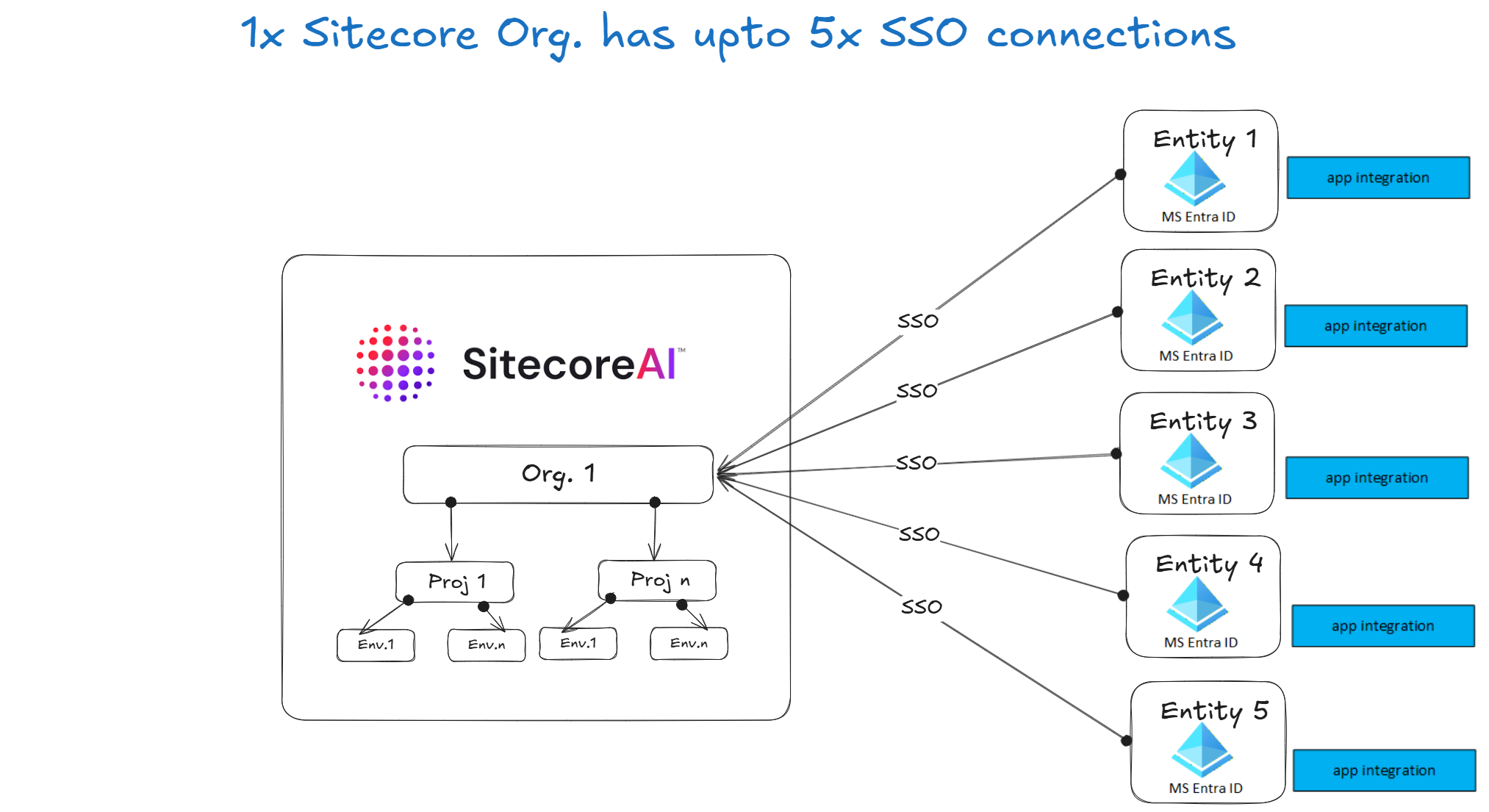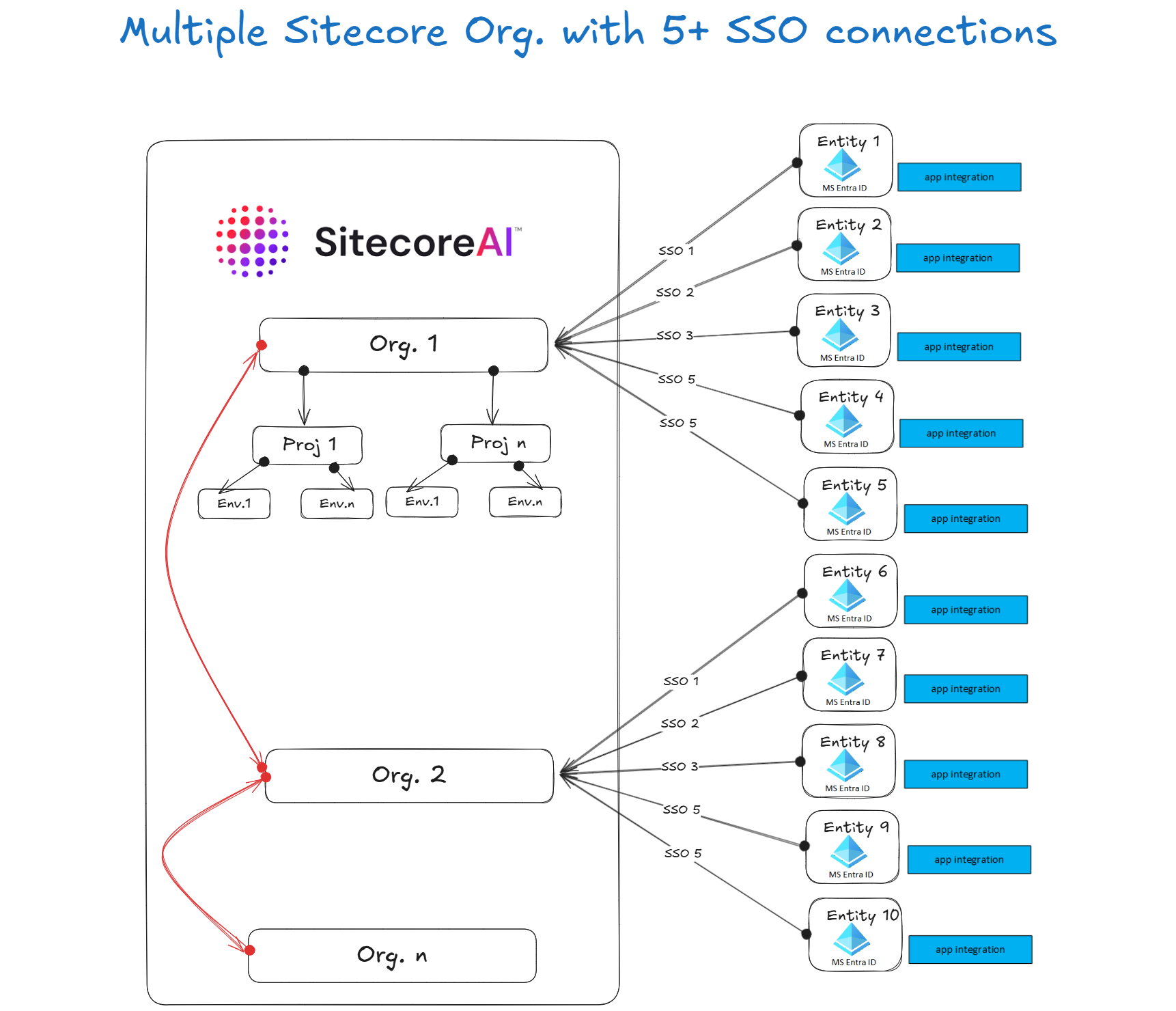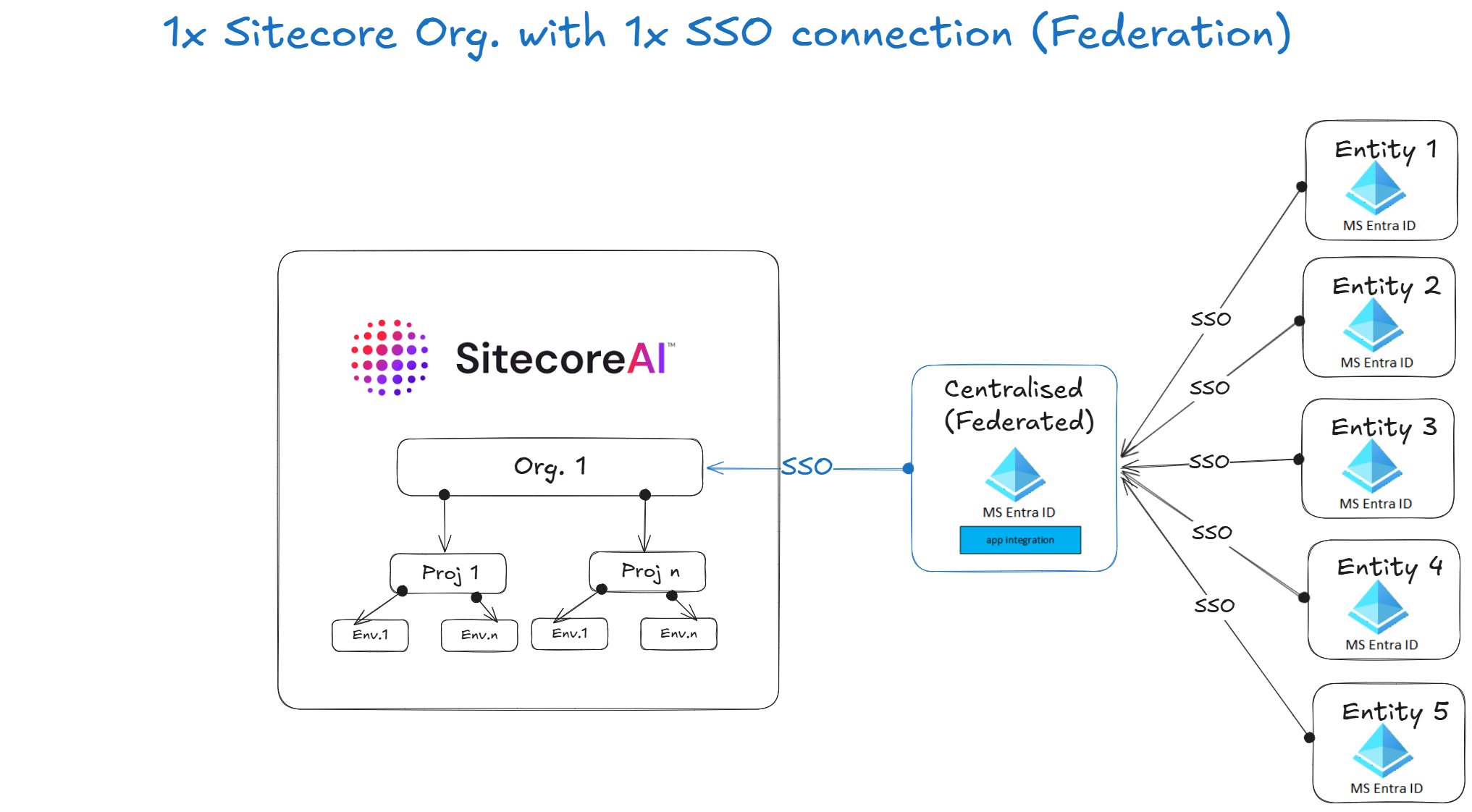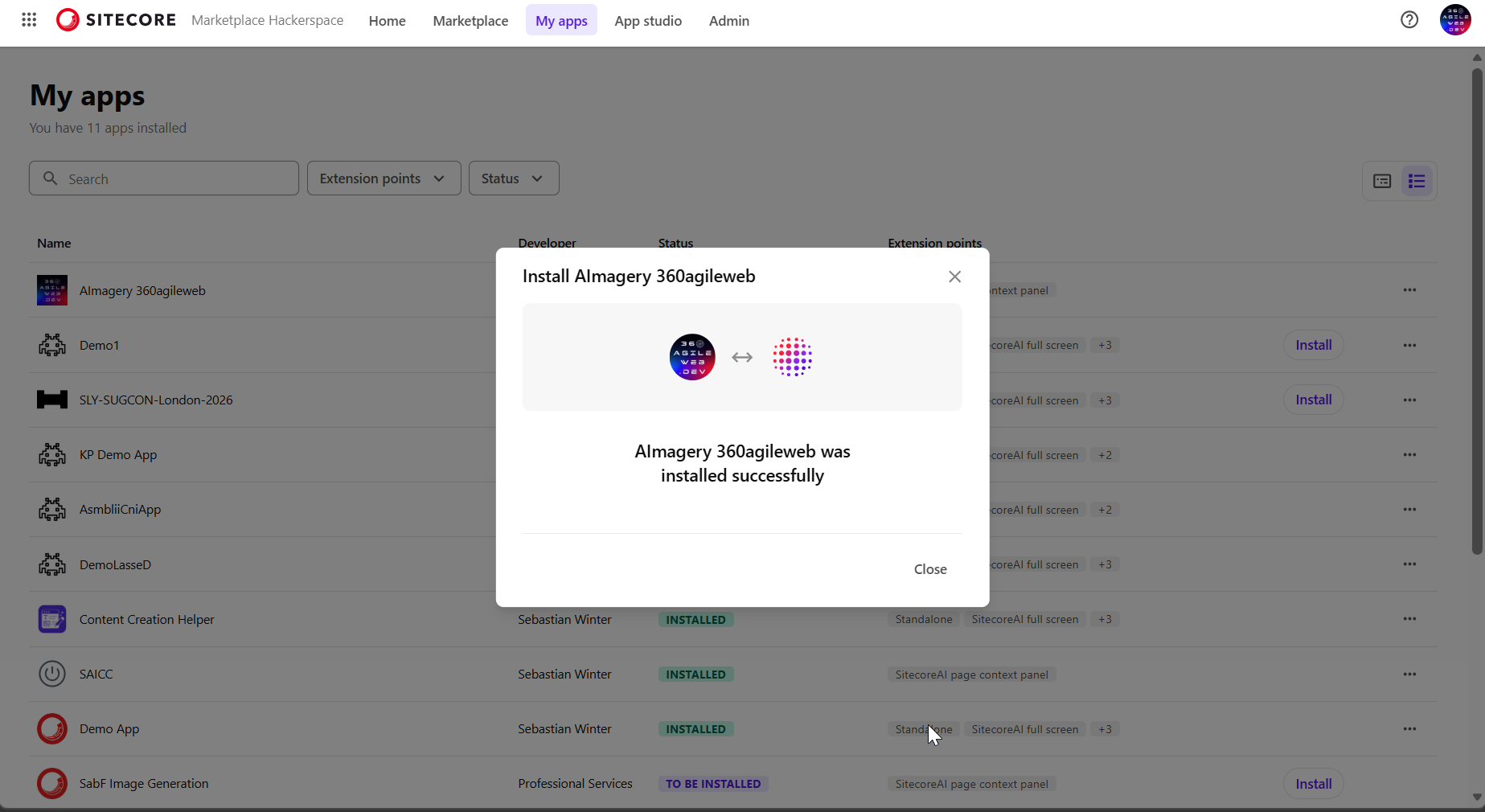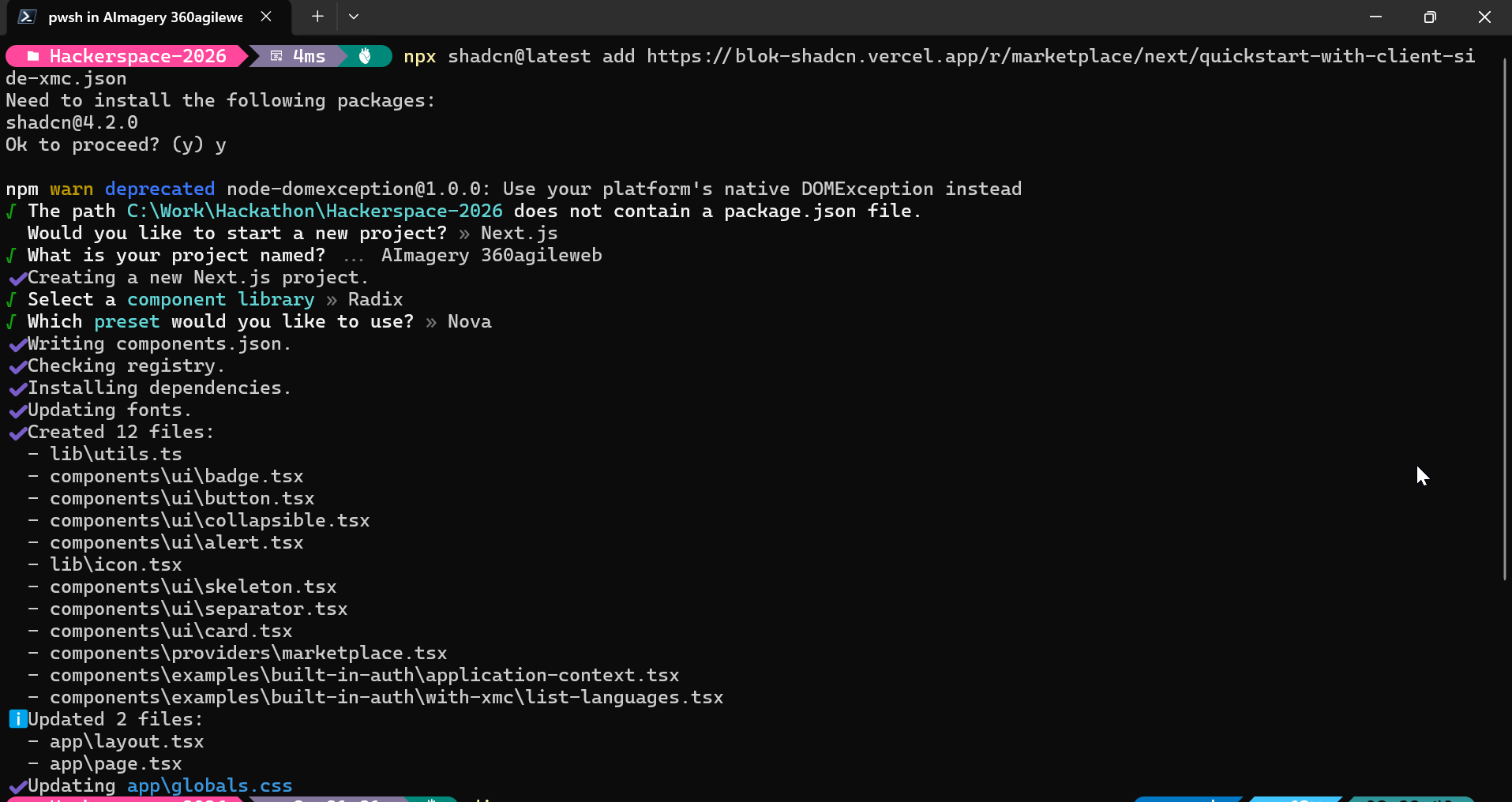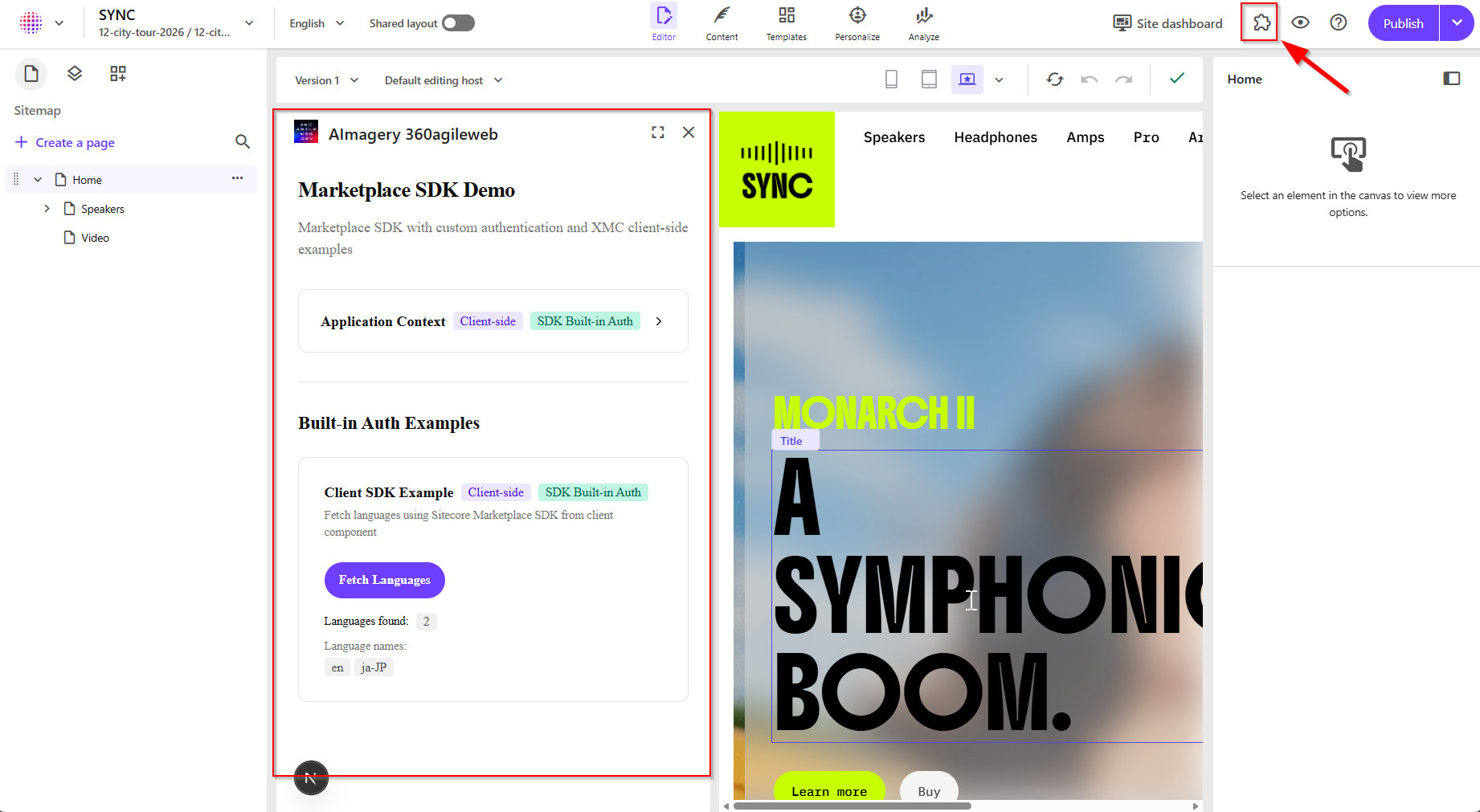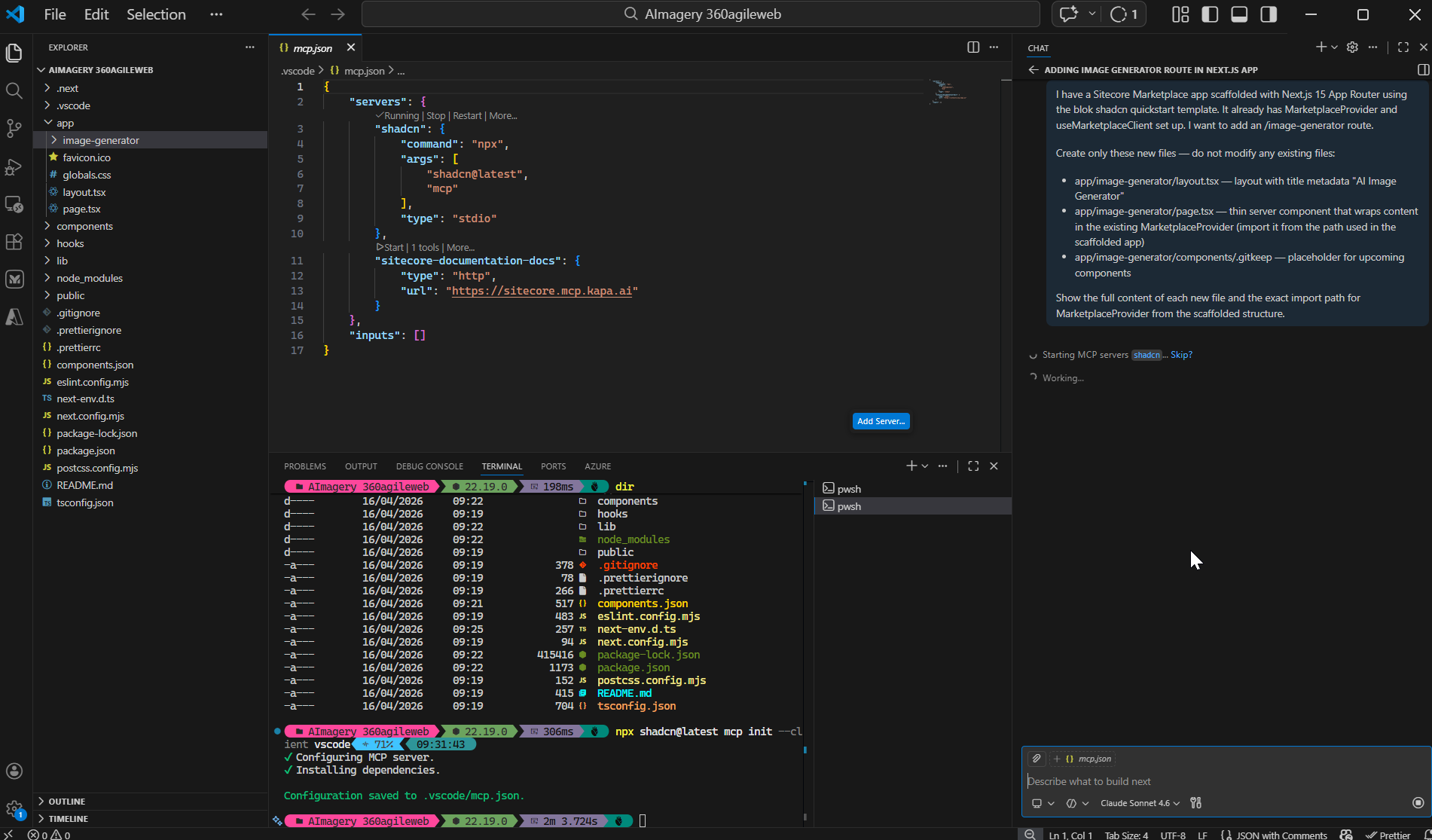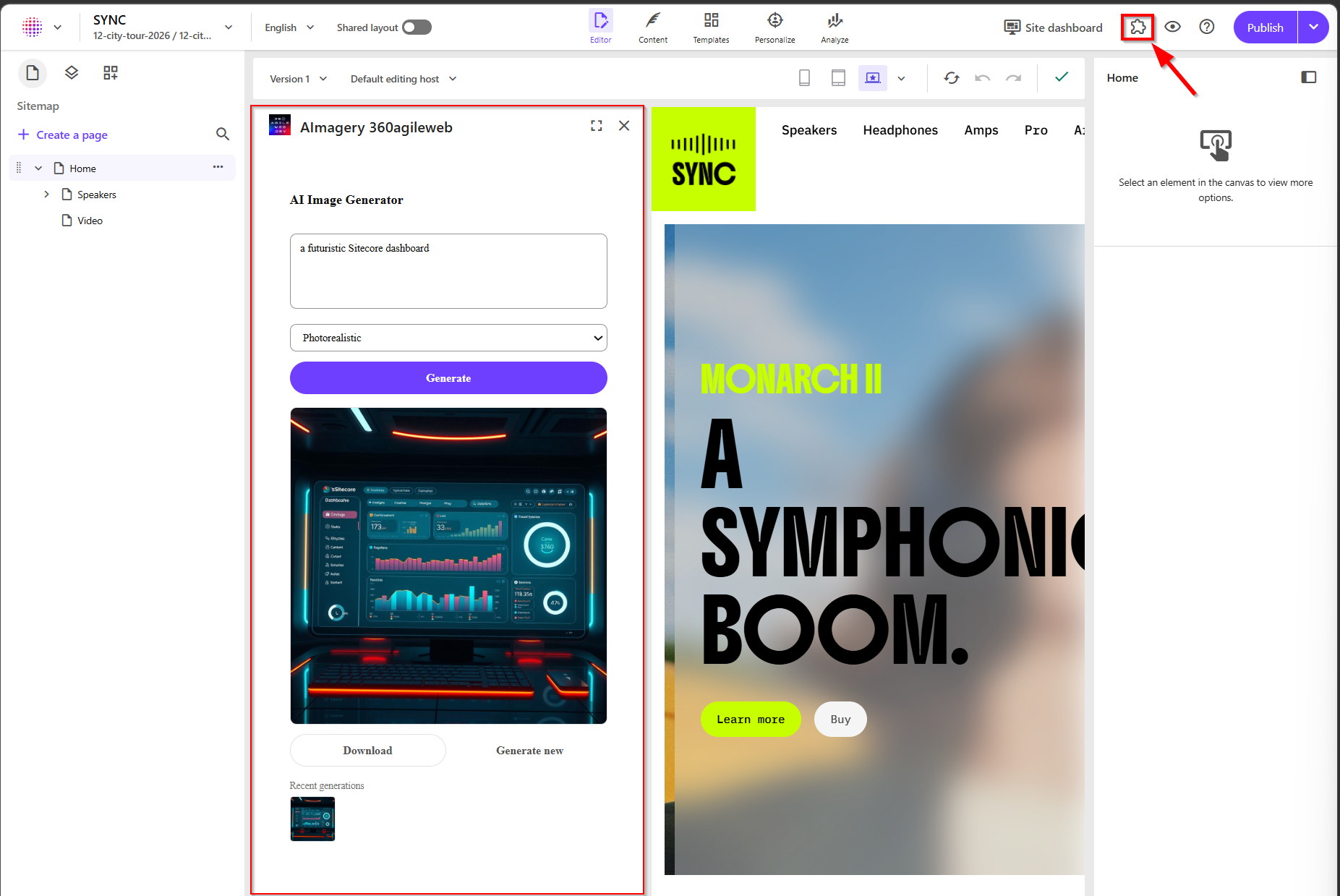
Having successfully completed all the vibecoding steps, I am sharing the full code listing of a fully functional AI-powered image generator. This is based on Next.js and Sitecore Marketplace SDK.
Below are some of the screenshots.
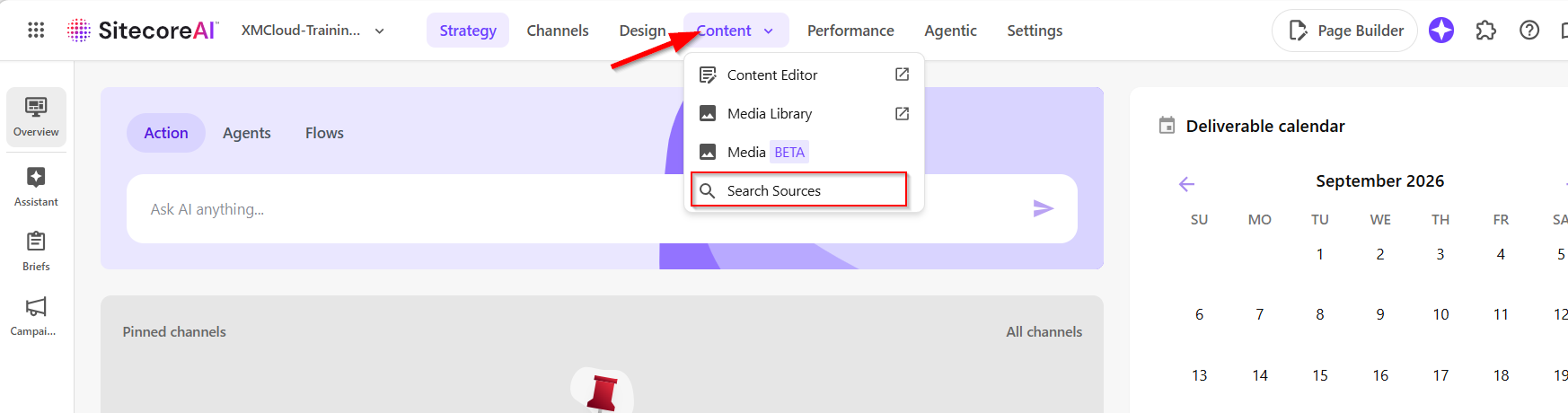
Installing Marketplace app
Scaffold Marketplace app in local dev
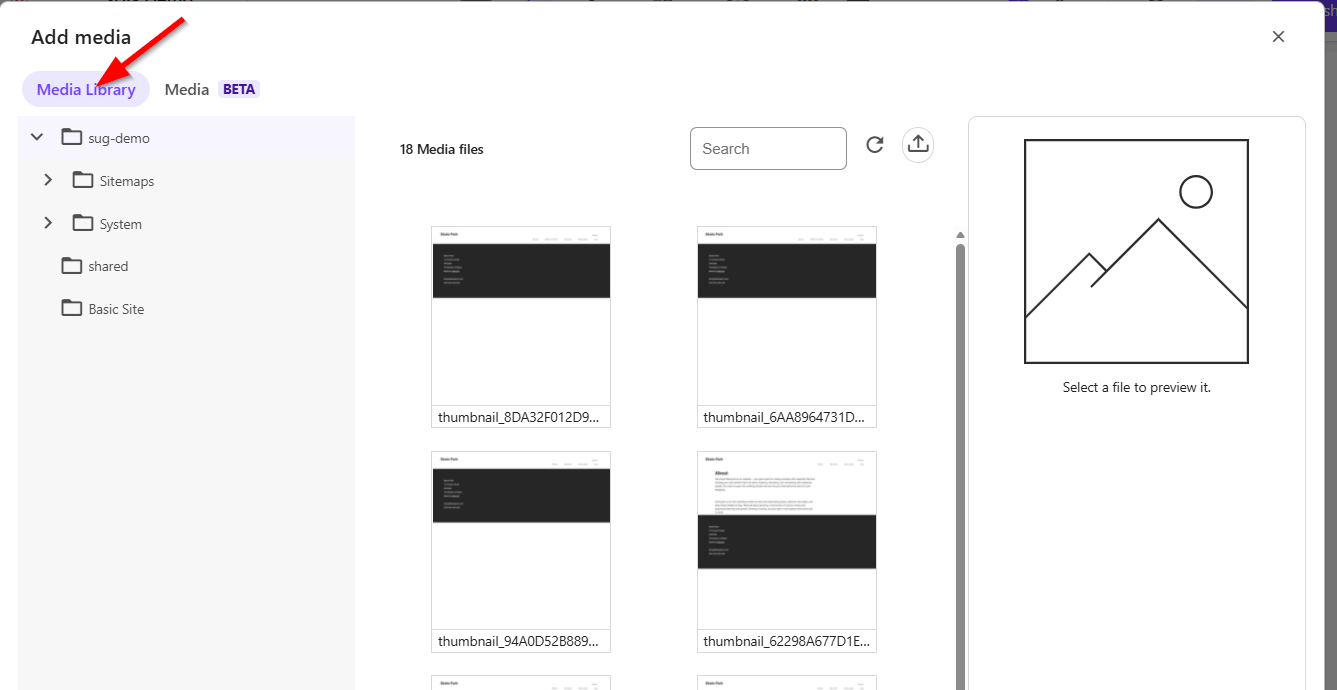
Vanilla Marketplace app running in Page Editor
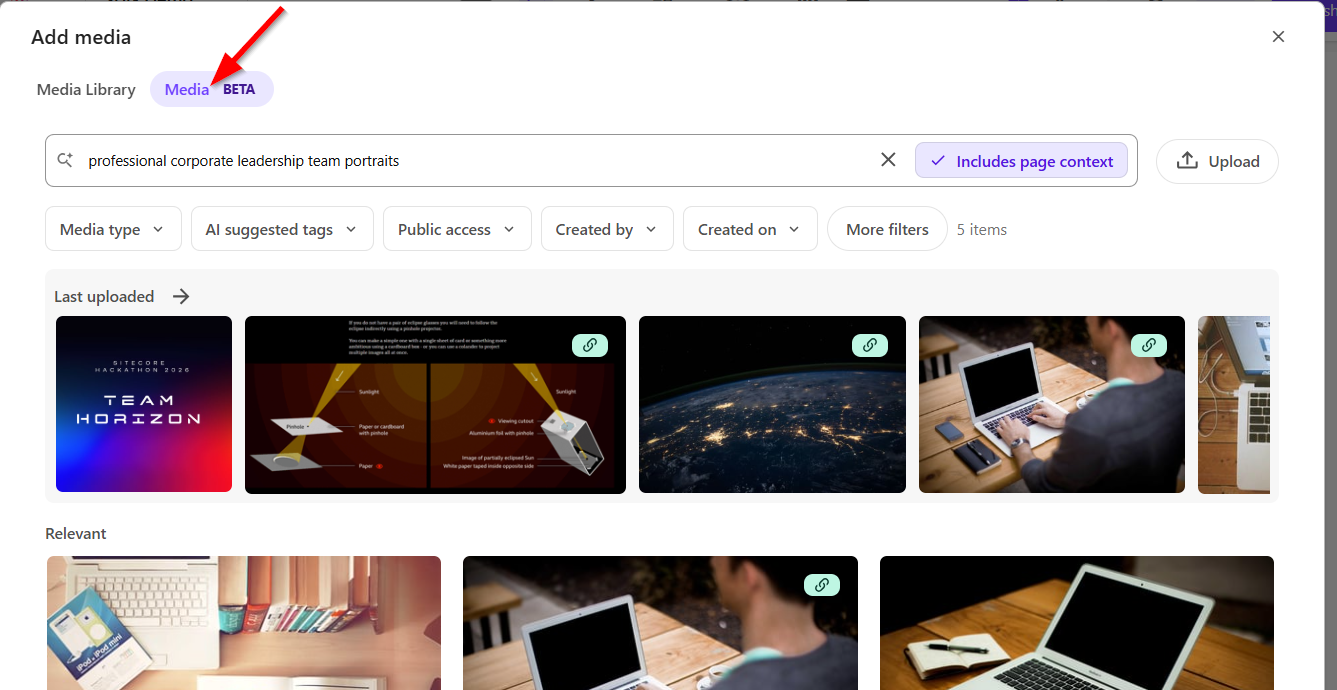
Vibe Coding in VS Code
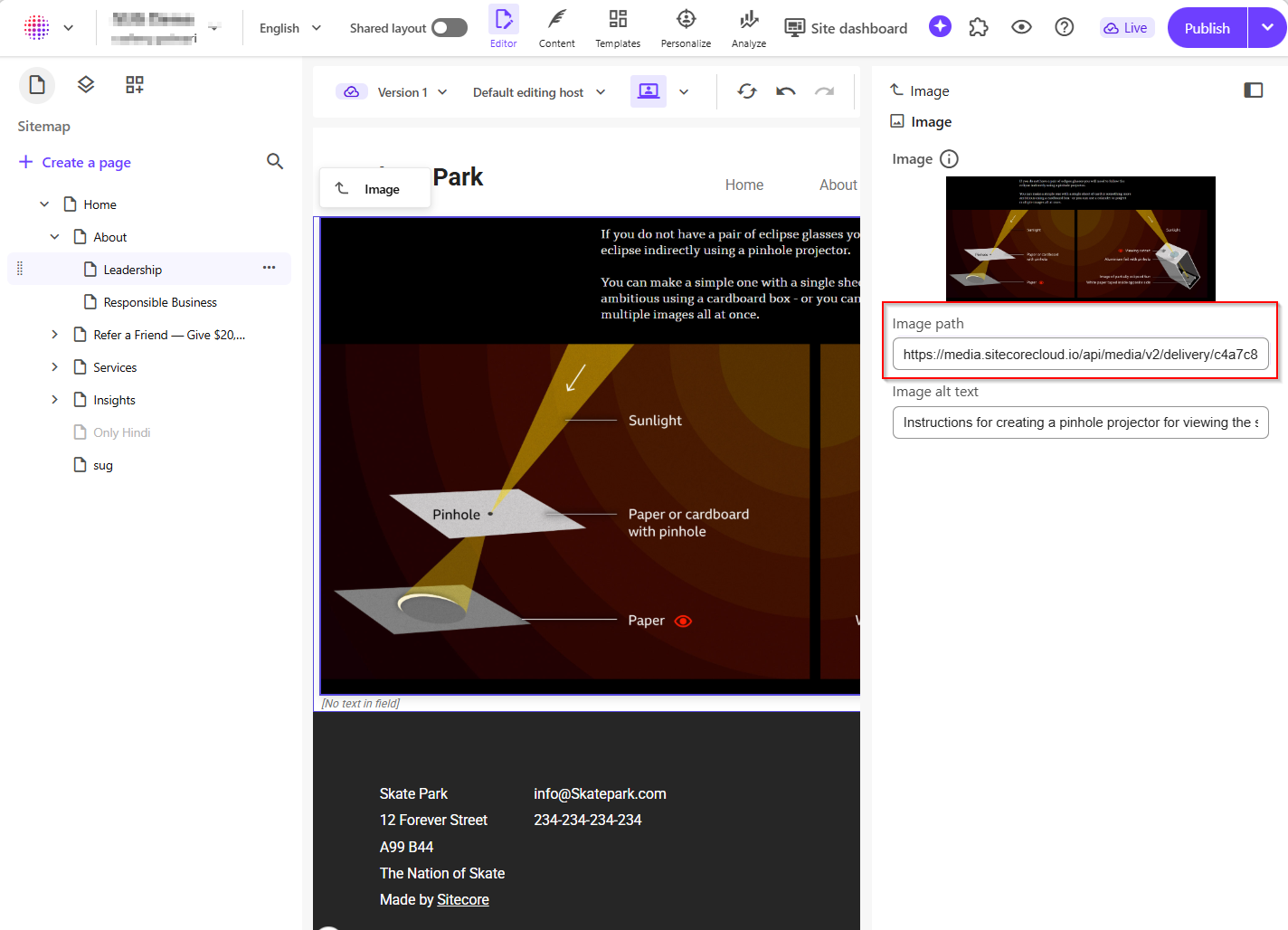
Final result -Image generator in Page Editor
You can now review, download or clone the full working source code from my GitHub Repository
Next steps
Stay tuned for future posts, feel free to leave us comments and feedback as well.
The Agentic studio in SitecoreAI brings human-AI collaboration into everyday marketing work, embedding AI directly into marketing workflows. Sitecore are doing a fantastic job behind the scenes to evolve, enhance and add new capabilities to SitecoreAI’s Agentic Studio.
With the March 30 2026 release, the Agentic studio focuses on working directly with your content, expanding how agents can be built and configured, and supporting larger workflows across multiple items and steps.
This release caught my eye, and I decided to dig deep into the nature of the updates to the agents, and try them first-hand with a practical agent.
In this blog post, I will be creating an agent using SitecoreAI’s Agentic studio,complete with screenshots for all the key steps involved. In particular, put to test working SitecoreAI pages and calling external APIs.
What are they key updates to agents?
You can run agents directly on your content. Agents are structured to work with context, items, and tools as part of your day-to-day workflows. For example, agents can directly work with items like SitcoreAI pages, briefs, artifacts and CSV files
Work with items – agents can run on items like SitecoreAI pages, briefs, artifacts, and CSV files. Agents process selected items across parameters (like languages) to generate outputs for each combination. They also enable content at scale from structured inputs, such as accounts in a CSV.
Use built-in tools and features – chat interfaces across Agentic studio let you set context, skills, MCPs, and tools for each run, giving you more control over how the agent behaves.
You have more flexibility to create and customize your own agents. You can define and configure agents and workflows to match your needs. Below is a summary verbatim from Sitecore release notes:
Create standard agents – define standard agents with instructions, tools, skills, context, and output formats for a flexible, chat-style experience.
Add new workflow actions – create workflow agents that support invoking standard agents, calling external APIs, and invoking Agent API tools.
Manage skills and tools – a Settings page brings together tools, skills, schemas, templates, user management, and job tracking.
Use agent skills – apply built-in agent skills such as campaign planning, competitive analysis, and CSV/text processing, or create your own.
Reuse schemas and templates – JSON schemas and HTML templates are managed globally by admins and reused across agents.
Test workflows – agent workflows can be tested with step-by-step visibility, including timing and error reporting.
Let us now put this to test – create an agent that invokes external API
Below we are going to create an X/Twitter Single Tweet Generator, a workflow agent that you can leverage to post on your X/Twitter.
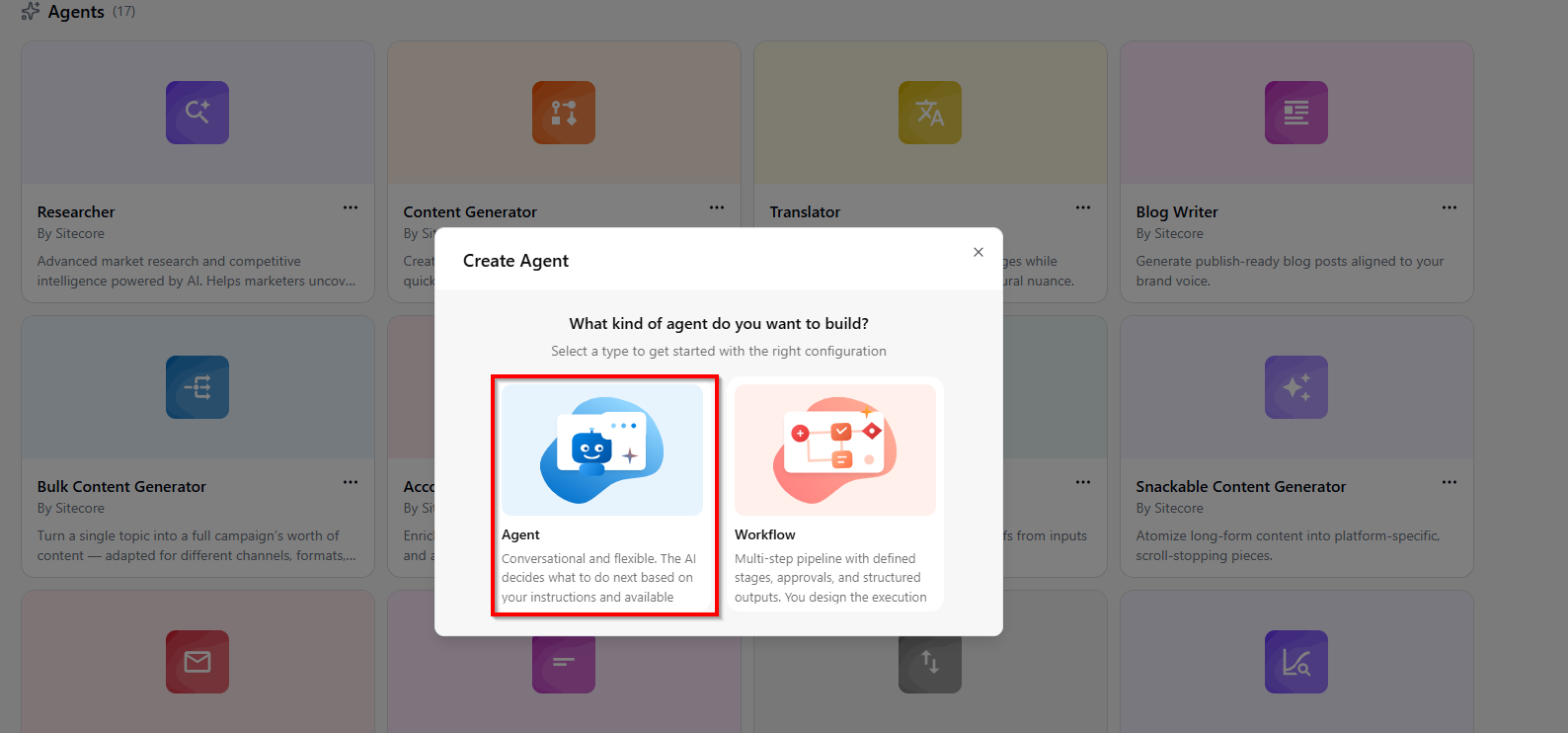
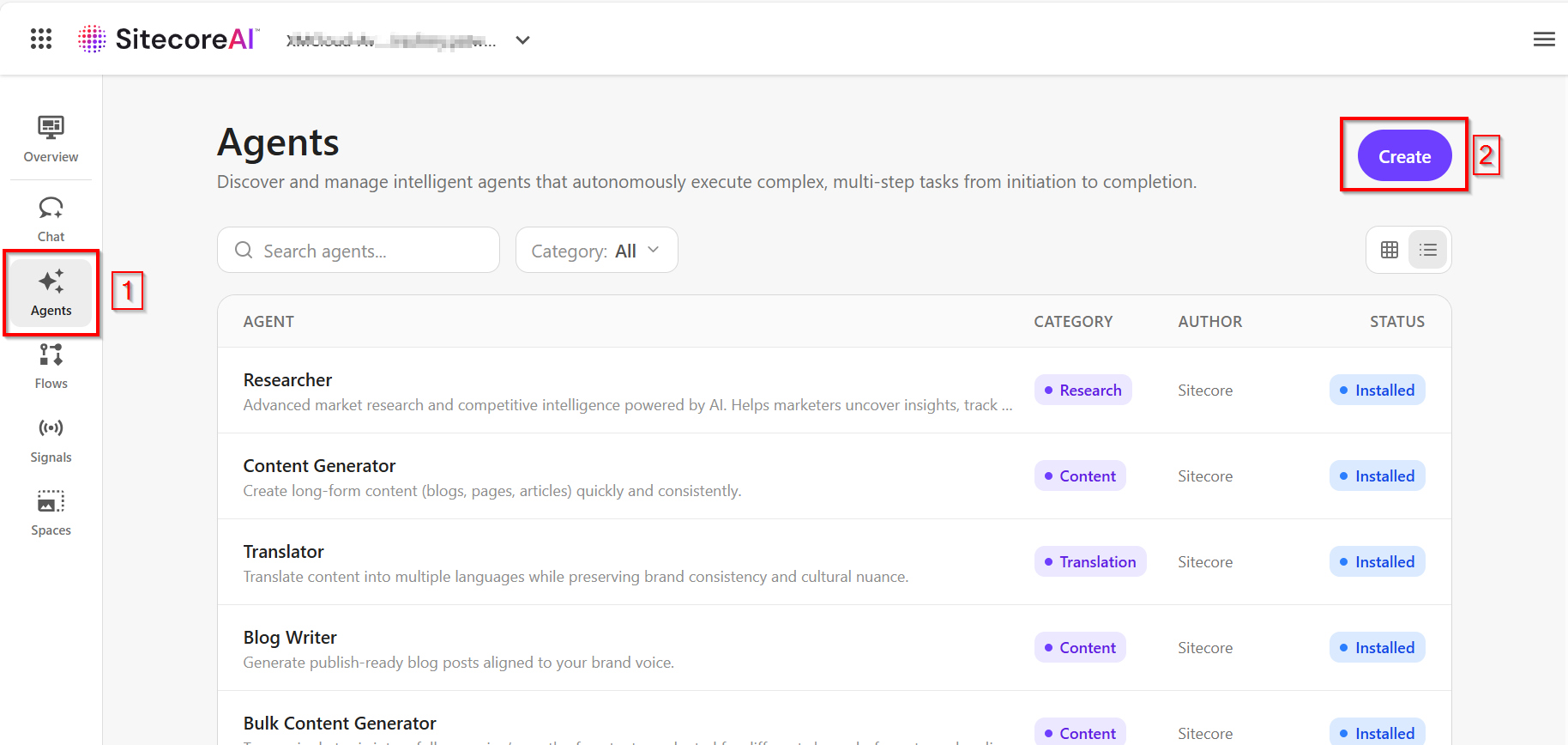
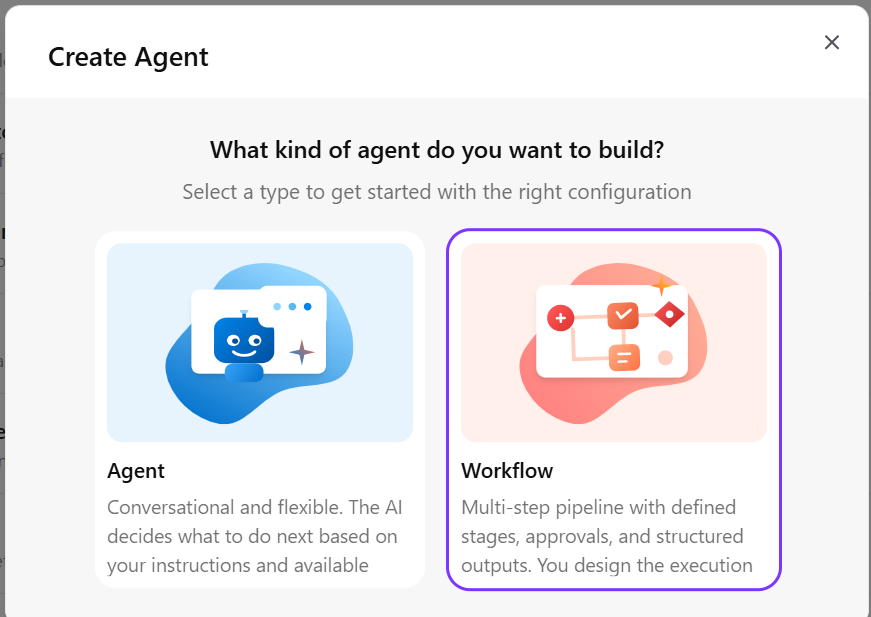
Step 1: In Agentic Studio, click on Create button.
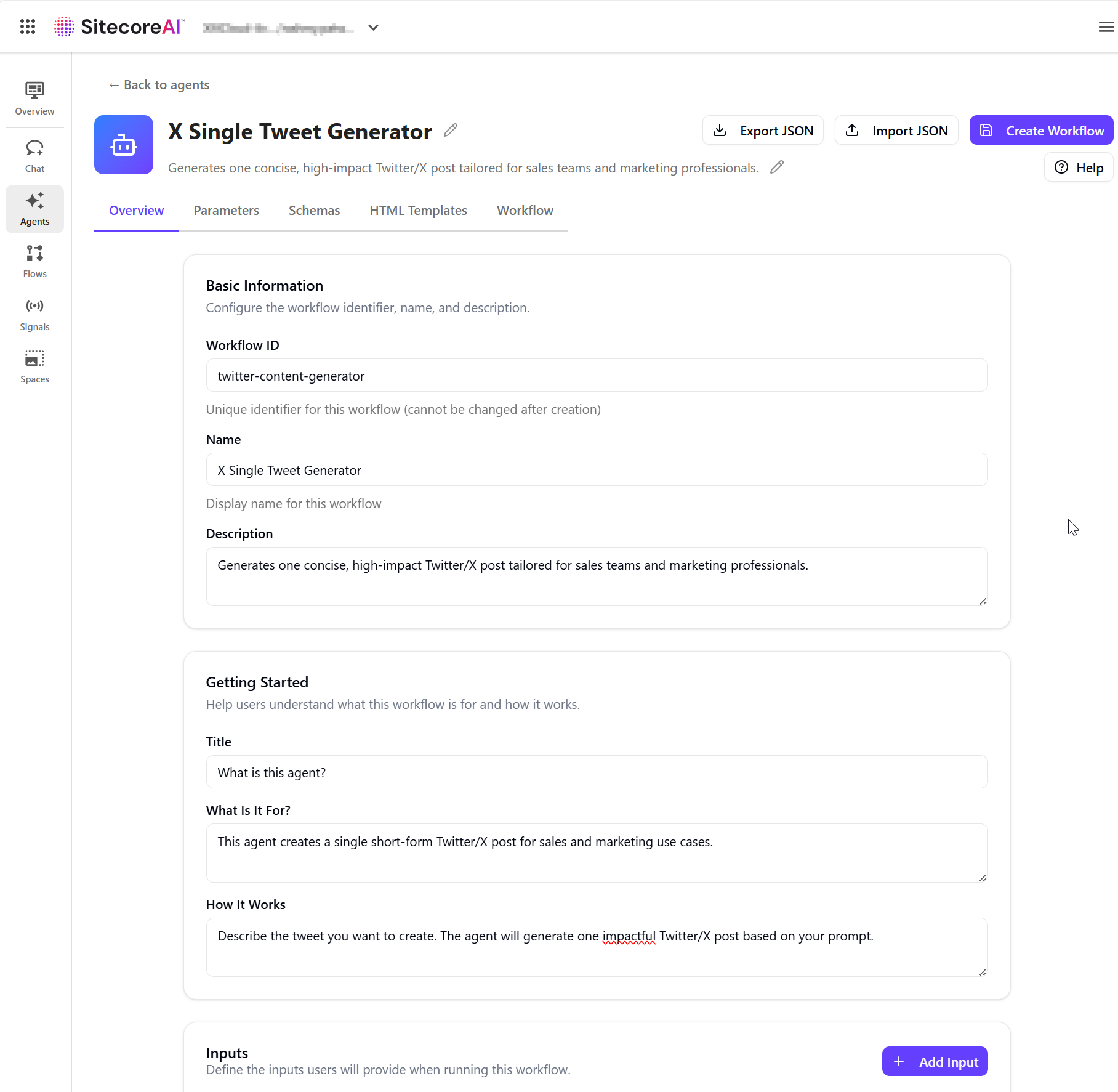
On the New Workflow overview page, specify the workflow agent configuration, as shown below
Workflow ID – Unique identifier for this workflow (cannot be changed after creation)
Name– Display name for this workflow
Description – a short summary of what the agent does.
In the Getting Started section, provide the content that appears on the agent run page:
Title – a short heading.
What is it for – the agent’s purpose.
How it works – how inputs are used and what the agent generates.
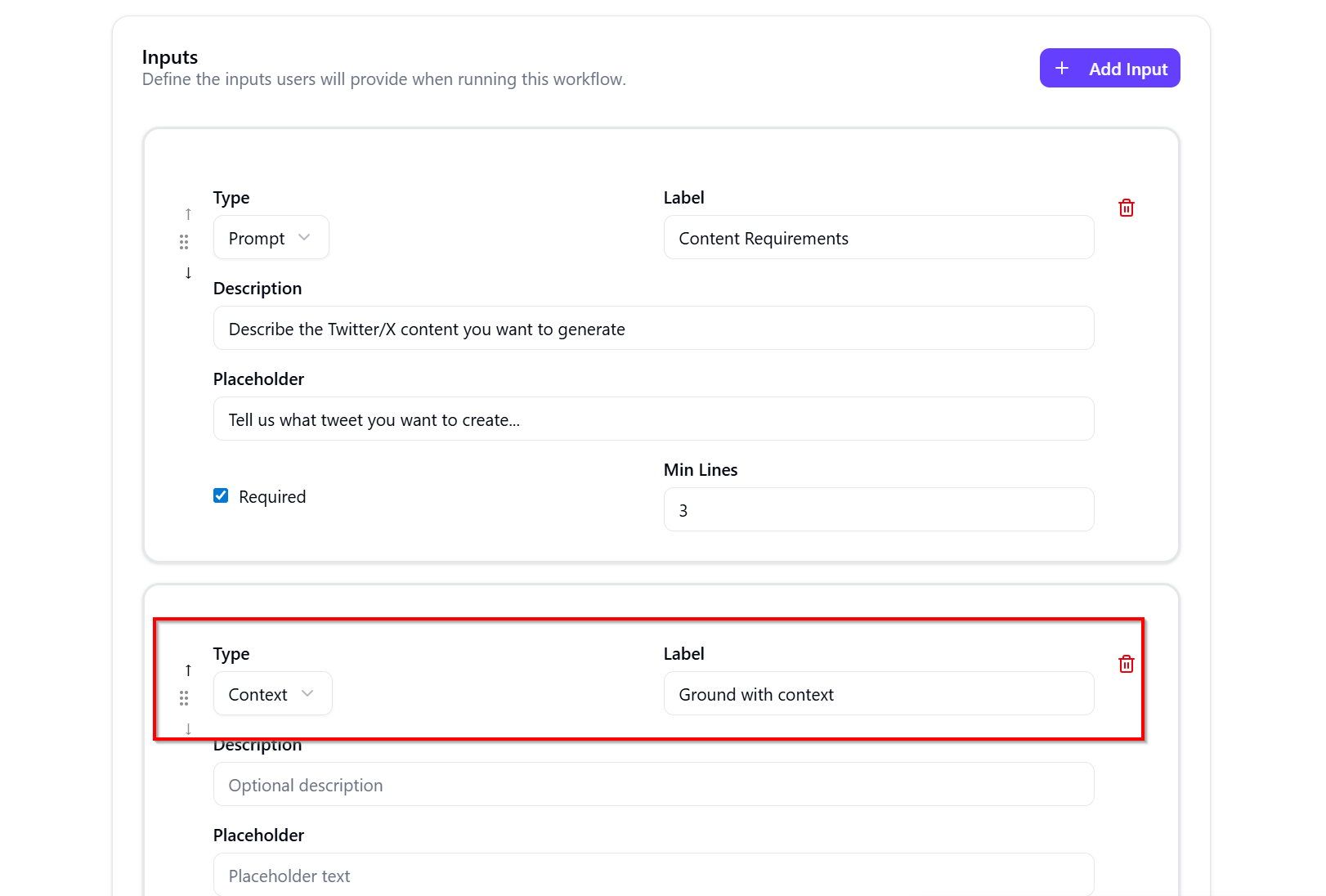
In the Inputs section, click Add Input to define required user inputs:
Type – the input type, such as Prompt.
Label – the field name shown to users.
Description – guidance for what uses should enter.
Placeholder text – example content displayed in the field.
Required – whether the input is mandatory.
Min Lines – the minimum number of input lines.
Important: Include input of Type Context to enable you to work with SitecoreAI pages for example. As shown below
Click Create Workflow to save your changes.
Step 3: Configure the parameters
Parameters are needed to influence how the agent generates content. Parameters allow users to select options such as language, audience, or region, helping the agent adapt its output based on those selections.
We won’t need any parameters for this workflow agent
Step 4: Define a schema
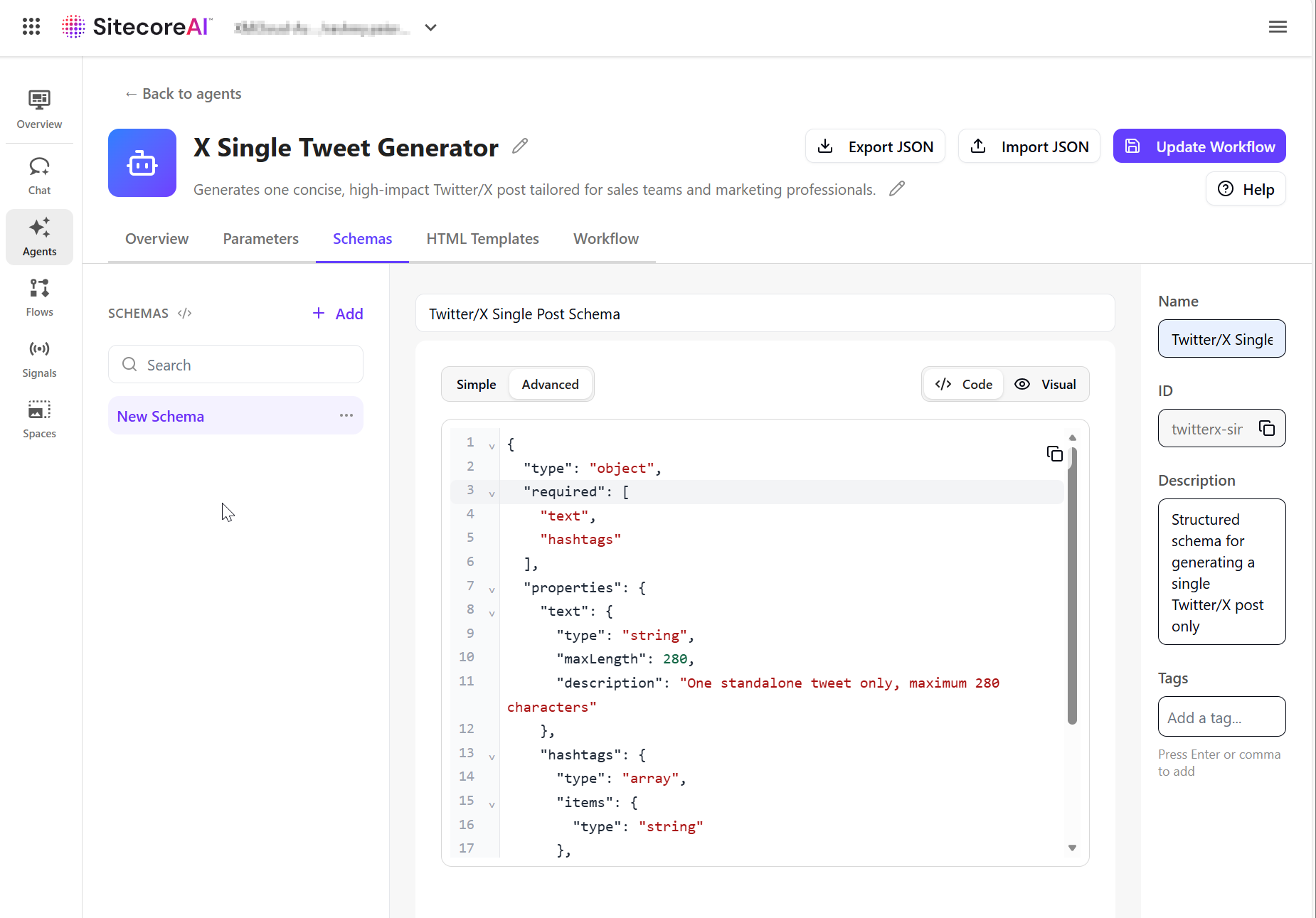
To enforce a structured output, we will define a JSON schema. This ensures the agent produces consistent, structured output that can be validated and also re-usable.
On the Schemas tab, click Add.
In the right pane, provide the following:
Name – the schema name.
Description (optional) – what the schema is used for.
Define the JSON structure for the output. You can use Simple mode or Advanced mode to define the schema manually using either the Code or Visual editor.
Click Update Workflow to save your changes, as shown below
Step 5: Define an HTML template
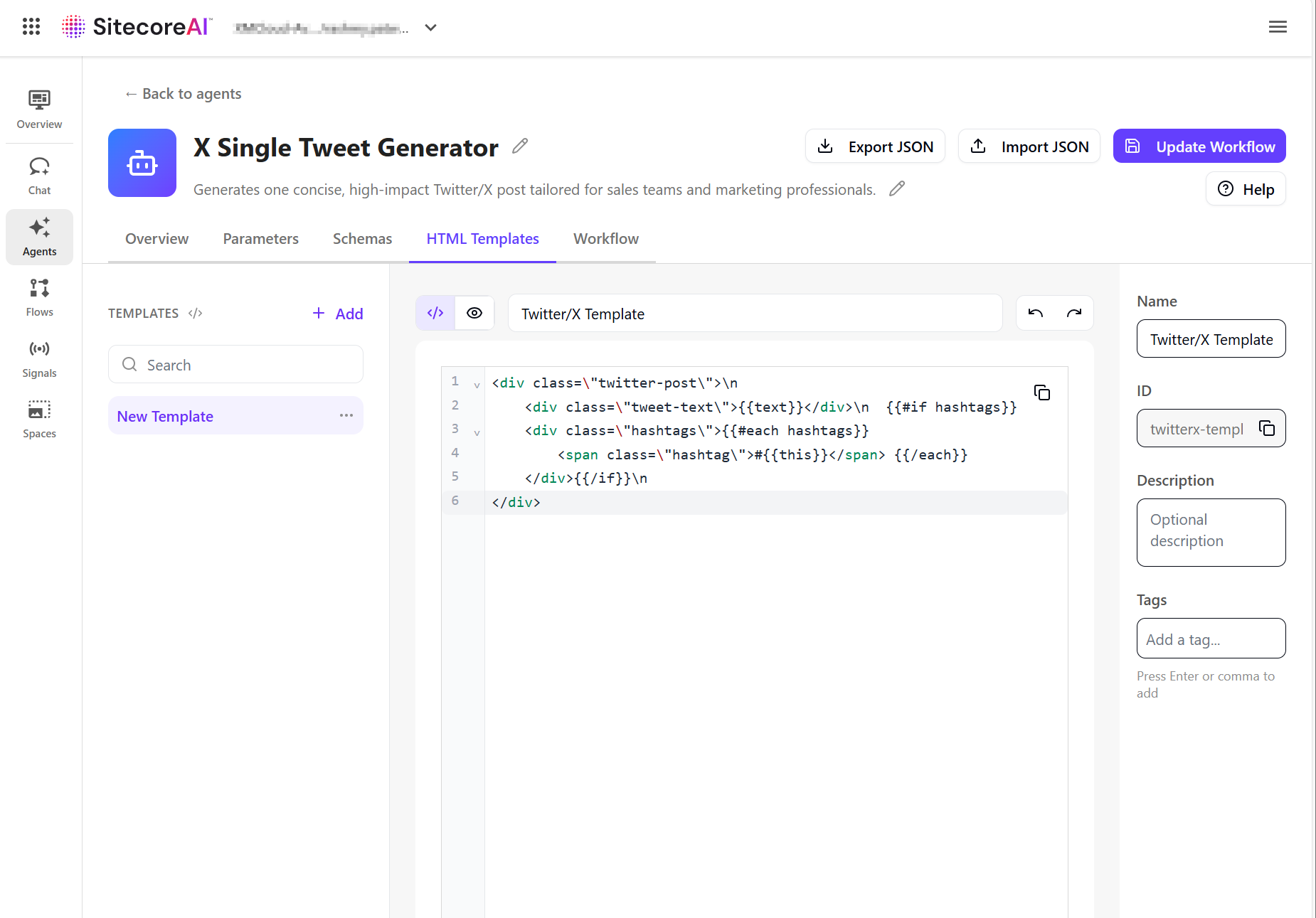
Use the HTML Templates tab to define how the agent’s output is displayed. Templates use Handlebars syntax to map structured data into a layout.
On the HTML Templates tab, click Add.
In the right pane, provide the following:
Name – the template name.
Description (optional) – what the template is used for.
Define the HTML structure using schema fields. Use Handlebars syntax to map values from the schema into the template in the Code editor.
Click Update Workflow to save your changes, as shown below
Step 6a: Build and test the agent workflow
On the Workflow tab, design the sequence of actions that the agent will be executing. To build the agent workflow:
On the Workflow tab, the canvas includes a Manual Trigger action as the starting point. Click Add Step to add a new action.
In the right pane, on the Properties tab, the list of available actions appears. Select an action to add it to the canvas.
Drag from the dot on one action to the dot on another to connect them into a workflow step. Actions run sequentially based on how they are connected.
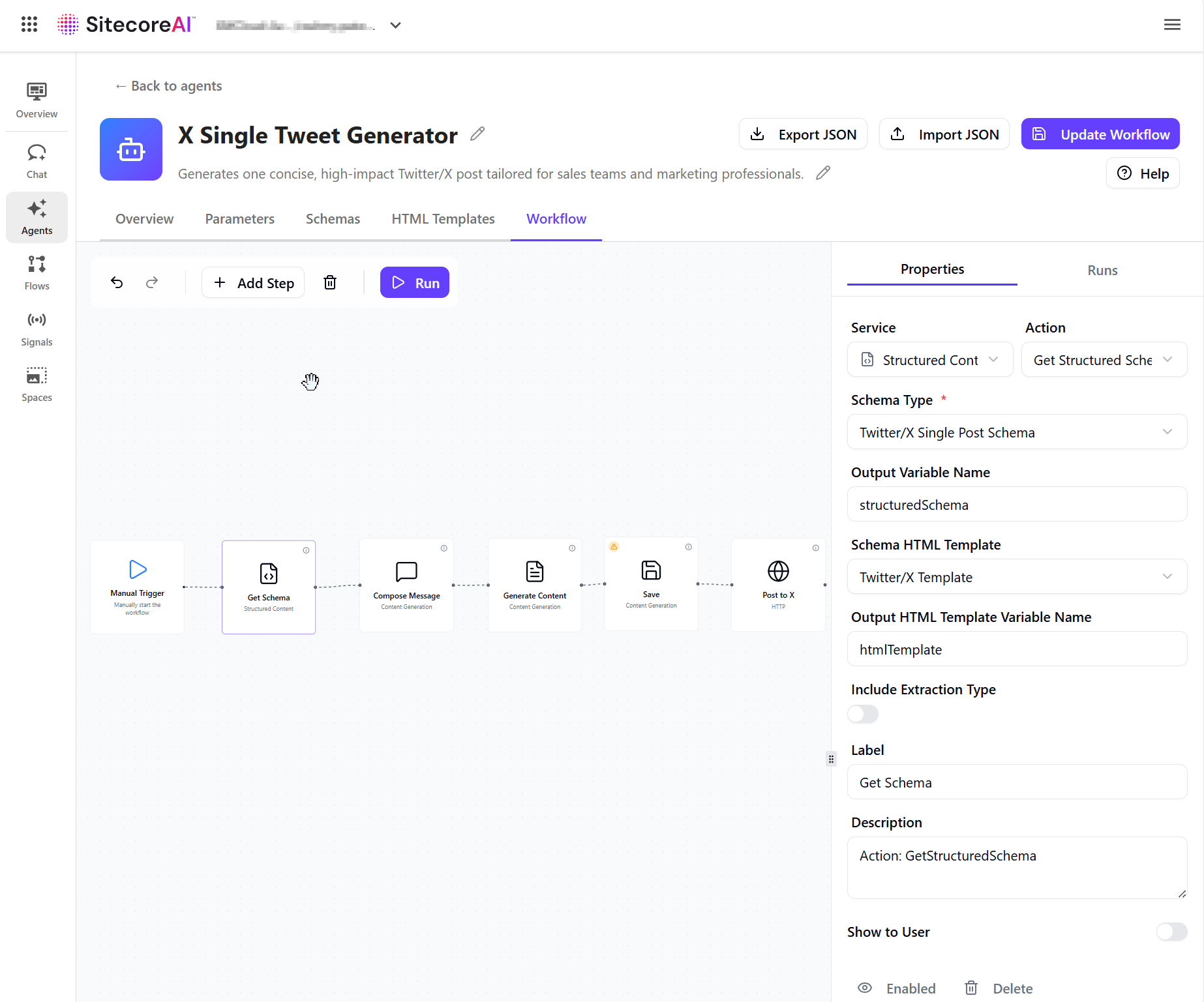
To configure the action, select an action on the canvas and adjust its settings in the Properties pane.
Depending on the selection, you might need to configure the action’s inputs and output variables, system prompts, message templates, linked HTML templates and schemas, and artifact storage options.
Repeat the process to build out your workflow as needed.
To delete an action or connector, select it on the canvas and press Backspace.
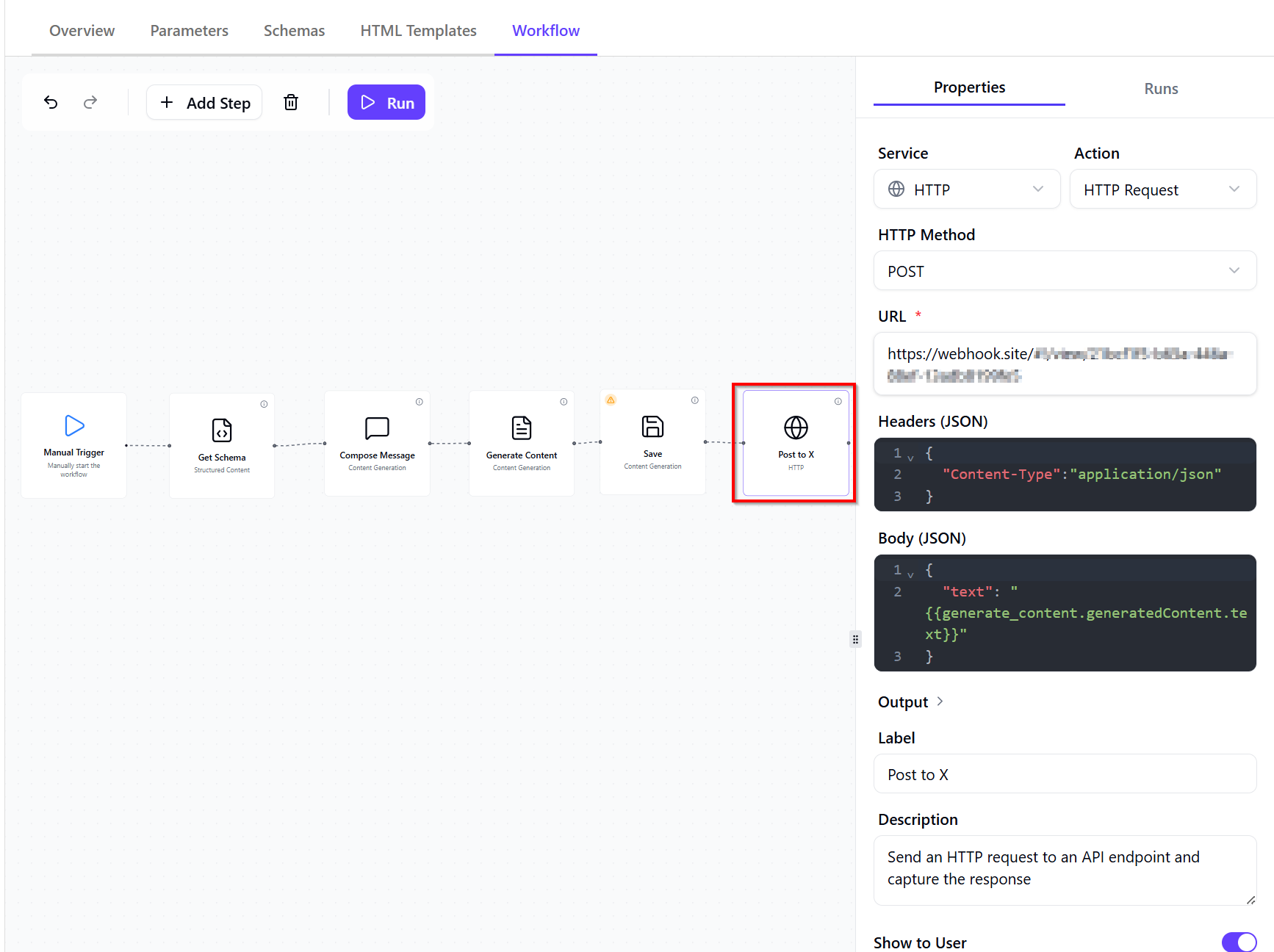
Below is the full workflow for our X Single Tweet Generator
Step 6b: Configuring an HTTP Request action
An HTTP Request action is used to send generated content to an external endpoint. In our case, to push the Tweet to Twitter/X.
The HTTP Request action retrieves the generated tweet from the previous step and sends it to the specified endpoint as a JSON payload.
It has the following configuration as shown below:
HTTP Method – POST (used to send the generated content to an API)
URL – the destination endpoint where the request will be sent.
Headers – define request metadata, typically including content type and authentication.
Body (JSON) – the payload sent to the API. This is where you pass data from previous workflow steps using variables. Ensure the variable correctly maps to the output of the generation step.
Agent JSON – The full listing of the JSON of the this agent is available in this Gist for reference. You can import it into the workflow editor to test or explore further for your use cases.
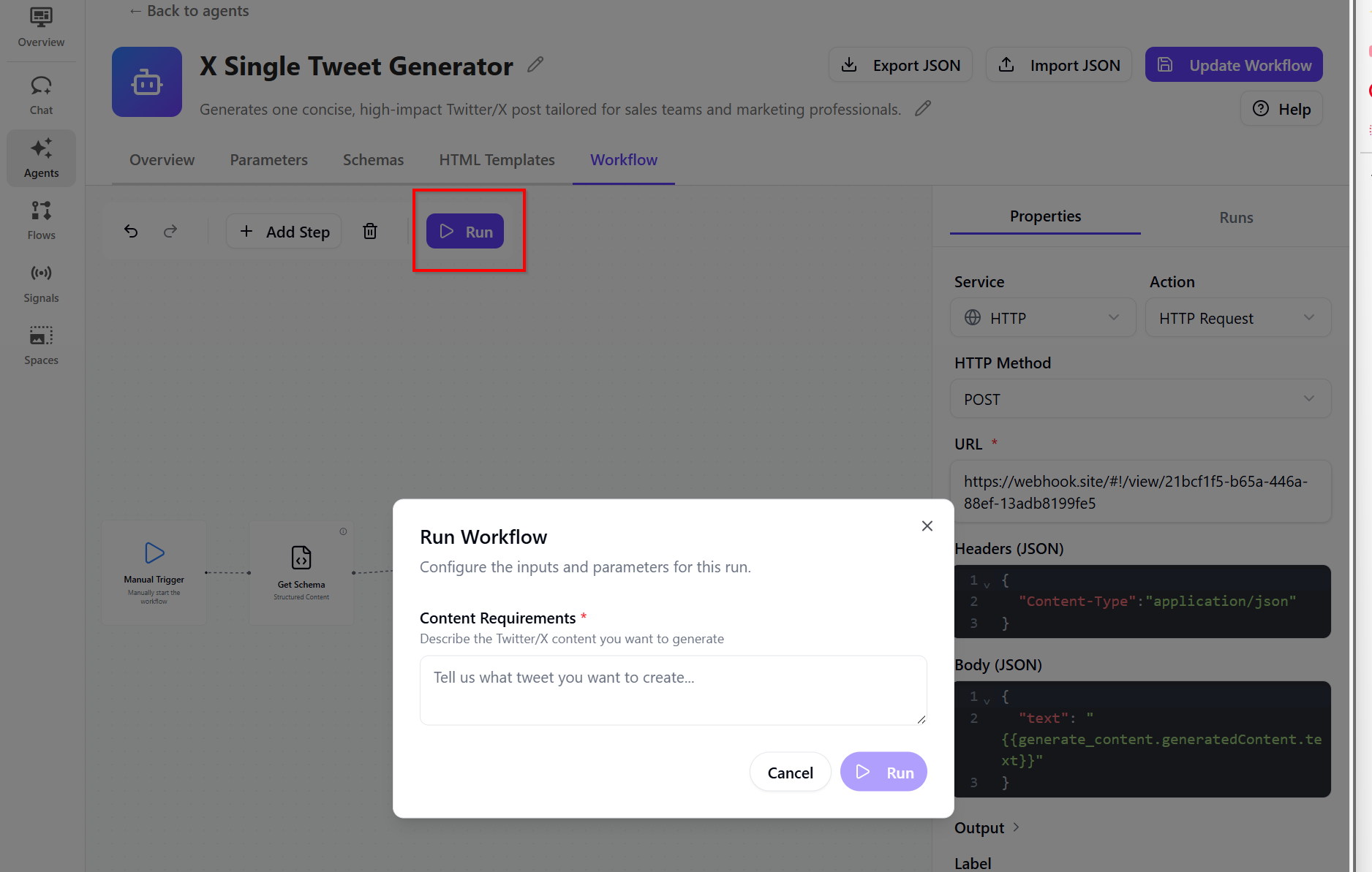
Step 7: Testing the agent
To test the agent, click on the Run button from the Workflow tab
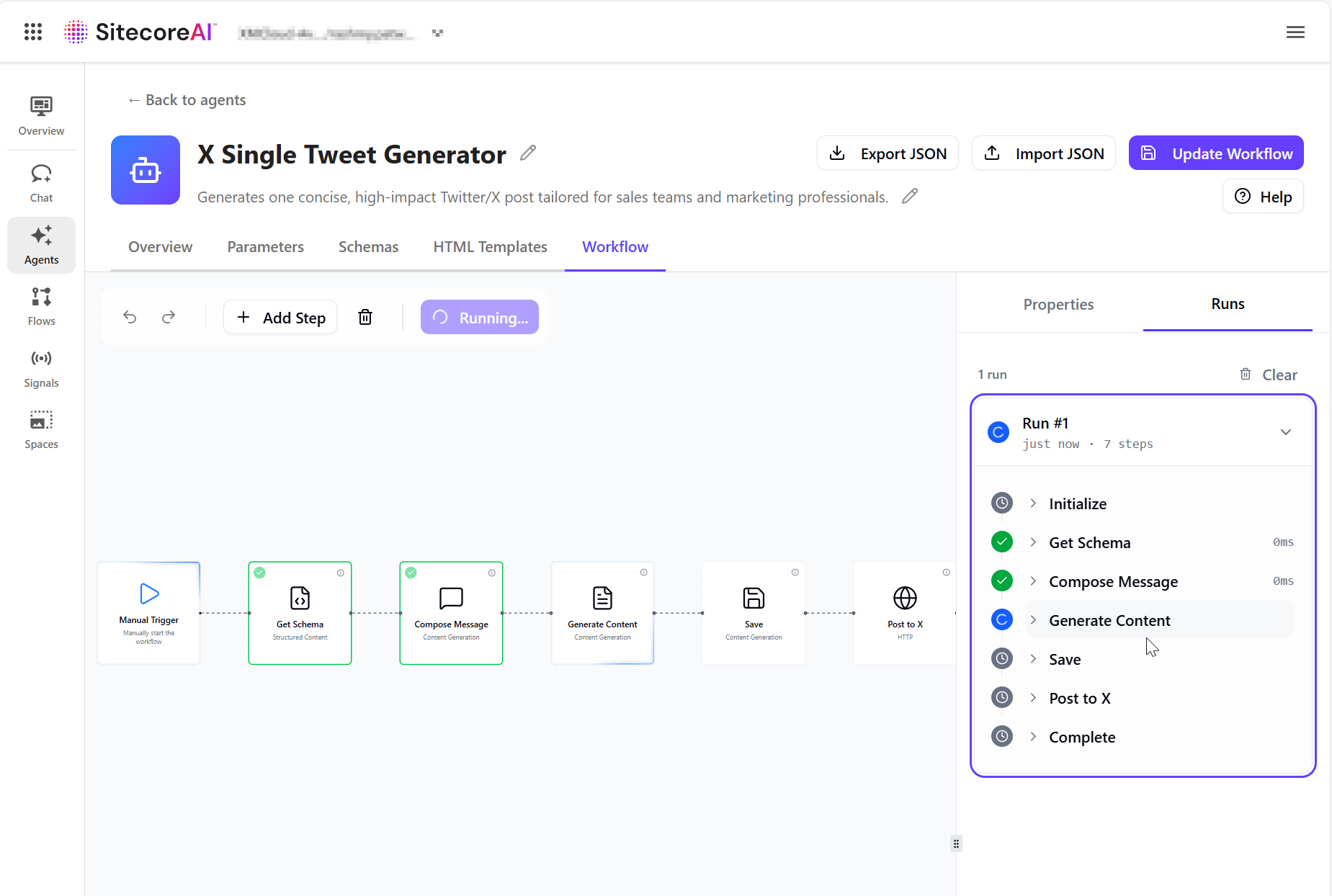
When successful, you will get a sample run similar to the one shown below:
Running agents using items
When running agents, you can provide two types of optional inputs: items and context.
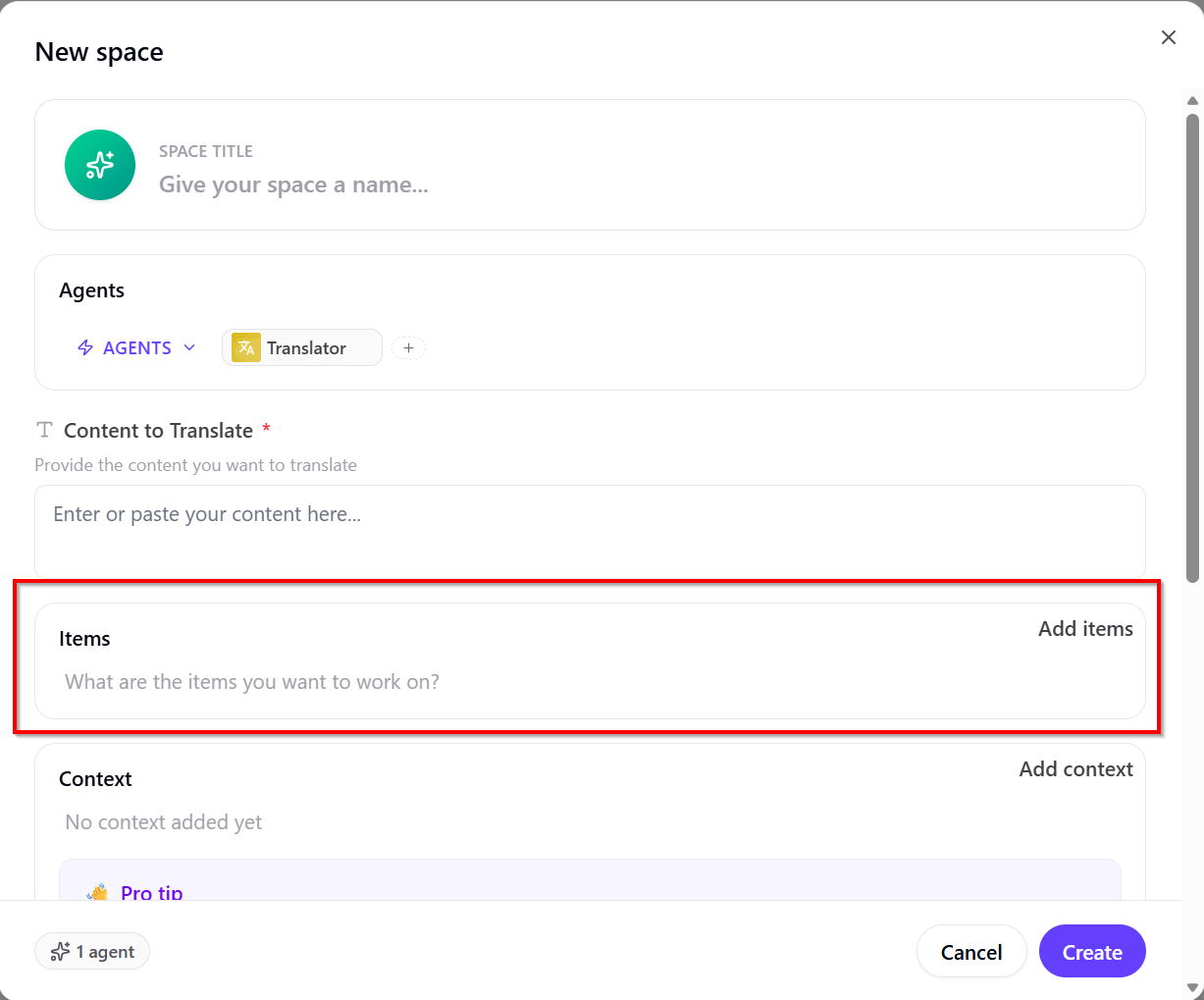
Items are the inputs the agent acts on. The agent processes each item and generates outputs for it. Use items to define what the agent should process individually. This enables the agent to perform actions on specific content from SitecoreAI.
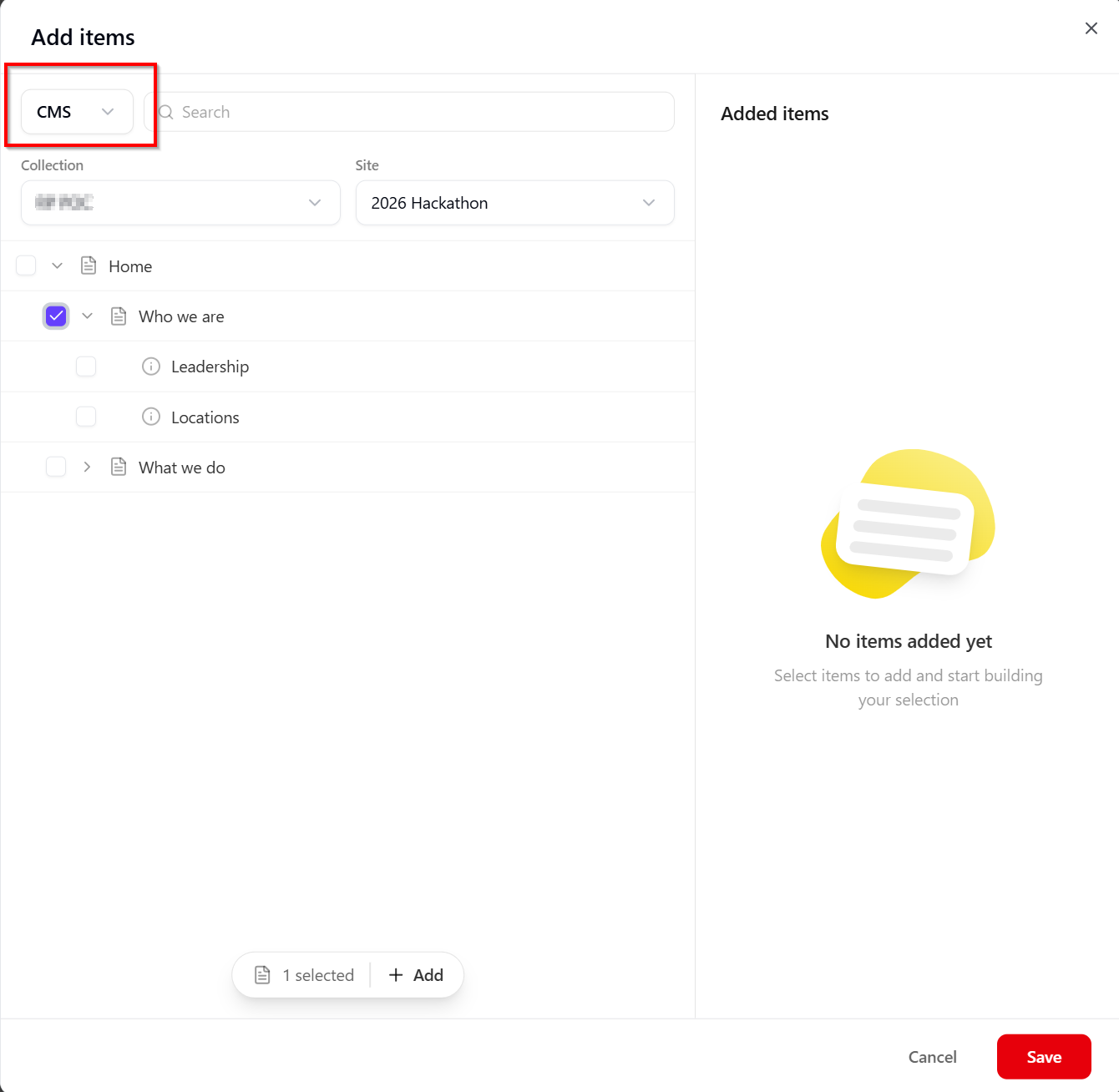
When running the agent, you have option to Add items as shown below
Clicking on Add items will allow to select SitecoreAI CMS content items, as shown below
Next steps
In this blog post, we looked in detail the March 30 2026 release of the Agentic studio, which you can read in full in the original bulletin. As Sitecore continues to bridge the gap between “AI as a tool” and “AI as a teammate,” the March update sets a high bar for the rest of 2026. Whether you’re ready to start chaining agents in the new Spaces or you’re curious about how those custom skills will streamline your specific brand voice, the future of content is officially autonomous. Feel free to leave us a comment or share any thoughts.
Content Hub now has a new Import/Export engine (version 2) which should now be the default in your environments. Sitecore have updated the underlying Content Hub packaging structure to organise content by resource type rather than by export category as it was previously the case. This change makes navigation more straightforward and ensures greater consistency throughout the package. You can read more about the changes introduced in my previous blog post where I took a deep dive into the changes and impact on CI/CD pipelines.
While refactoring CI/CD pipelines to work with the new Import/Export engine in early January, I came across two main blockers which at the time meant I couldn’t progress any further.
That is when I reached out to Sitecore Support and raised two product issues, which Sitecore recognized and embarked on fixing them. These issues were MONE-55068 (support ticket CS0655802) and MONE-55007 (support ticket CS0655833).
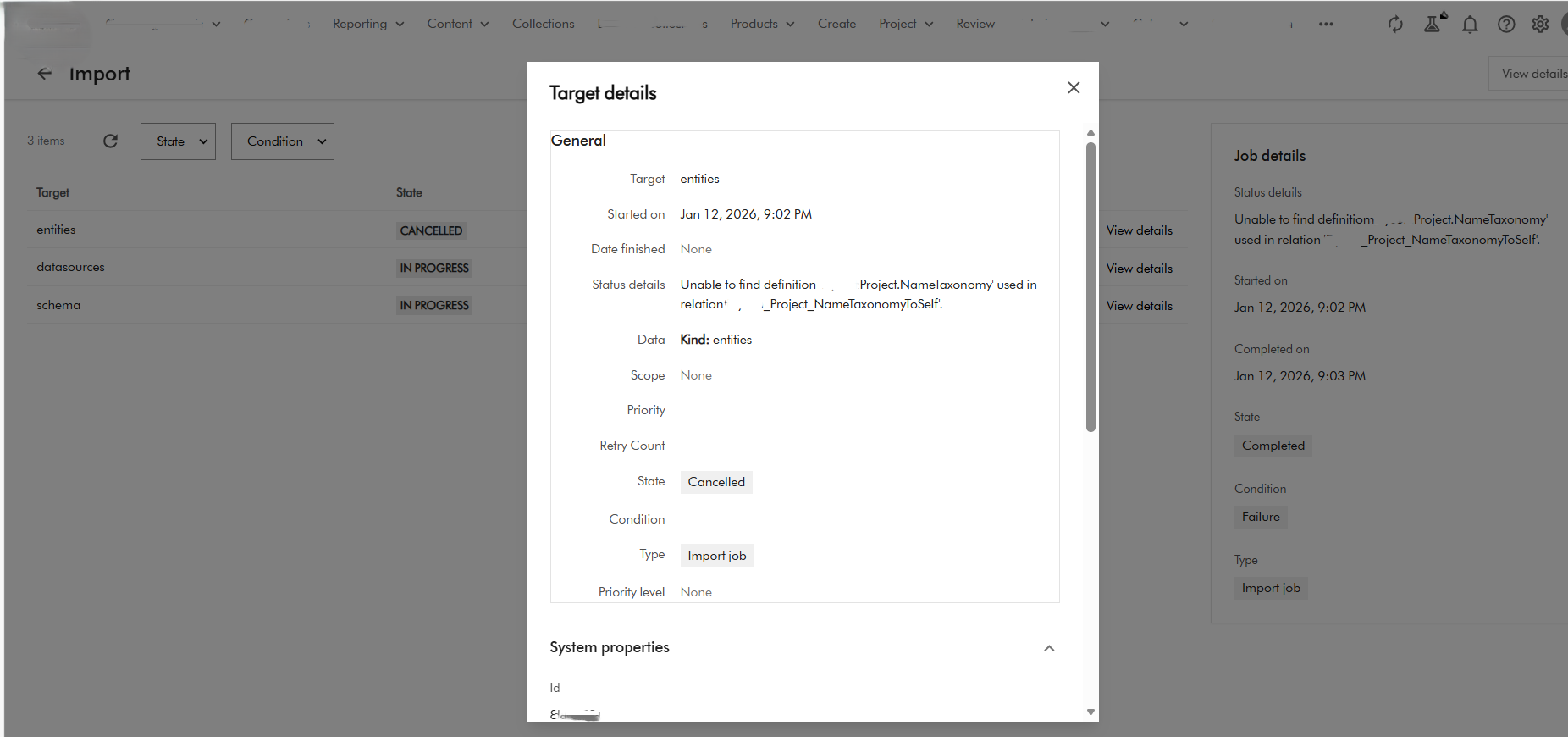
Unable to find definition 'XXXX.Project.NameTaxonomy' used in relation 'XXXX_Project_NameTaxonomyToSelf'.
Kind: entities Target: datasources Status details: Kind: datasources Target: schema Status details: Kind: schema
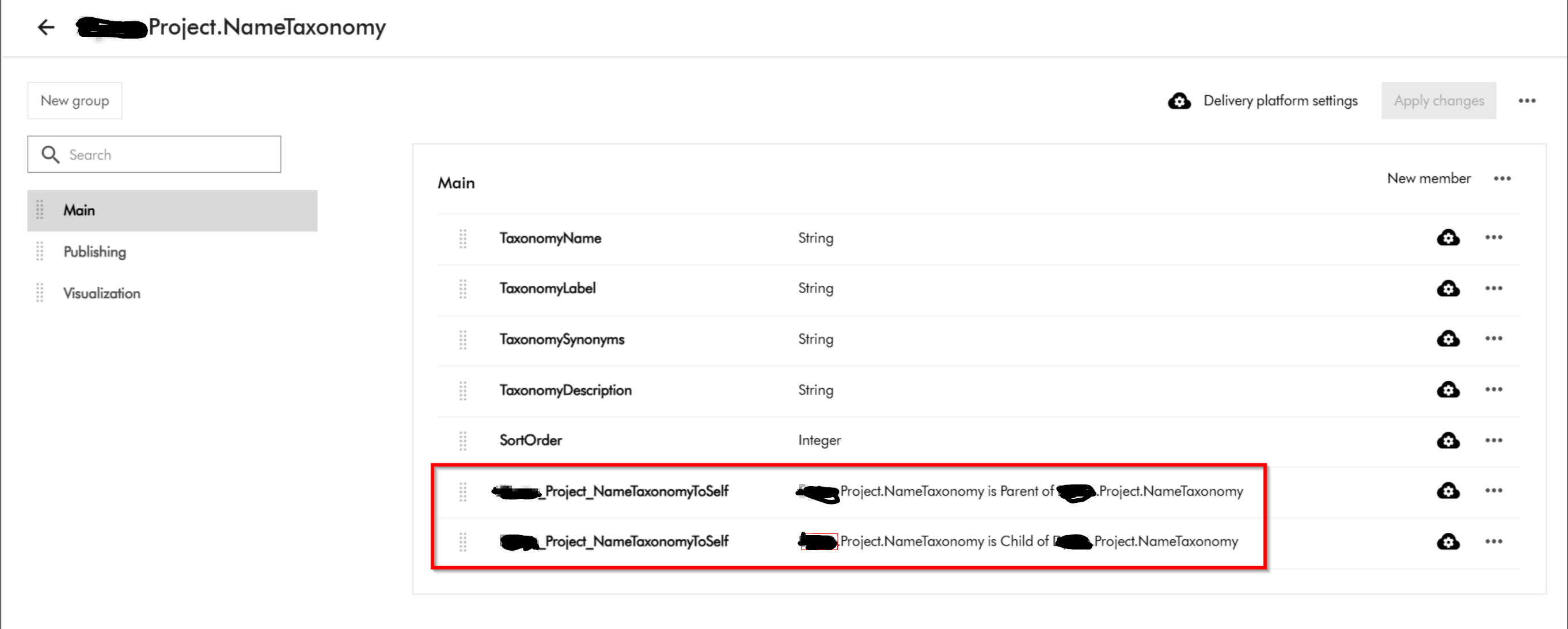
This was a clear defect within the Product since we know Taxonomy entities have self-relations and therefore should not be the reason a taxonomy entity will fail to import successfully. Below is my taxonomy definition
Fix provided by Sitecore
Fixed an Import/Export v2 issue that caused an error when importing packages with new definitions. (MONE-55068)
Support ticket CS0655833 and product issue MONE-55007
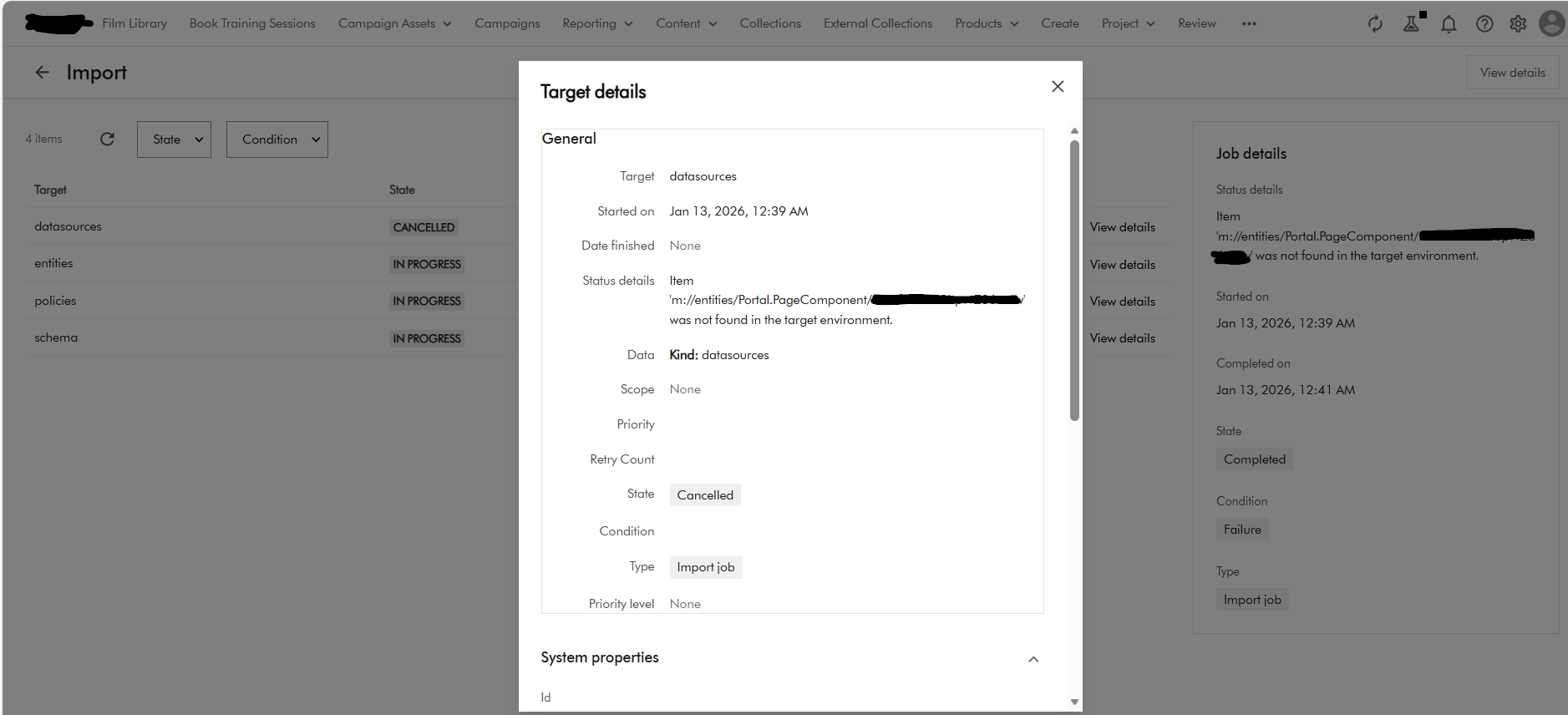
Below is a screenshot of the error I encountered when using CLI to import Pages. This error seems logically related to one above affecting self-relations in taxonomy definitions.
For pages, the issue was caused by one of the components related to the parent page not existing and causing the page import to fail. You could have thought the Import/Export engine should resolve dependencies, but clearly this was a Product issue.
Fix provided by Sitecore
Fixed an Import/Export v2 issue that caused an error when importing Creation components linked to Search components. (MONE-55007)
Support ticket CS0648899 and product docs issue MDOC-5887
While refactoring the CI/CD I noticed lack of sufficient documentation to detail what was changed in the new packaging architecture as part of Import/Export v2. I raised another support ticket CS0648899 with Sitecore, which was duly registered as MDOC-5887 to provided the needed clarity in the official docs.
I am happy to report that Sitecore have also addressed the documentation gap and fixed the MDOC-5887
Other resolved issues with Import/Export v2 engine
Below are the three other fixes shipped on February 6, 2026
Import/Export v2 now excludes M.Portal.Version entities when exporting to prevent missing-entity errors during import. (MONE-53876)
Import/Export v2 now correctly preserves and updates user group names with leading or trailing whitespace during import, preventing duplicate groups and import failures. (MONE-54335)
Import/Export v2 operations no longer swap labels between parent and child when the relation name is the same and there are no actual changes in the imported package. (MONE-54614)
Updating your CI/CD pipelines
As already covered in my previous post, it is very straight forward to update your existing CI/CD pipelines to work with the new package architecture. In simple terms, you will need to simply map your previous logic to work with the new package architecture. Ensure your Content Hub environments are re-baselined within your source control as well.
Next steps
In this blog post, I have looked at the list of issues that Sitecore have resolved for the new Content Hub Import/Export engine. I also dived into my two support tickets that I had raised that were affecting the Import/Export v2, thereby contributing to Product enchantments. I noted and appreciated how quickly Sitecore teams worked to resolve these issues within a month. I hope your Content Hub CI/CD pipelines are more robust with all these fixes going forward.
Please let me know if you have any comments above and would like me to provide further or additional details.
If you already using DevOps for deployments with your Content Hub environments, then you probably already aware of the breaking change that Sitecore introduced a few months ago. You can read the full notification on the Sitecore Support page The new version of the package import/export engine become the default in both the UI and CLI from Tuesday, September 30 according to the notification. Because of the breaking changes introduced, this means existing CICD pipelines won’t work. In fact, there is a high risk of breaking your environments if you try use existing CICD pipelines without refactoring.
In this blog post, I will look into details what breaking changes were introduced and how to re-align your existing CICD pipelines to work with the new import/export engine.
So what has changed in the new Import/Export engine?
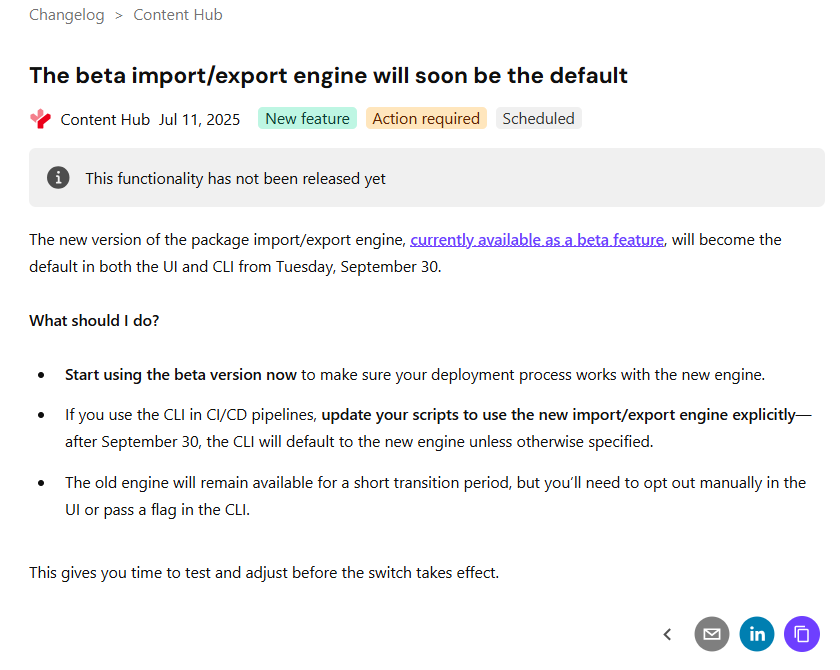
Below is a screenshot from the official Sitecore docs summarizing the change. You can also access the change log here.
There is no further details available from the docs on specifics of the breaking change. However, it is very straightforward to figure out that Sitecore fundamentally changed the package architecture in the new import/export engine.
Resources are grouped by type
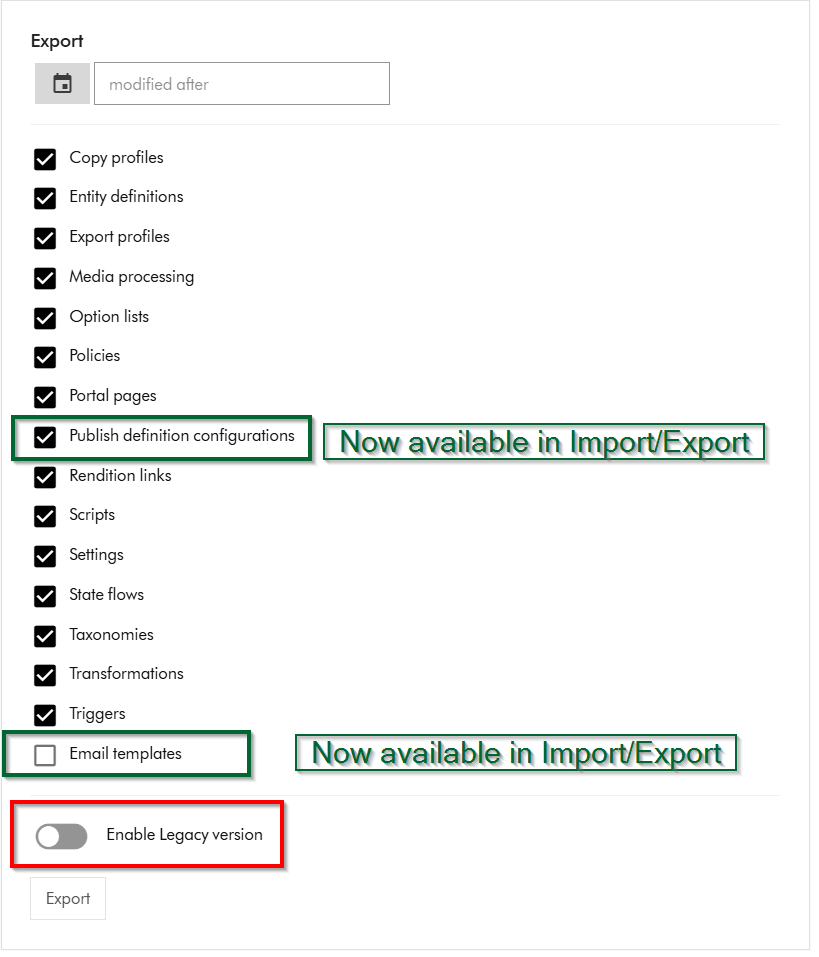
Within Sitecore Content Hub Import/Export UI, you have an option to Export components using both the previous/legacy engine and the new engine. As shown below, you can notice a toggle for Enable Legacy version, which when switched on will allow you to export a package with previous/legacy engine.
Also we can note that Publish definition configurations and Email templates are now available for Import/Export with the new engine. Email templates are unchecked by default.
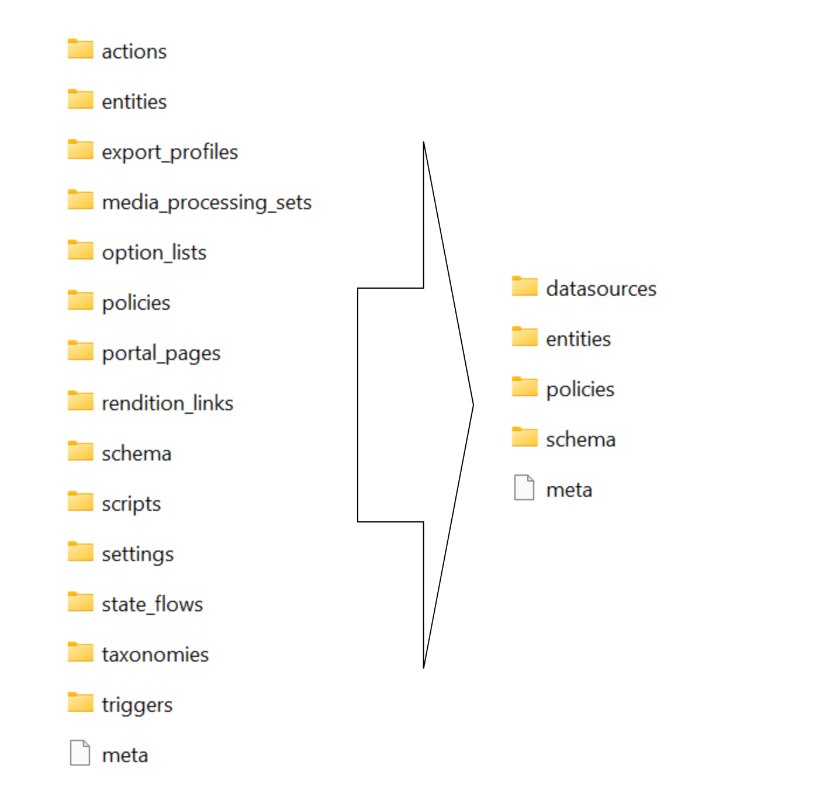
If you did a quick comparison between the export package from the old/legacy engine vs the new engine, it comes clear that Sitecore has updated the packaging structure to organise content by resource type rather than by export category
This change makes navigation more straightforward and ensures greater consistency throughout the package.
Summary of the changes between legacy and new export packages
Below is a graphic showing how the package structure was changed. On the left hand-side, we have the legacy/old package and on the right hand side is the new one.
Full comparison of package contents between old and new
Below is a more detailed comparison, showing how the packages differ.
Component
Legacy package sub folders
New package sub folders
Copy profiles
copy_profiles
entities
Email templates
n/a
entities
Entity definitions
entities schema option_lists
datasources entities schema
Export profiles
export_profiles
entities
Media processing
media_processing_sets
entities
Option lists
option_lists
datasources
Policies
policies
datasources entities policies schema
Portal pages
entities portal_pages
datasources entities policies schema
Publish definition configurations
n/a
entities
Rendition links
rendition_links
entities
Settings
settings
entities
State flows
state_flows
datasources entities policies schema
Taxonomies
taxonomies
datasources entities schema
Triggers
actions triggers
entities
Scripts
actions scripts
entities
Resources are grouped by type
Instead of separate folders like portal_pages, media_processing_sets, or option_lists, the new export engine places files according to their resource type.
For example:
All entities are stored in the entities/ folder.
All datasources (such as option lists) are found in datasources/ folder
Policies and schema files have their own dedicated folders.
Each resource is saved as an individual JSON file named with its unique identifier.
Related components are now separated
When a resource includes related items—such as a portal page referencing multiple components—each component is now saved in its own JSON file.
These files are no longer embedded or nested under the parent resource.
Updating your CICD pipelines
It is very straight forward to update you existing CICD pipelines once we have analysed and understood the new package architecture. You can revisit my previous blog post where I covered this topic in detail You need to simply map your previous logic to work with the new package architecture. You will also need to re-baseline your Content Hub environments within your source control so that you are using the new package architecture.
Next steps
In this blog post, I have looked at the new Content Hub Import/Export engine. I dived into how you can analyse the packages produced from the legacy/old engine and compared it with the new engine. I hope you find this valuable and the analysis provides a view of what has changed in the new package architecture.
Please let me know if you have any comments above and would like me to provide further or additional details.
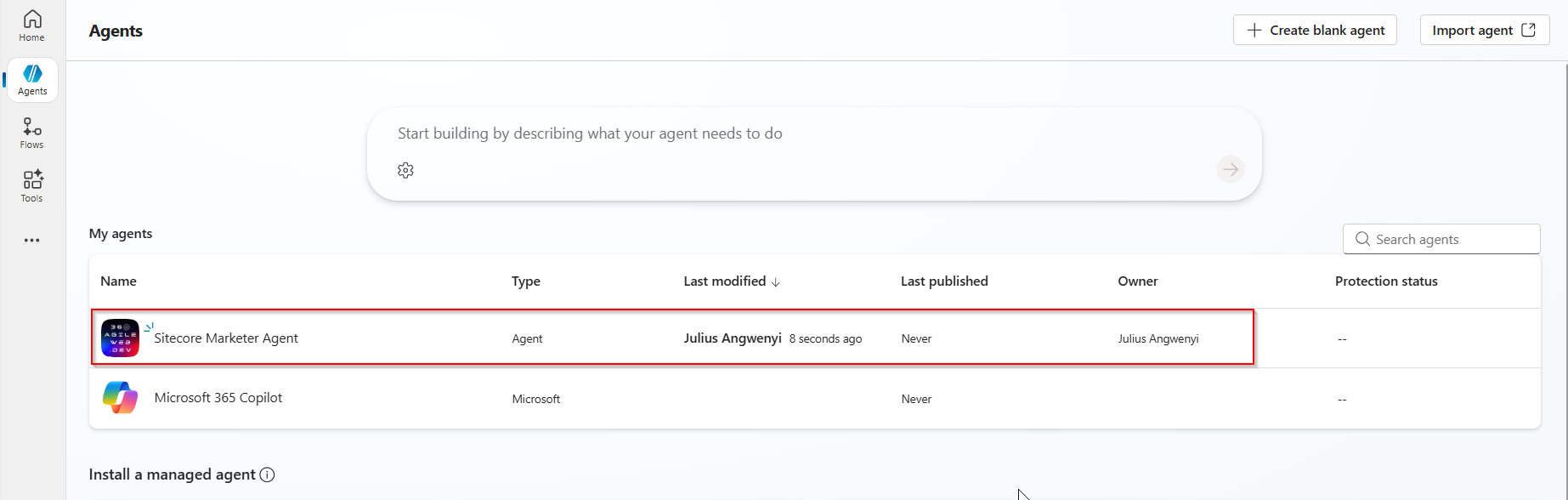
As you may be aware, the Marketer MCP now has a capability to integrate with Microsoft Copilot studio. You can now connect your Microsoft Copilot Studio agents to the Sitecore Marketer MCP for seamless access to Sitecore’s marketing features.
The Marketer MCP is the Model Context Protocol (MCP) for marketing in Sitecore. It connects AI agents to Sitecore tools through the Agent API, providing secure access across the entire digital experience lifecycle.
In this blog post, I will walk you through a step-by-step guide, complete with screenshots.
Pre-requisites
Before you begin, make sure you have:
A valid Sitecore account with required permissions
A valid Microsoft Copilot studio account with access permissions to Create agents and Create Custom Connectors
Step 1 – Create a new agent in Copilot Studio
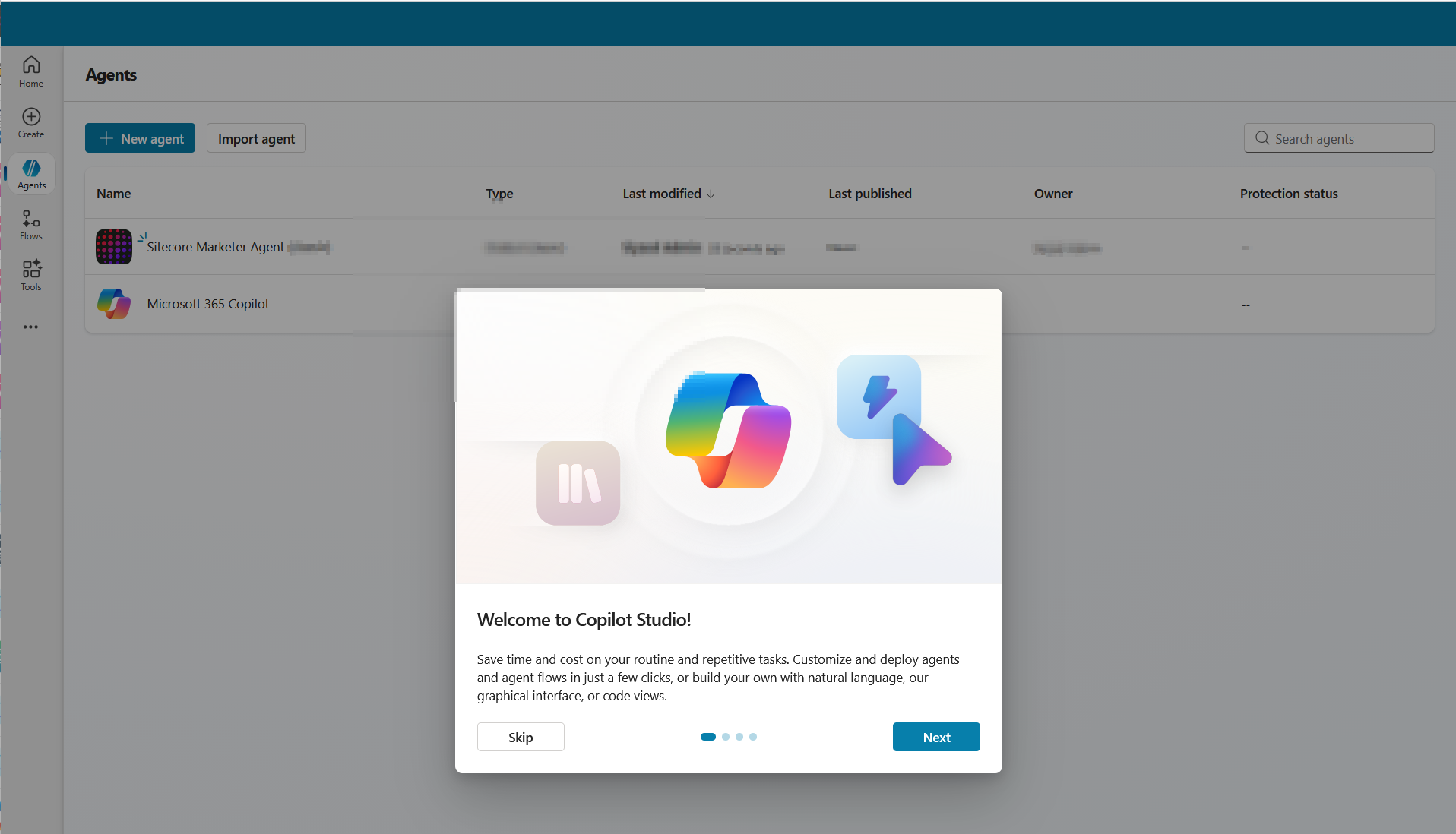
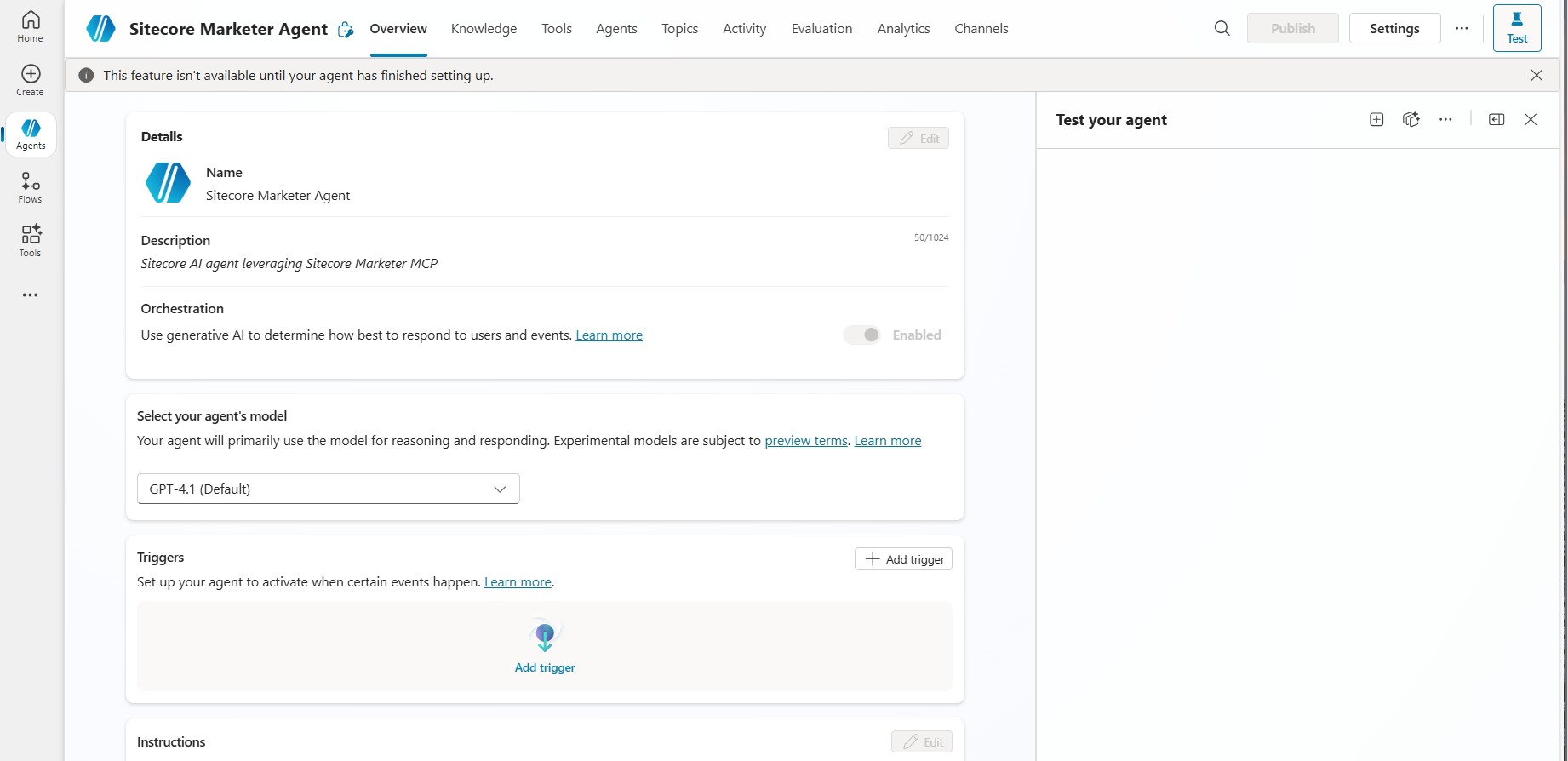
Open Copilot Studio and either create a new agent or open an existing one.
As shown in the screenshot below, specify the following minimal details for your agent:
Name: The name of your agent
Description: Description of your agent
Icon: You can choose an icon for your agent (optional)
Step 2 – Add a tool to the agent
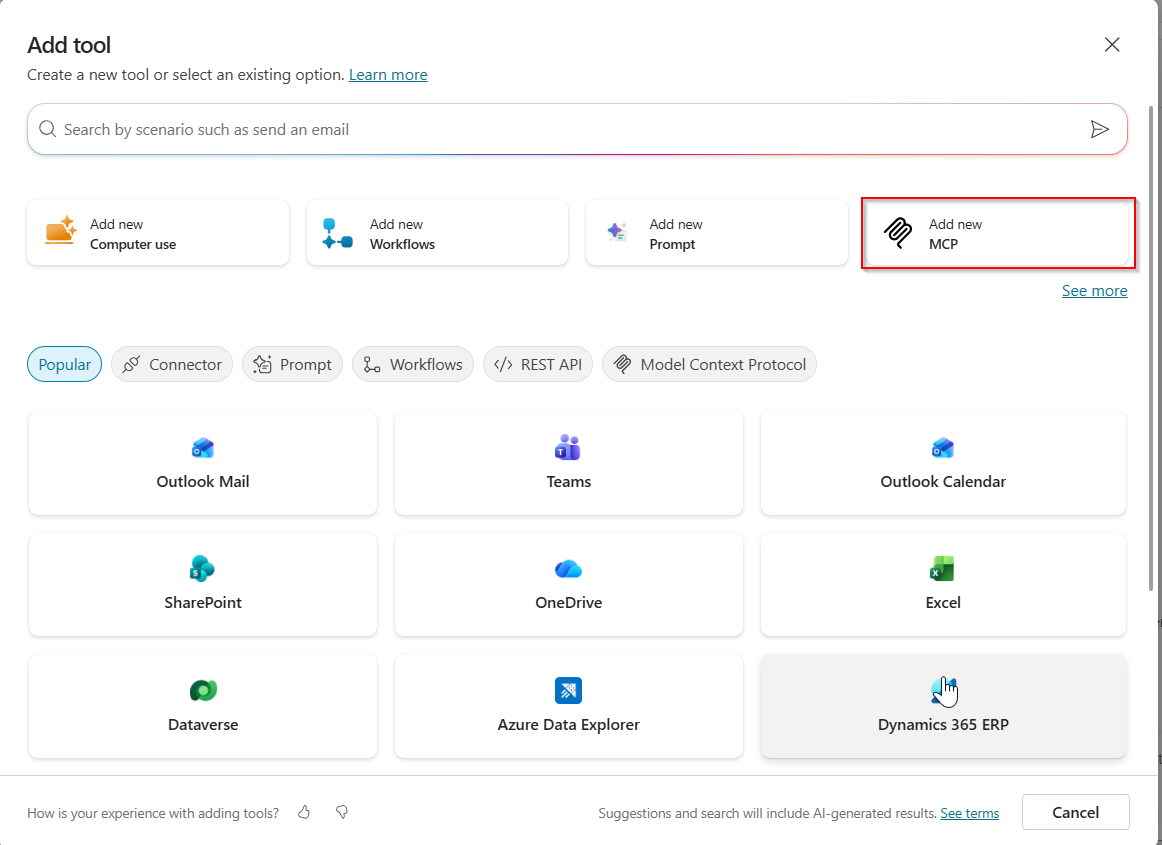
Go to the Tools tab for your agent then click Add a tool.
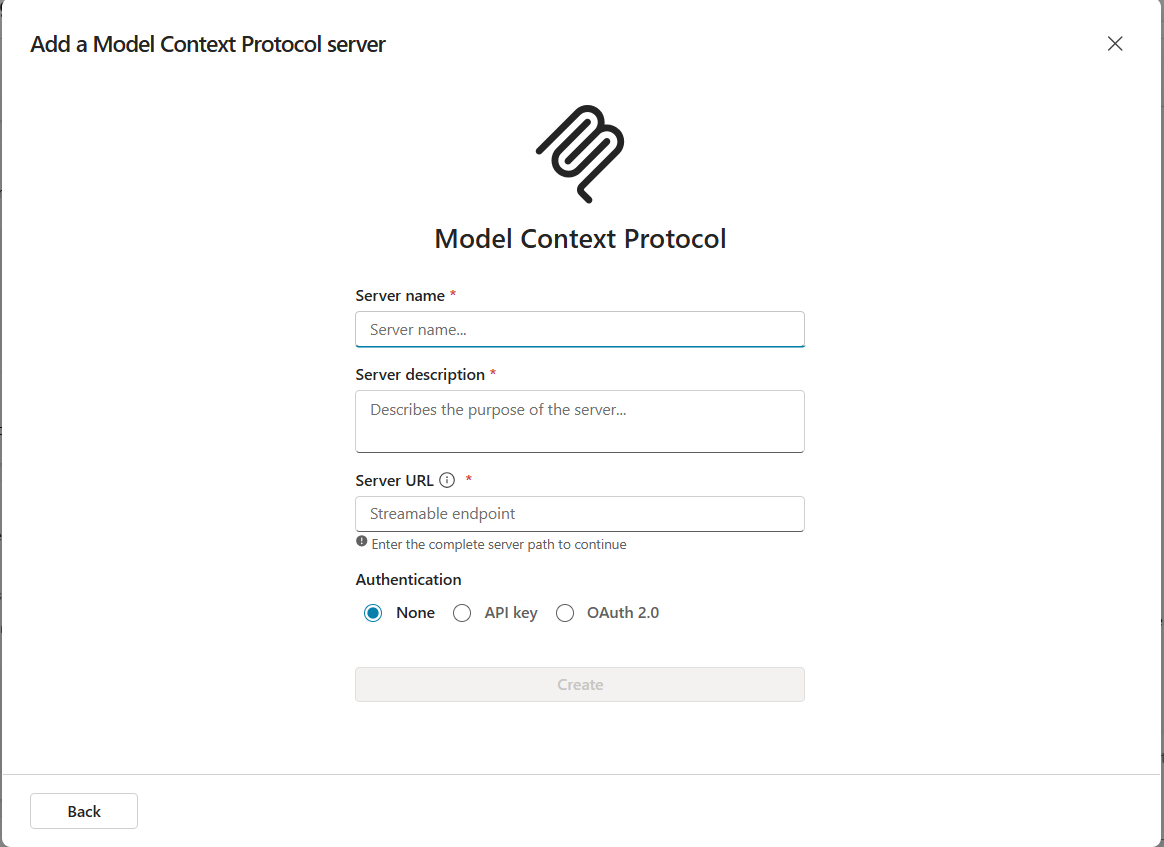
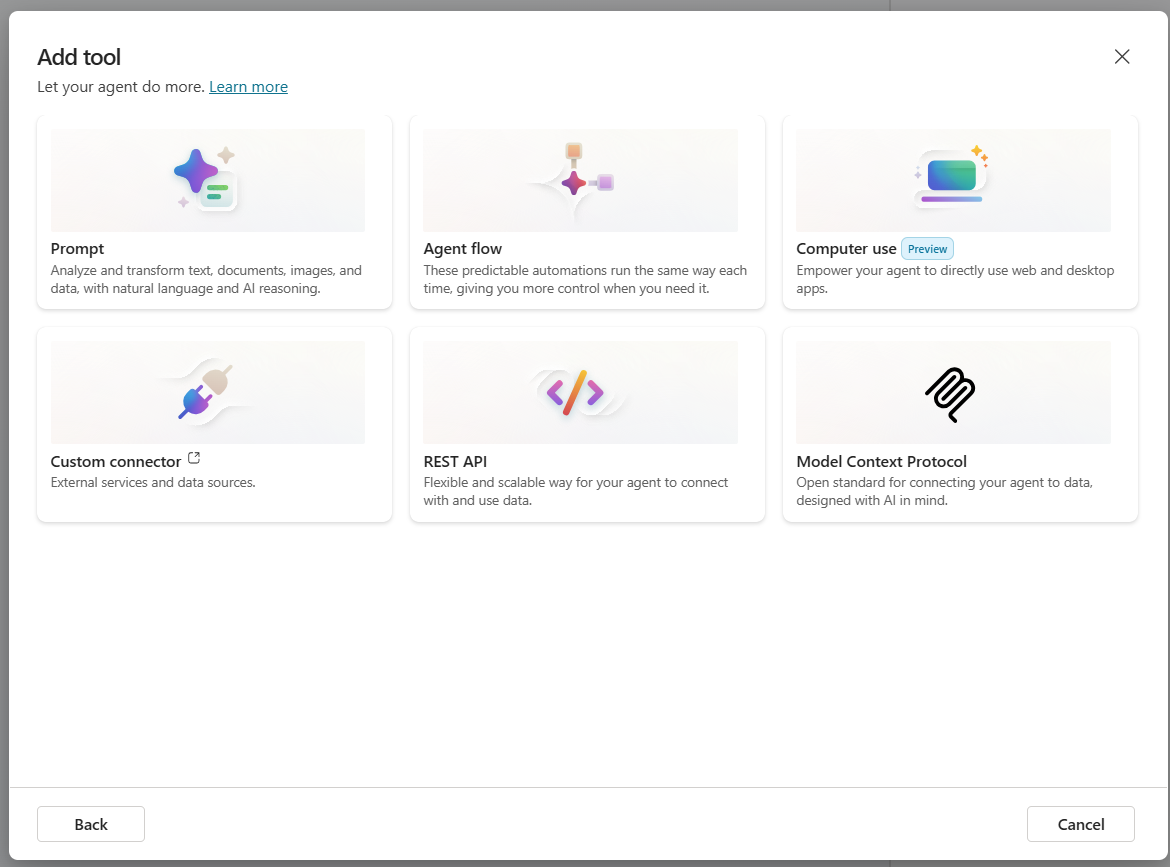
Select New tool then choose Model Context Protocol. The MCP onboarding wizard opens
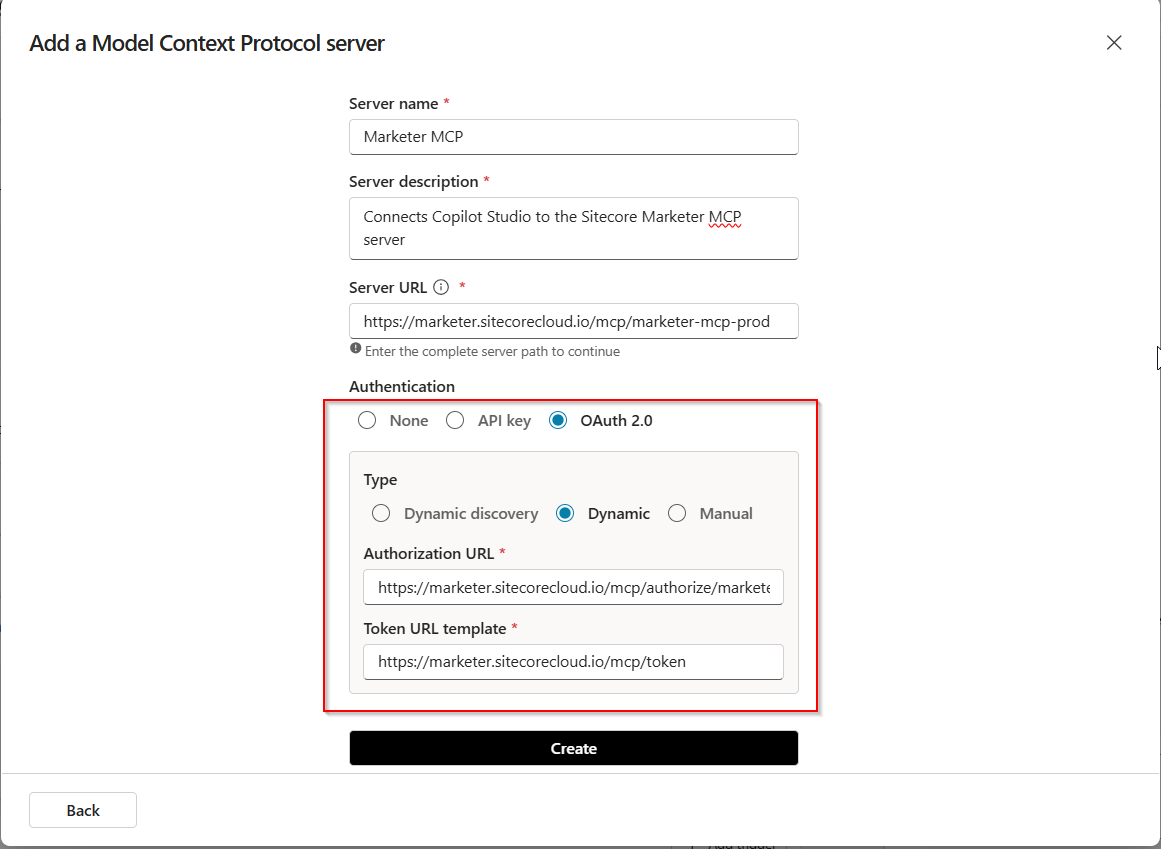
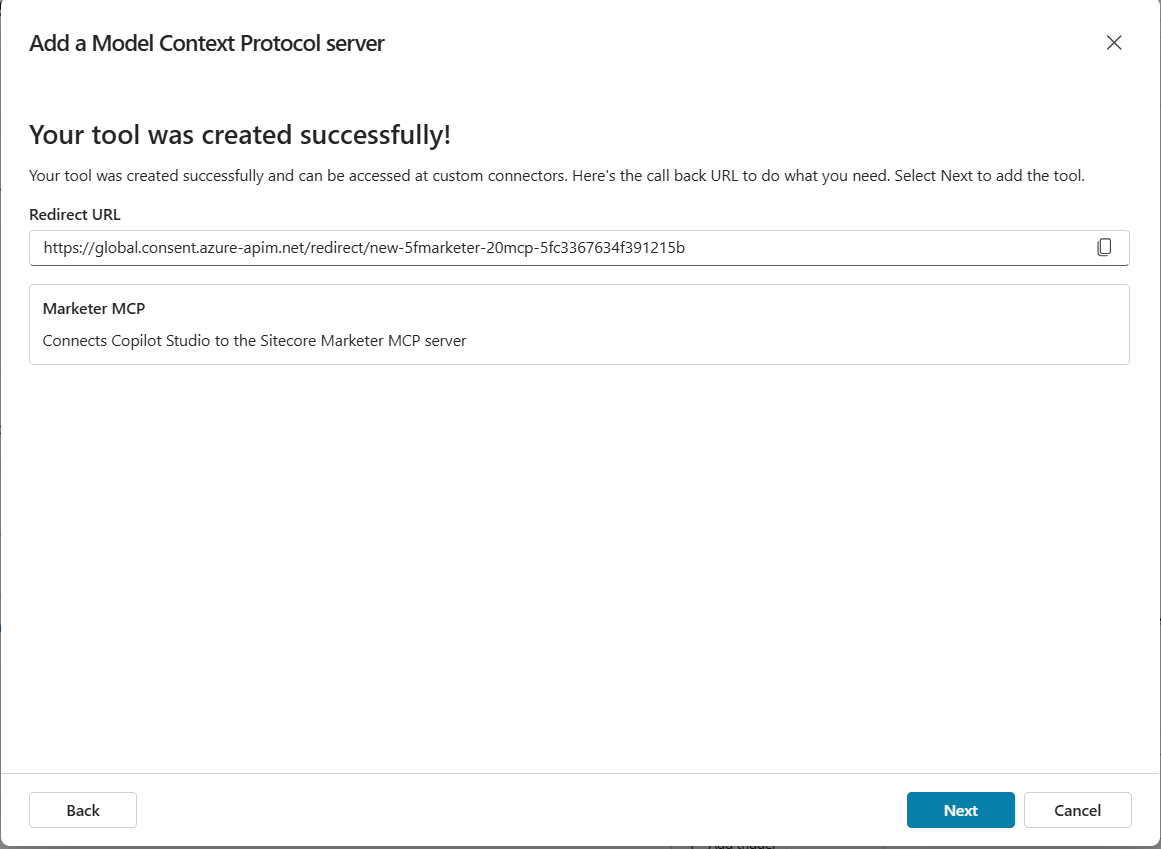
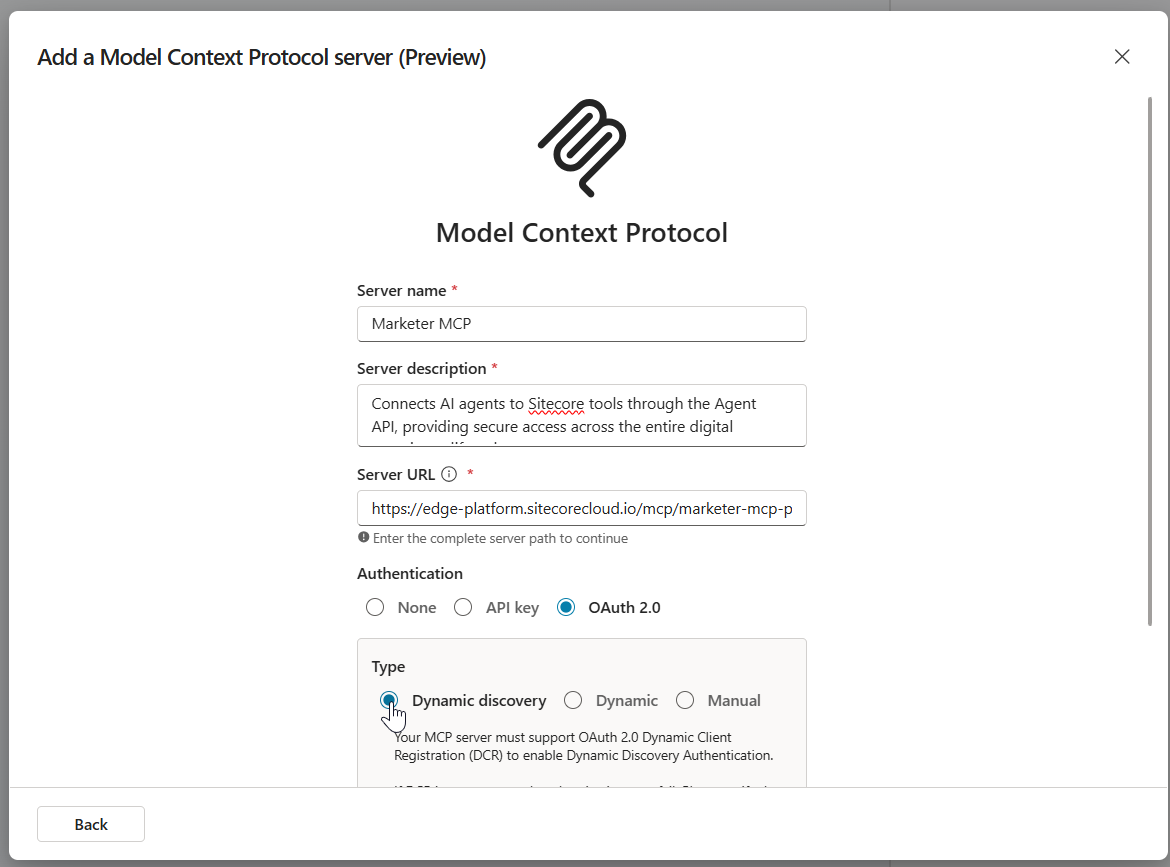
Enter the following details, as show in screenshot below
Server name – for example, Marketer MCP.
Server description – a short description of what the Marketer MCP does.
Open a new browser window, paste the updated URL into the address bar and press Enter.
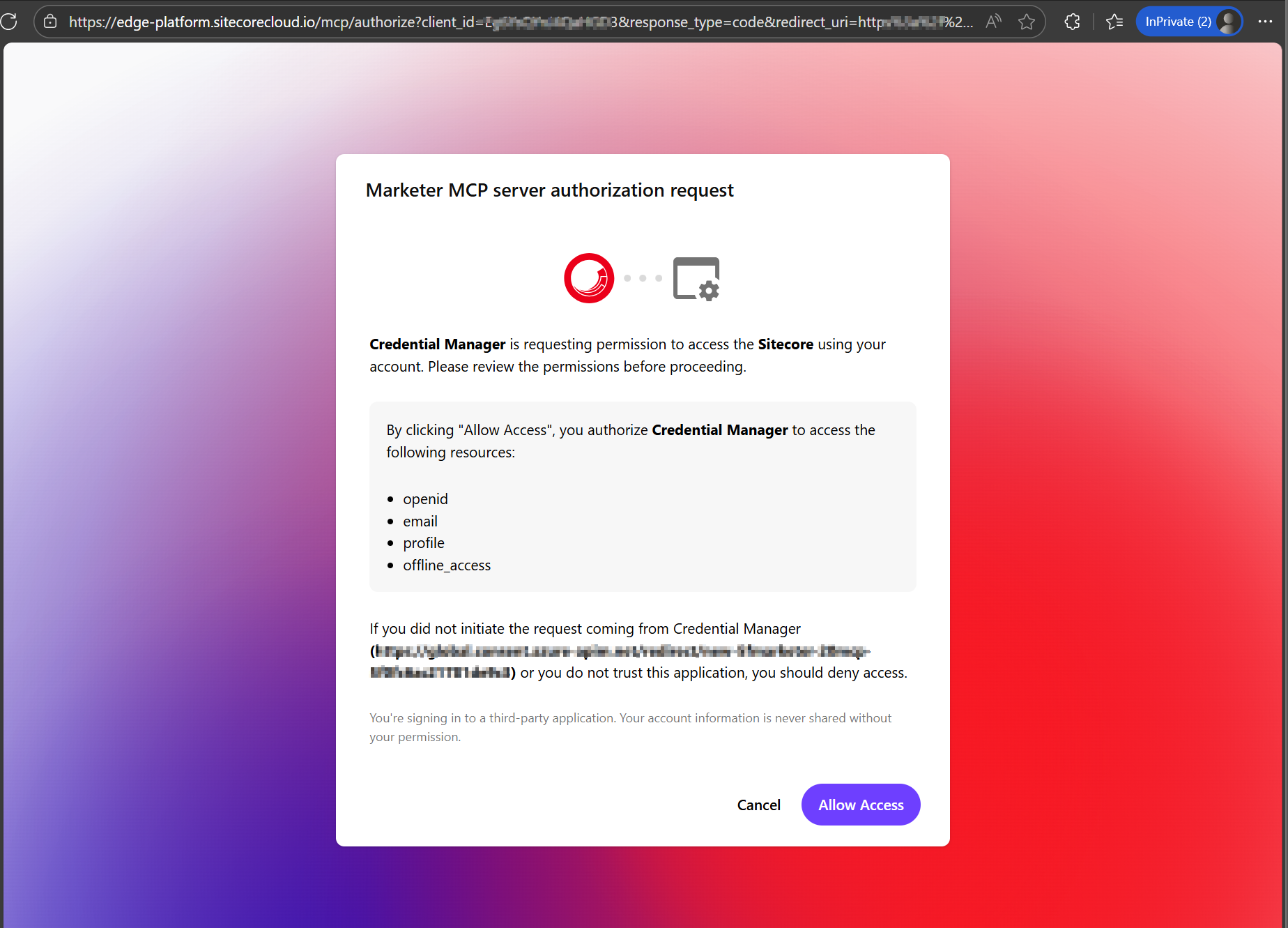
In the Marketer MCP authorization request dialog (see screenshot below), click Allow Access.
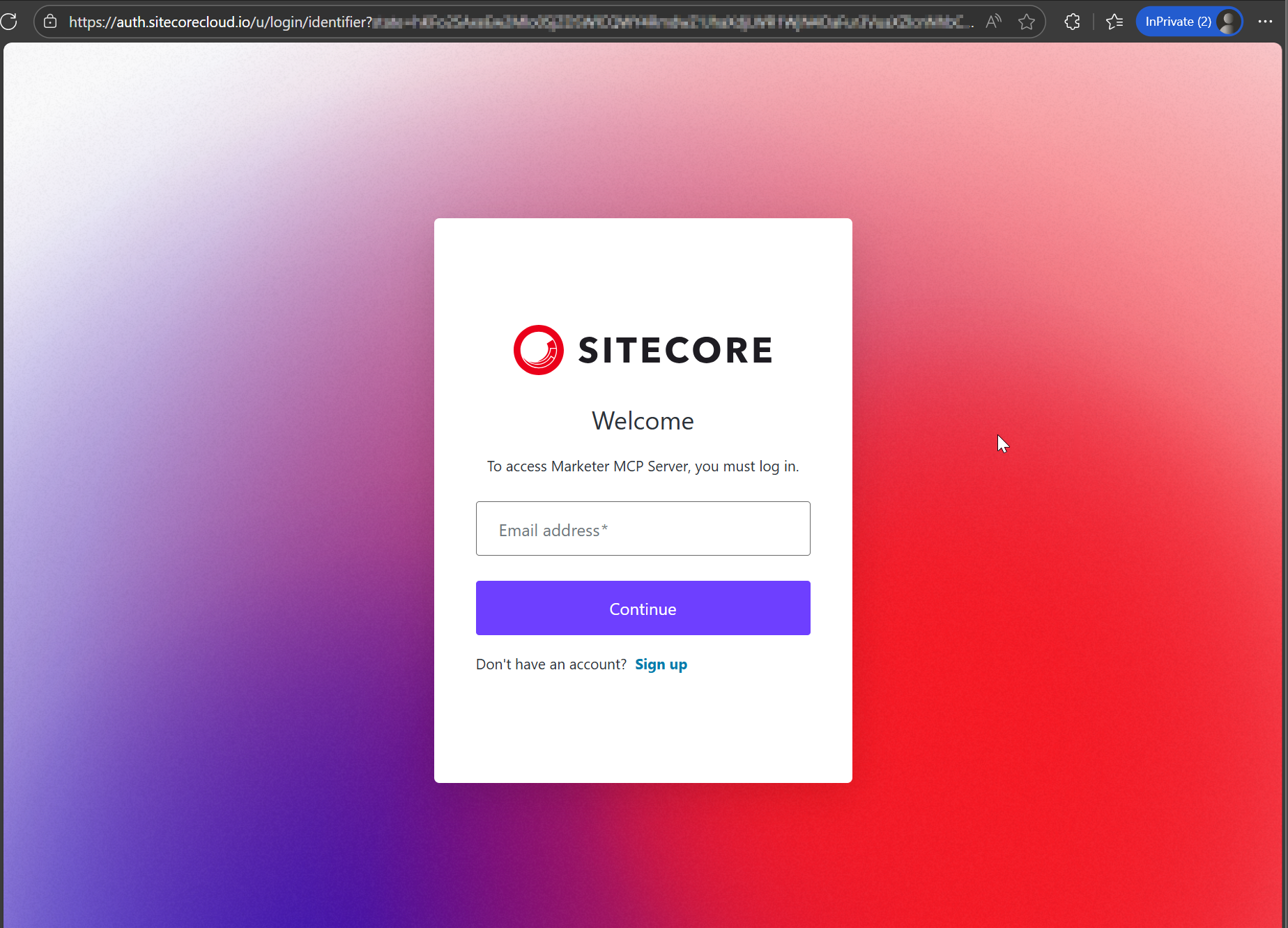
This will prompt you to login to your Sitecore Cloud Portal
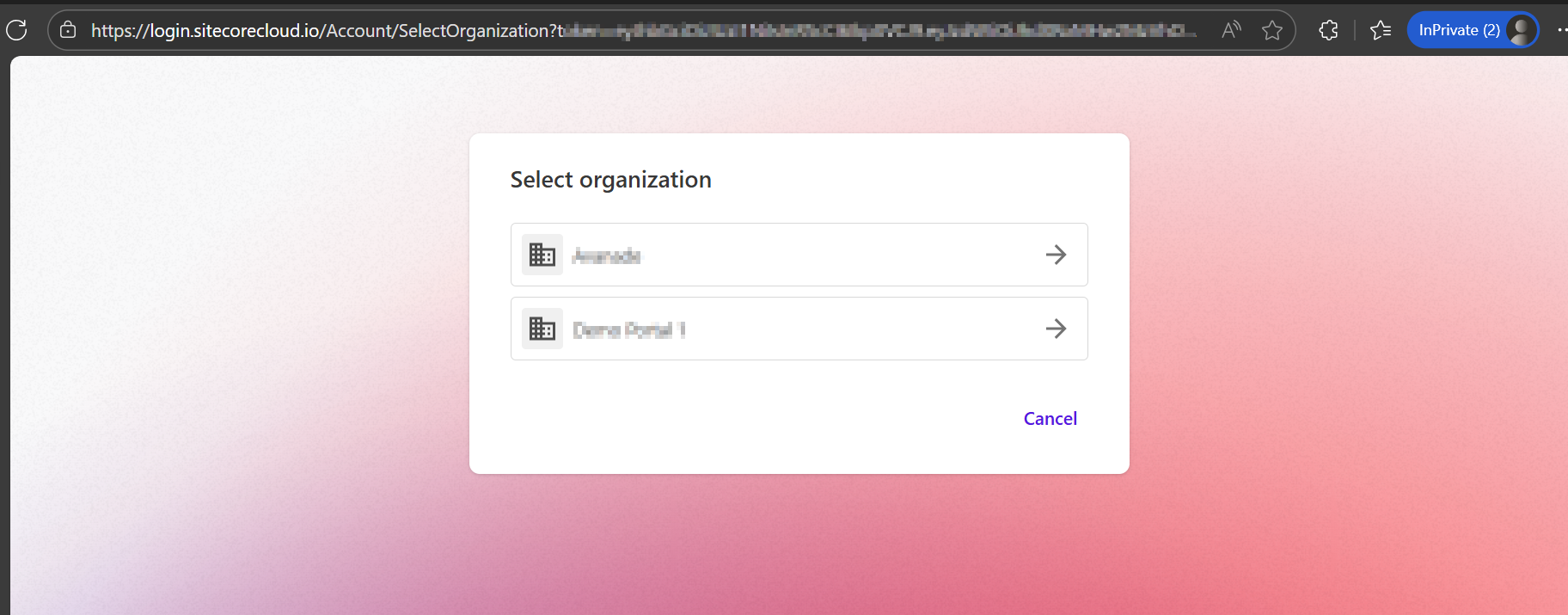
Then select the organization and tenant you want to use when interacting with the MCP server (as per screenshot below)
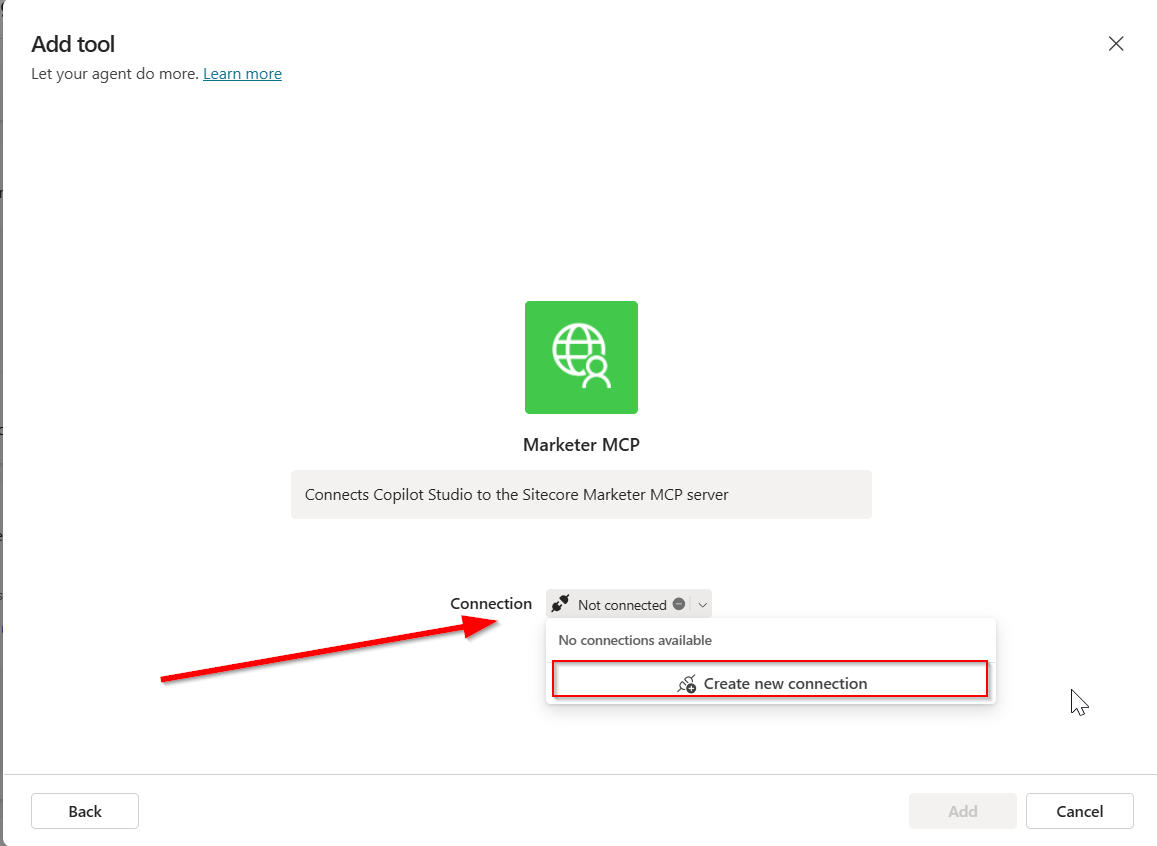
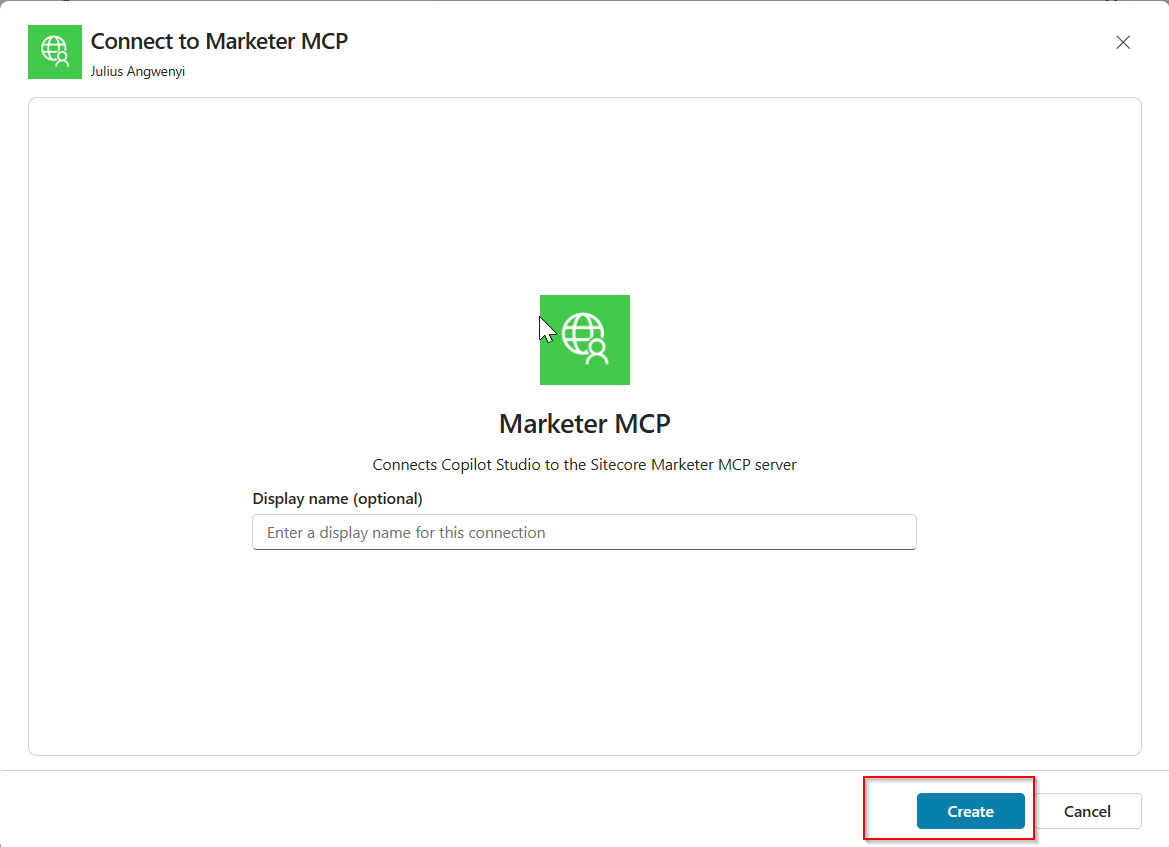
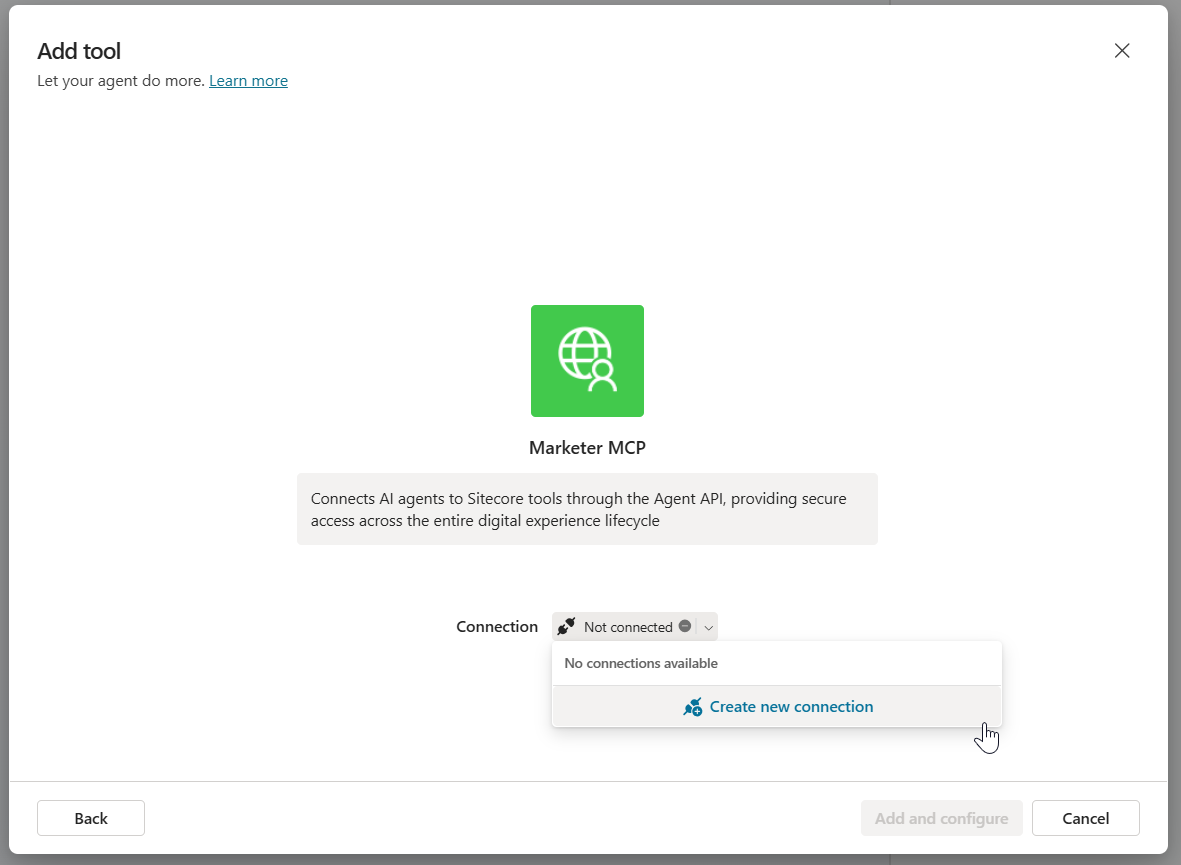
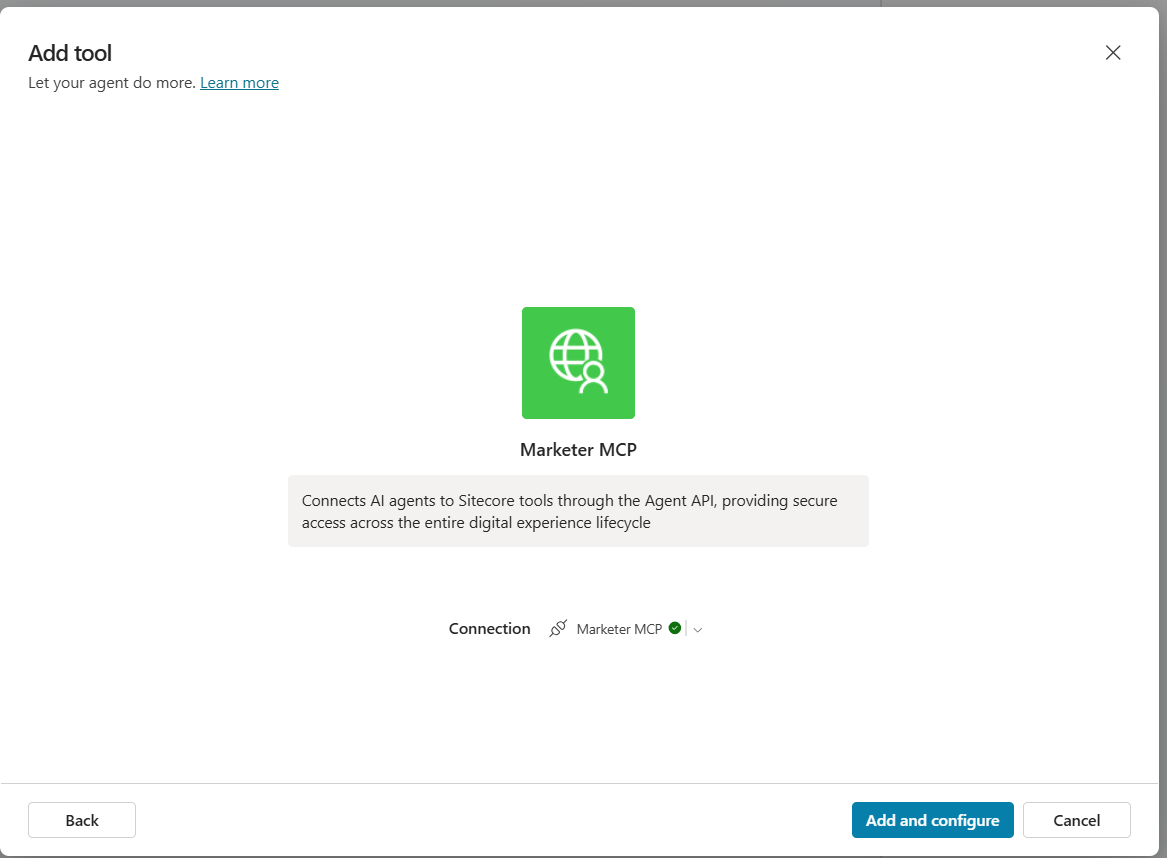
Return to the Add tool dialog in Copilot Studio. When it shows that you’re connected to the MCP server, click Add and configure.
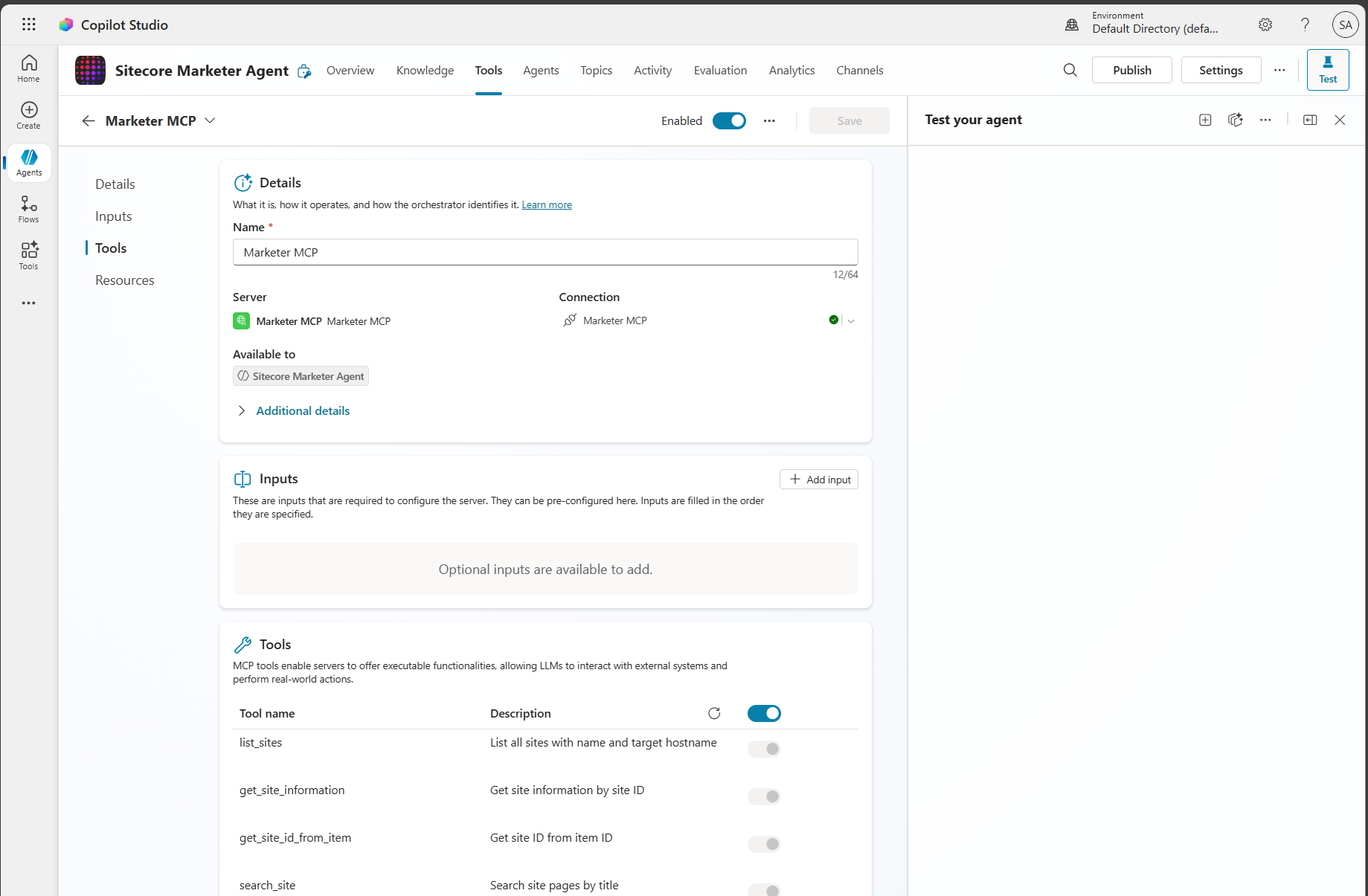
You should now see the Marketer MCP details and its tools enabled and ready to use. You can begin entering prompts to interact with Sitecore through the MCP.
Step 3 – Get prompting
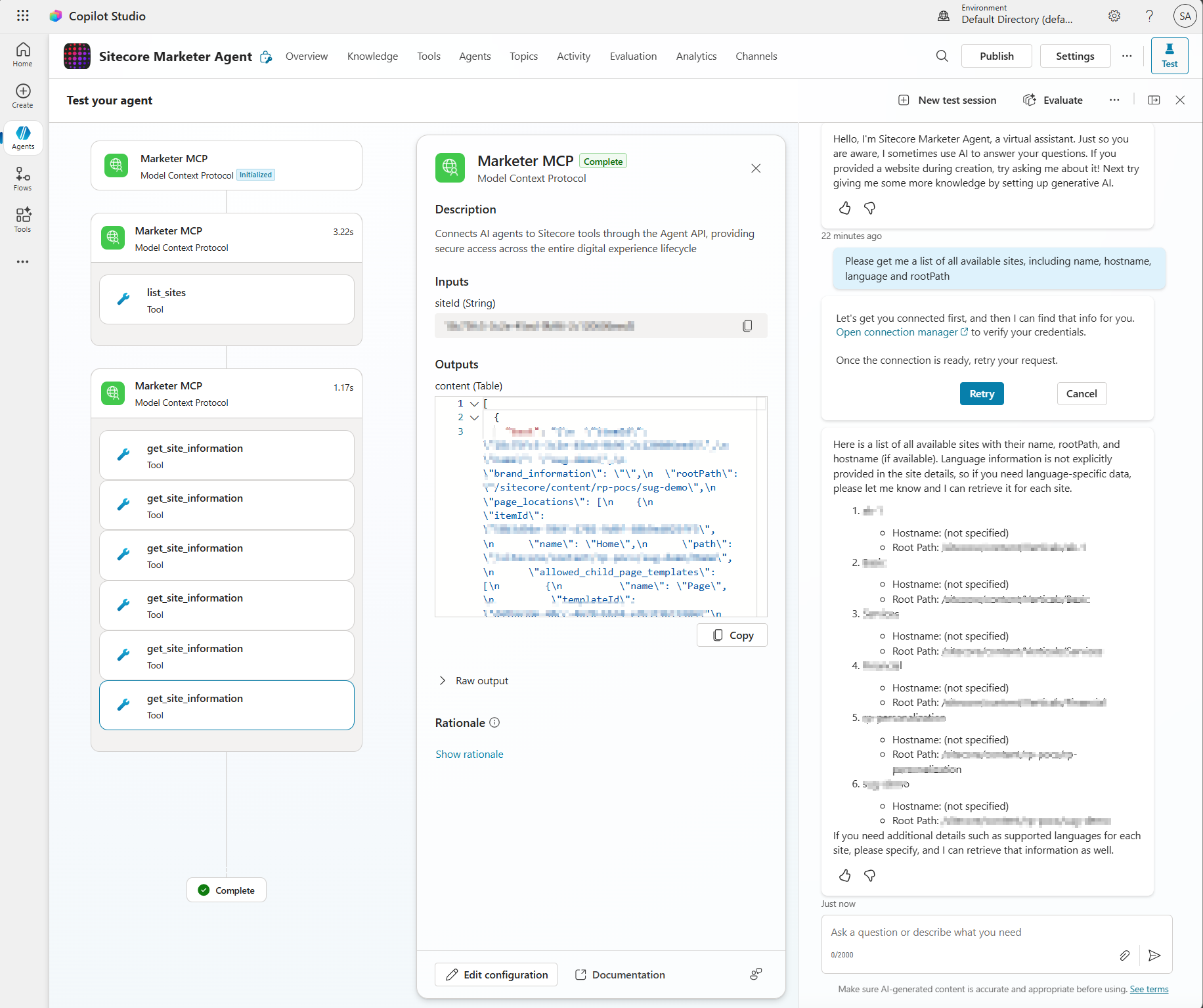
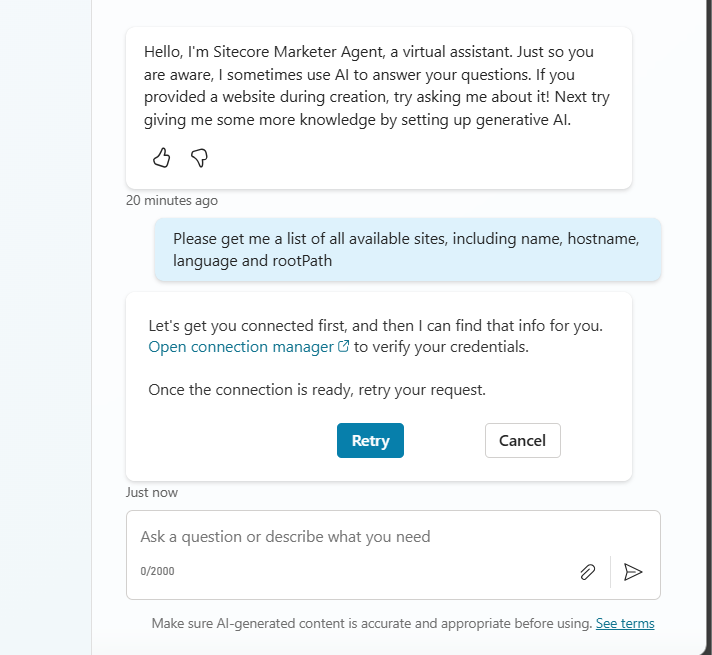
From your Copilot prompt text area, you can now use natural language to prompt and perform actions in SitecoreAI. The first time you write a prompt, you may see a connection warning message shown below.
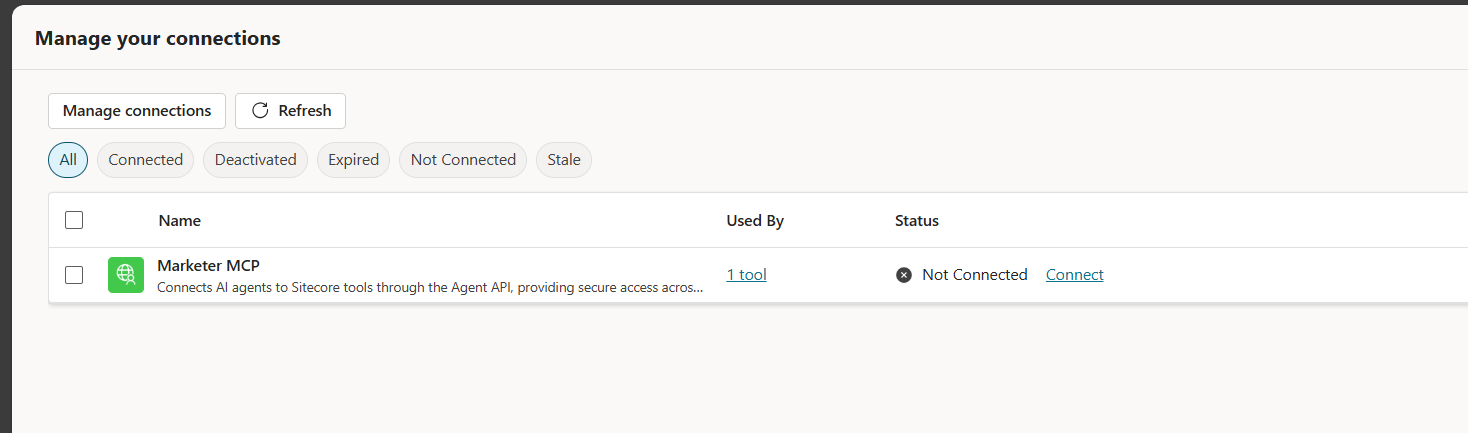
Simply follow the Open connection manager link to get connected. The link will open the dialog shown below
Click on Connect link. You will now get a response from your Sitecore AI as shown below.
Troubleshooting
You may come across some issues when establishing the connectivity into Marketer MCP from Copilot Studio. Below are the issues I encountered and how I resolved them.
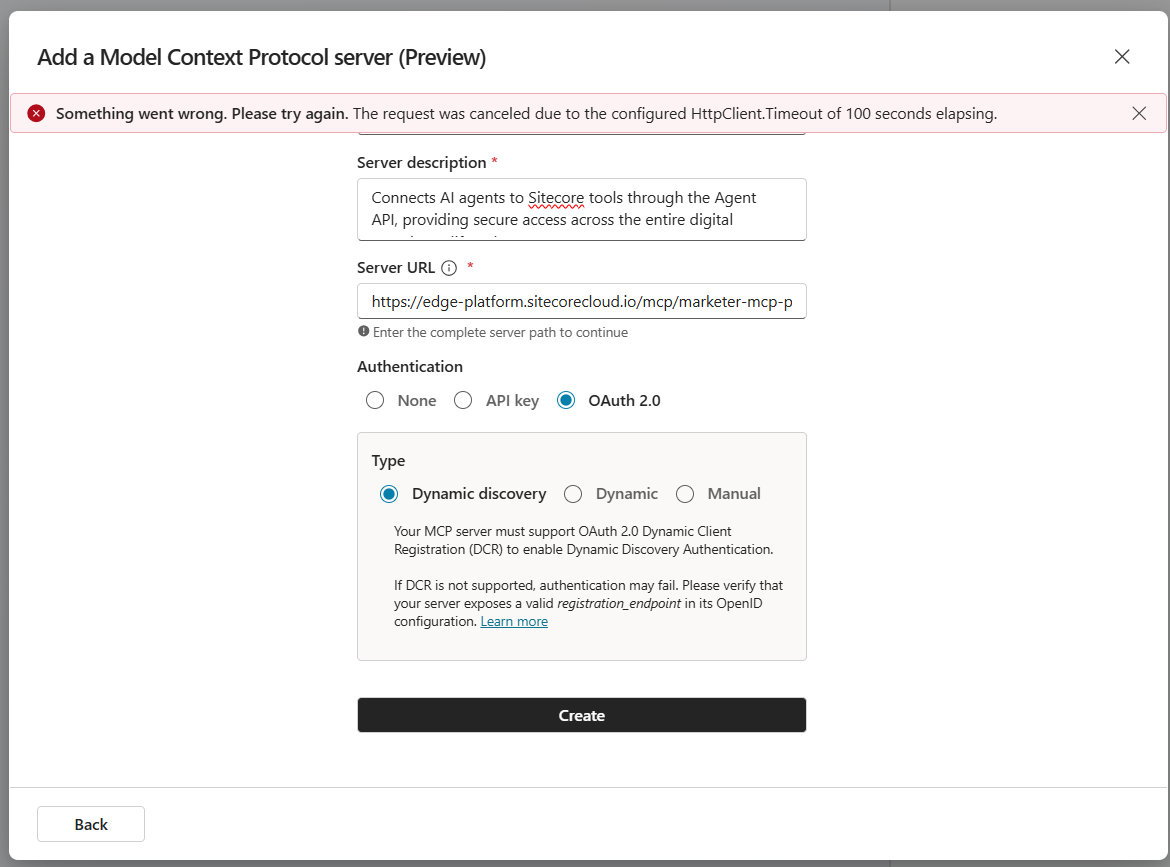
Issue 1: Timeout error
I got this error when Creating the connection:
Issue 1 Resolution:
I simply repeated that step for the second time and issue was resolved
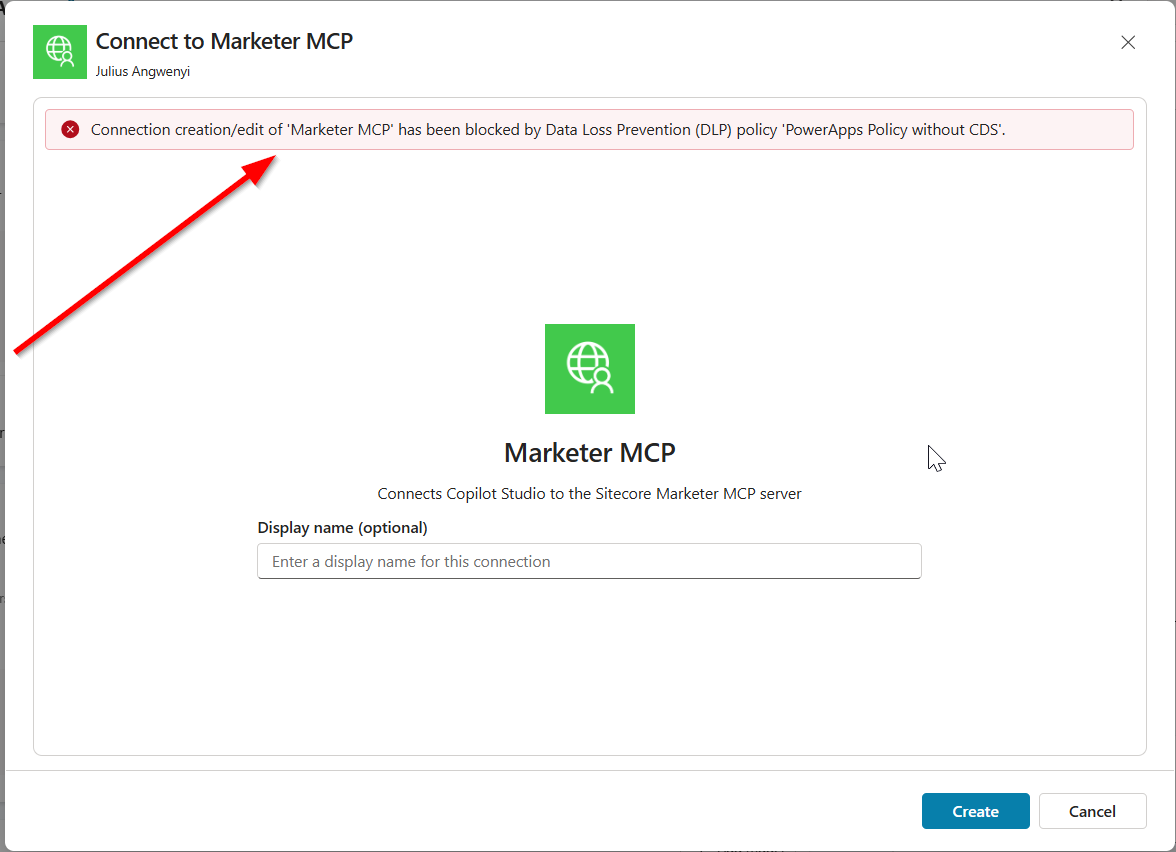
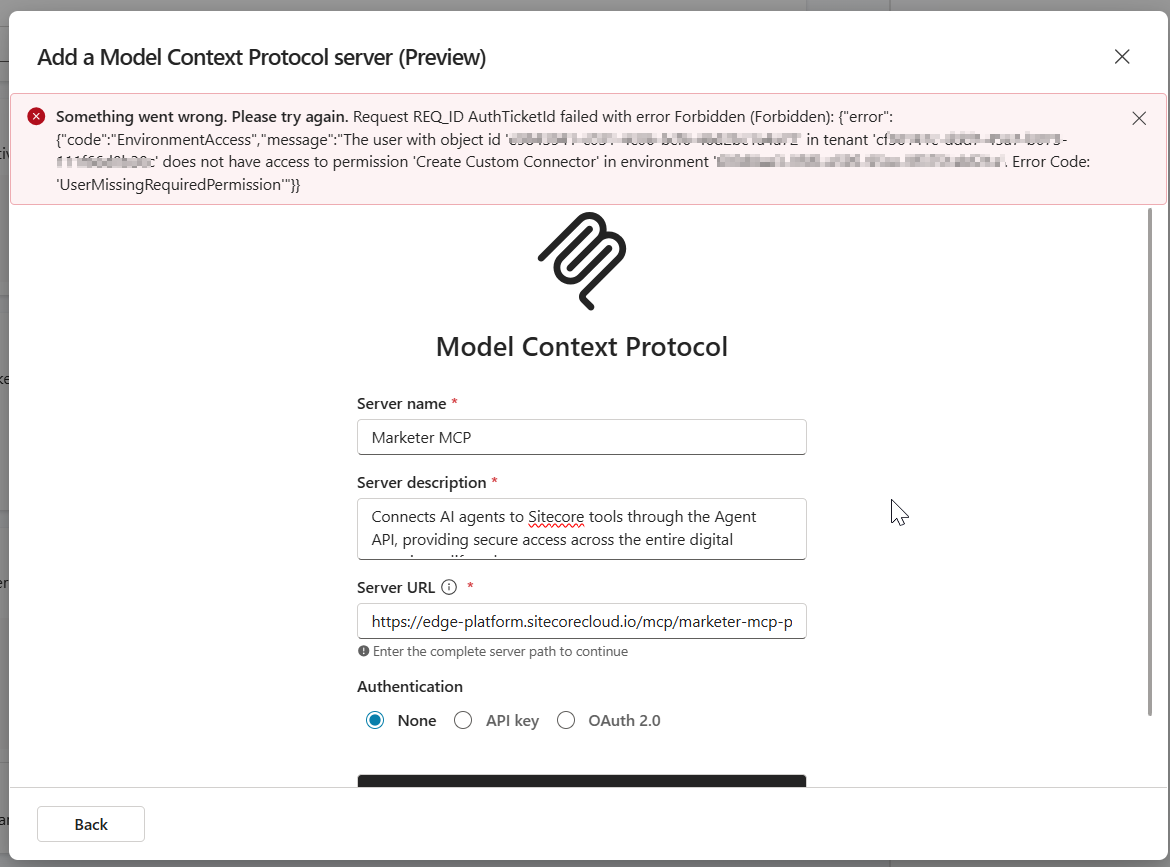
Issue 2: Environment Access permission error
The error below may occur when your Copilot Studio account doesn’t have access permissions to create a custom connection
Issue 2 Resolution:
Work with your ITS teams to provision the correct level of needed access in Copilot Studio
Next steps
In this blog post, we looked at a step-by-step guide on how to set the Marketer MCP integration with Microsoft Copilot Studio. We looked at potential connectivity issues that you may encounter and how to resolve them to get it working.
The Marketer MCP provides tools to create content, manage campaigns, run marketing automation, and handle content management. This is an evolving tool and remember to check latest updates from Sitecore.
The Marketer MCP is only reliable for the supported use cases listed here. Responses outside this scope have not been validated by Sitecore and might be inaccurate.
The content below was generated with help of AI. I prompted AI to help create an executive summary and curated list that covers everything AI in upcoming Sitecore Symposium 2025, scheduled for November 3-5 in Orlando.
Executive Summary: The AI Mandate at Sitecore Symposium 2025
Sitecore Symposium 2025, will center on the fundamental redefinition of digital experience driven by Artificial Intelligence. The overarching theme, “Next is Now,” acknowledges that AI has profoundly altered consumer behavior, replacing traditional search with summarization and converting clicks into definitive conclusions. This shift mandates that brands meet customers across novel channels and touchpoints that did not exist recently.
The New Paradigm: Augmentation vs. Automation – A key strategic indicator of Sitecore’s direction is articulated by CEO Eric Stine, who will emphasize the limitations of existing, disconnected marketing solutions and the fragmented experiences they create. The strategic focus of Sitecore’s platform evolution is clear: prioritizing augmentation over automation and relevance over reach. This positioning redefines Sitecore’s AI not merely as a tool for reducing labor costs, but as a critical growth engine designed to scale human creativity and accelerate the marketer’s capacity to connect, create, and compete.
Industry Context and Strategic Sponsorship: Accenture’s Agentic Shift – The focus on agentic frameworks at Sitecore mirrors a broader industry trend among global professional services firms. Accenture, for example, is leveraging similar principles, having recently launched its “Physical AI Orchestrator” solution. This cloud-based offering integrates AI agents from Accenture’s AI Refinery™ platform to help manufacturers create software-defined facilities and live digital twins, highlighting the enterprise reliance on autonomous, goal-oriented AI systems. Accenture is participating as a Strategic Sponsor at Sitecore Symposium 2025. Furthermore, they are the exclusive partner for the highly anticipated #ExecutiveExchange, a premier program designed for senior industry leaders to explore the possibilities of content, data, and AI, and gain valuable actionable insights. Joined by Sitecore’s leadership and a select group of global thought leaders, this Exchange is designed to spark ideas and foster meaningful connections for C-suite attendees.
The Three Pillars of Sitecore’s AI Strategy – The Symposium agenda is structured to address the complete lifecycle of enterprise AI adoption, from strategic planning to implementation and governance. The sessions reveal a focus on three core pillars essential for achieving the AI advantage:
Strategic Vision: Establishing the architectural foundation, the product roadmap, and the necessary governance frameworks for the future “Agentic Web.”
Tactical Execution: Showcasing specific, measurable use cases in both content orchestration (velocity and compliance) and developer acceleration (code generation and platform governance).
Real-World Validation: Presenting client stories that validate how global brands build trust, achieve scalable personalization, and modernize their architecture to be truly “AI-ready.”
Strategic Vision: Sitecore’s AI Roadmap and Agentic Future
The strategic sessions at Symposium will focus on establishing the architectural and corporate intent behind Sitecore’s AI investments, demonstrating a shift beyond rudimentary generative capabilities toward advanced, integrated intelligence.
Defining the Advantage: Speed, Scale, and Trust – The General Session, “Speed, scale, and trust: The AI advantage for marketers,” sets the executive tone for the event. Sitecore Chief Product Officer Roger Connolly, joined by leaders from major global enterprises including Infor, Regal Rexnord, AFL Global, and Berkeley Homes, will discuss how intelligence and imagination must work together to unlock entirely new ways to compete in the digital space. The discussion centers on utilizing AI to accelerate content delivery, amplify creative output, and, most critically, build lasting trust at scale. The repeated emphasis on “trust” is highly significant in the enterprise context. It signals that Sitecore recognizes the profound corporate liability associated with AI outputs, such as hallucinations or compliance breaches. Therefore, the core strategy involves developing AI solutions with inherent guardrails for brand safety, data integrity, and regulatory adherence, positioning AI not just as an efficiency tool, but as a critical competitive advantage built on verifiable governance.
The Agentic Framework: The Technical Roadmap – A key session provides an exclusive look into Sitecore’s product roadmap, focusing on how its platform is being reimagined with intelligence. This session details how advanced agentic frameworks will power intelligent and seamless workflows across the entire product suite. This move toward agentic frameworks signifies a major architectural transition. Rather than relying on rigid, sequential DXP workflows, Sitecore is building decentralized, goal-oriented AI entities—or “agents”—that possess the autonomy and context needed to execute complex, cross-product tasks. These AI agents will be empowered to “plan, synthesize, and act” wherever assistance is needed. The necessary precursor for this capability is a fully composable, API-first backbone, such as XM Cloud, which provides agents with the required data context and execution permissions to operate effectively and autonomously across the DXP ecosystem.
The Foundational Imperative: The Experience OS – For AI acceleration to be effective, a unified and governed digital ecosystem must be in place. The session “The Experience OS: Preparing Digital Foundations for AI Acceleration” addresses this foundational requirement. The analysis indicates that fragmented, ungoverned legacy systems (characterized by low content and data maturity) inevitably lead to inconsistent AI outputs and dramatically increase the human resources required for correction and oversight. Leaders from Horizontal Digital and Gradial will share how AI can accelerate site operations only after a foundation is built that successfully unifies teams, standardizes components, and establishes scalable governance. Establishing this “Experience OS” is therefore the fundamental structural step that enables the desired strategic outcome: efficiency, consistency, and accelerated delivery across all digital properties.
Strategic Partner Spotlight: Accenture’s AI and Innovation Sessions
Accenture’s presence at Sitecore Symposium 2025 extends far beyond the Executive Exchange, featuring a strong lineup of engaging sessions that showcase innovation and customer impact, particularly around AI-driven strategies. Attendees are encouraged to visit Accenture at booth 229 to connect with their Sitecore experts and explore how AI-driven content strategies are shaping the future of digital experience.
Key sessions featuring Accenture include:
Main Stage Showcase: Accenture will present a “CoNEXTion Partner” segment alongside their customer, showcasing innovation and customer impact.
Fireside Chat with Vercel: “Driving Engineering Innovations with Generative AI & Sitecore,” featuring Joe Kehoe.
Healthcare Panel Discussion: A healthcare-focused panel, moderated by Benjamin Adamski from Accenture and featuring insights from Anish Chadalavada (Gradial Co-Founder), Brice Bauer (Accenture), and Adeline Ashley (Sitecore’s Healthcare Industry Expert).
The following table provides a curated list of key Sitecore Symposium 2025 agenda items, summarizing their strategic importance, technical focus, and client application.
Session Title
Core Theme/Focus
Speakers/Client Case Study
Summary and Key Takeaways
Registration Link
Speed, scale, and trust: The AI advantage for marketers (General Session)
Executive Strategy & Trust
Roger Connolly (Sitecore CPO), Infor, Regal Rexnord, AFL Global, Berkeley Homes
Executive insights on positioning AI as an advantage, leveraging intelligence and imagination to accelerate delivery and build lasting trust at scale, moving beyond mere automation.
Sitecore’s AI roadmap: How agentic frameworks will transform digital experience
AI Roadmap & Agentic Architecture
Sitecore Product Team
Exclusive look at the AI roadmap, demonstrating how future AI agents will be empowered to “plan, synthesize, and act” across the DXP for seamless, intelligent workflows.
Harnessing AI for content creation: Introducing AI Experience Generation for Sitecore XM Cloud
Content Use Case & Product Demo
Richard Seal (Principal Engineer, Sitecore), Mo Cherif
Practical demonstration of the new AI Experience Generation app in the XM Cloud Marketplace, detailing AI-driven page creation and the technical architecture for building Marketplace extensions.
Orchestrating the Future: AI-Powered Content Operations with Sitecore, Gradial, and EPAM
Content Supply Chain & Operational Efficiency
Timothy Marsh, Amanda Follit (EPAM)
Strategic methods to overcome content fragmentation and slow cycles by implementing intelligent, orchestrated AI content supply chains that enhance audience resonance.
Addresses the non-technical hurdles of AI implementation, focusing on organizational resistance, strategic roadblocks, and how to effectively manage change in the enterprise.
Creating an AI-powered content supply chain for regulatory markets using Sitecore
Industry Use Case & Compliance
Mike Shaw (CI Digital)
Essential session for high-compliance sectors (H&LS, FS) detailing how AI-driven automation ensures governance, streamlines approvals, and transforms regulatory data into compliant narratives.
Cutting Sitecore development time by up to 80% with AI
Developer Tooling & Code Generation
Rajitha Khandavalli (Meritage Homes)
Deep dive into leveraging context augmentation with MCP Servers and integrating external data (Jira, Figma) to enable accurate, high-speed, AI-generated code generation, drastically reducing development cycles.
Deliver Measurable Operation Efficiency with Agentic AI
Platform Governance & DevOps
N/A (HelixGuard Focus)
Introduction to the HelixGuard “AI co-pilot,” blending MCP intelligence, analytics, and automation to proactively elevate platform performance, governance, and experience delivery in an agentic framework.
Scaling smarter: How Vizient uses Sitecore to personalize, integrate, and innovate in a complex B2B healthcare landscape
Client Story & AI Foundation
Jonathan Price (Americaneagle.com)
Case study detailing how a complex B2B healthcare organization established “AI-ready infrastructure” and achieved smart personalization and faster time to market following a digital transformation.
The Experience OS: Preparing Digital Foundations for AI Acceleration
Infrastructure Strategy & Governance
Pam Butkowski (Horizontal Digital)
Strategic session outlining the necessary pre-conditions for AI success: unifying teams, standardizing components, and establishing scalable governance models for faster delivery and consistency.
Conclusion: Leading the Future of DX with Sitecore AI
The Sitecore Symposium 2025 agenda confirms a decisive strategic pivot: Sitecore is transitioning from providing a traditional Digital Experience Platform (DXP) to offering an Intelligent Experience OS built on the principles of augmentation and agency. The analysis of the session topics suggests that the focus is on three intertwined strategic vectors: the deployment of agentic frameworks to automate complex, cross-platform workflows; the delivery of measurable efficiency via AI-driven content orchestration and developer acceleration; and the commitment to enterprise governance to ensure trust and compliance in high-stakes environments.
For digital leaders and technologists, the Symposium presents a compelling narrative that moves beyond simple generative AI experimentation. It outlines a comprehensive, strategic path forward where AI serves as the catalyst for continuous innovation, provided that organizations first establish the required foundational agility, standardization, and change management principles necessary to support a truly intelligent and composable digital future.
Next steps
In this blog post, we looked at the upcoming Sitecore Symposium 2025, where we looked at everything AI related. With help of AI, I have managed to review the agenda items and come up with this curated list. Stay tuned for future posts, feel free to leave us comments and feedback as well.
I previously blogged about Sitecore Stream Brand Management and looked at a high level architecture on how the Brand Kit works under the hood. Today, I continue this conversation and look at a more detailed step-by-step guide on how you can start integrating with the Stream Brand Management APIs.
As a quick recap, Sitecore have evolved the Stream Brand Management to provide a set of REST APIs to manage life-cycle of the brand kit as well as getting a list of all brand kits. You can now use REST APIs to create a new brand kit, including sections and subsections, and create or update the content of individual subsections. You can also upload brand documents and initiate the brand ingestion process.
Brand Management REST API (brand kits, sections/subsections)
Document Management REST API (upload/retrieve brand documents).
These new capabilities opens opportunities such as allowing you to ingest brand documents directly from your existing DAM. You could also integrate them with your AI agents so that you can enforce you brand rules
Step 1 – Register and get Brand Kit keys
Brand Management REST APIs use OAuth 2.0 to authorize all REST API requests. Follow these steps below:
a) From your Sitecore Stream portal navigate to the the Admin page and then navigate to Brand Kit Keys section, as shown below.
b) Then click on Create credential button which opens the Create New Client dialog similar to one shown below. Populate with the required client name and a description, then click on Create
c) Your new client will be created as shown below. Ensure you copy the Client ID and Client Secret and keep them in a secure location. You will not be able to view the Client Secret after you close the dialog.
Step 2 – Requesting an access token
You can use your preferred tool to a request the access token. In the sample below, I am leveraging Postman to send a POST request to the https://auth.sitecorecloud.io/oauth/token endpoint.
client_id This is the Client ID from previous step
client_secret This is the Client Secret from previous step
Sitecore API Catalog lists all the REST APIs plus sample code on how to integrate with them. Below is a snapshot of the list of operations at the time of writing this post:
Have you started integrating Sitecore Stream Brand Management APIs yet? I hope this step-by-step guide helps you start exploring the REST APIs so you can integrate them with your systems.
Stay tuned for future posts, feel free to leave us comments and feedback as well.
Do you know how to add a custom class using “new” text editor CKEditor? I want to add a custom "<p class="my-custom-class"></p>"
Sounds familiar? This is a common query which XM Cloud developers are grappling on Sitecore developer community channels, including Slack.
In fact, a quick search reveals an active topic as shown below:
What is CKEditor?
On May 8, 2025 Sitecore deprecated the legacy Pages rich text editor in XM Cloud. This was previously accessible from the right-hand side panel. The newer CKEditor rich text editor becomes the default editor. The link I have shared above provides guidance on how to enable the newer CKEditor rich text editor. This involves adding the env variable PAGES_ENABLE_NEW_RTE_EDITOR in the Deploy app and set its value to ‘true’.
supporting new markup (this was not possible with previous legacy editor)
*The image above has been adopted from developers.sitecore.com
But how do I add custom class to CKEditor?
With all these new capabilities and UX improvements, unfortunately you can not customize the CKEditor in XM Cloud (yet). As mentioned earlier, there seems to be demand for a capability to customize the list of the options available from the formatting drop down.
Makes sense to be able to create custom classes to be included in the list right?
Back to you Sitecore XM Cloud team.
What are other developers of XM Cloud saying?
Below are some of the answers to this question on Slack:
Next steps
Joined Sitecore Slack channel yet? Head over to https://sitecore.chat to join the community. In the meantime, stay tuned and please keep any eye on this feature request. Also please give us any feedback or comments.
In this blog post, we will explore further How the Brand Aware AI works, by looking at the architecture of Agents and how we bring them to life in our Stream Brand Assistant agent. There is also an accompanying video series on my YouTube channel.
What is an agent?
An agent is simply a software service that uses AI to assist users with information and task automation: An agent does a task, Take this do it and let me know when you are done.
We have three main elements on an Agent, as shown in the architecture below:
Model – We now have access many Large Language Models and Small Language models that does the thinking
Knowledge – This is the Instructions, data sources that enable the agent to ground prompts with Contextual data
Tools – A set of tools that agents can invoke such as retrieving information, Actions such as making API calls, and keeping a thread in memory of current conversation. You can also create custom tools using your own code or Azure Functions
How Brand Assistant agent works
Below are the steps involved when interacting with the Brand Assistant within Sitecore Stream:
The user enters a prompt – the user enters a prompt in Brand Assistant – such as a question or an instruction as shown during the demo by Alessandro earlier.
The system passes information from the Brand Context – the system automatically provides information from the Brand Context brand kit section as a system prompt.
Copilot analyzes if it can answer from Brand Context – the thinking process begins. The Brand Assistant evaluates whether the information passed from the Brand Context alone is enough to answer the prompt.
Based on the analysis, the process continues in one of two ways:
Generate a direct response – if the Brand Context provides sufficient information, the Brand Assistant generates a direct response using only that content.
Invoke other AI agents – if the Brand Context doesn’t answer the prompt and more information is needed, the Brand Assistant automatically activates one or more AI agents to search and organize the information and generate a response:
Search agent – uses tools to find information from your brand knowledge, web searches, or both.
Brief agent – activated only when the user specifically requests a campaign or creative brief
•Summary agent – condenses all retrieved information into a concise, relevant response.
As generative AI continues to evolve and become more deeply embedded in our digital landscape, its applications have expanded well beyond simple chat interfaces. Today, these models are powering intelligent agents capable of autonomously executing complex tasks and streamlining operations.
Forward-thinking organizations are now harnessing this potential to build AI-driven agents that orchestrate business processes and manage workloads in ways that were once out of reach.
In this post, we’ll take a closer look at how Sitecore is embracing this shift—leveraging Brand-Aware AI to transform the way enterprise marketing teams operate. There is also an accompanying video series on my YouTube channel.
Some of pain points that marketers face today
Before we look at how Sitecore are leveraging AI with Sitecore Stream, let me set the context around some of the pain points that marketers face today:
Keeping brand consistency – challenges around keeping their brands aligned with latest trends, efficiently improving previous campaigns & briefs, assets to keep a consistent brand tonal voice
Taking longer time to make decisions – challenges around decision making turnaround time due to manual processes and large volumes of content and material that needs reviewing as part of the creative process
Availability of robust Self-Serve tools – challenges around lack of tools for efficient task planning, content supply chains, moving faster removing blockers and having more control
To address these challenges, Sitecore has taken steps to introduce AI-Driven marketing by creating Sitecore Stream. Sitecore Stream is the way Sitecore are infusing AI capabilities across their products.
Sitecore Stream consists of three components: Brand-aware AI, Copilots & agents and Agentic workflows, as discussed below.
Brand-aware AI
This is what powers Sitecore AI tools to generate content that reflects your brand’s identity. This is made possible by a foundational understanding of your brand called brand knowledge. In the next slide, I will show in detail how this brand knowledge is created in Sitecore Stream.
Brand-aware AI enables marketers to create high-quality content faster, by combining deep brand knowledge with real-time Web insights to generate outlines and long-form drafts in seconds.
Copilots and agents
These are the AI assistants designed to increase marketers’ productivity by speeding up decision-making and task execution. Copilots are for humans, Agents are for processes. Copilot is the UI for AI – the chat based interface is where you can ask specific questions about your brand. Better still, you can actually brainstorm with AI, e.g. you want to create new content for blog post or a campaign brief.
Agentic workflows
These are advanced tooling to orchestrate tasks and streamline marketing project management across teams. This capability enables you to discover gaps in your campaigns and reduce planning time with help of AI that understands your brand and project context.
You can essentially ideate & plan entire campaign with help of AI. AI will recommend key top deliverables to bring your campaigns to life and recommend tasks to get them completed within seconds. Providing full agentic experiences to marketing campaigns, which human-in-the-loop too keep or discard suggestions
How to create your brand knowledge in Stream
This involves a 6-step process as outlined in the infographic shown below. If you are managing a multi-brand enterprise, you can repeat this process for each of your separate brands. Essentially creating multiple brand kits within Sitecore Stream.
Next steps
Have you started using Sitecore Stream with your Sitecore products yet? You can reach out to Sitecore directly by filling in the ‘Sitecore Steam: Get Your Demo’ form on their website.